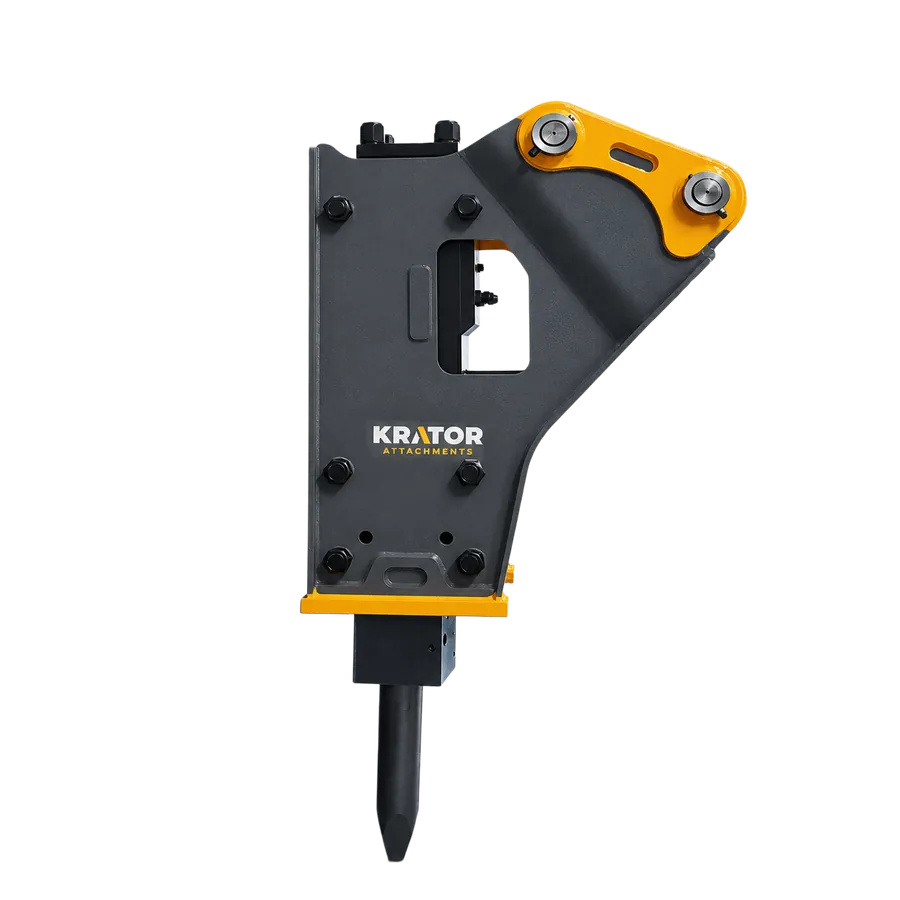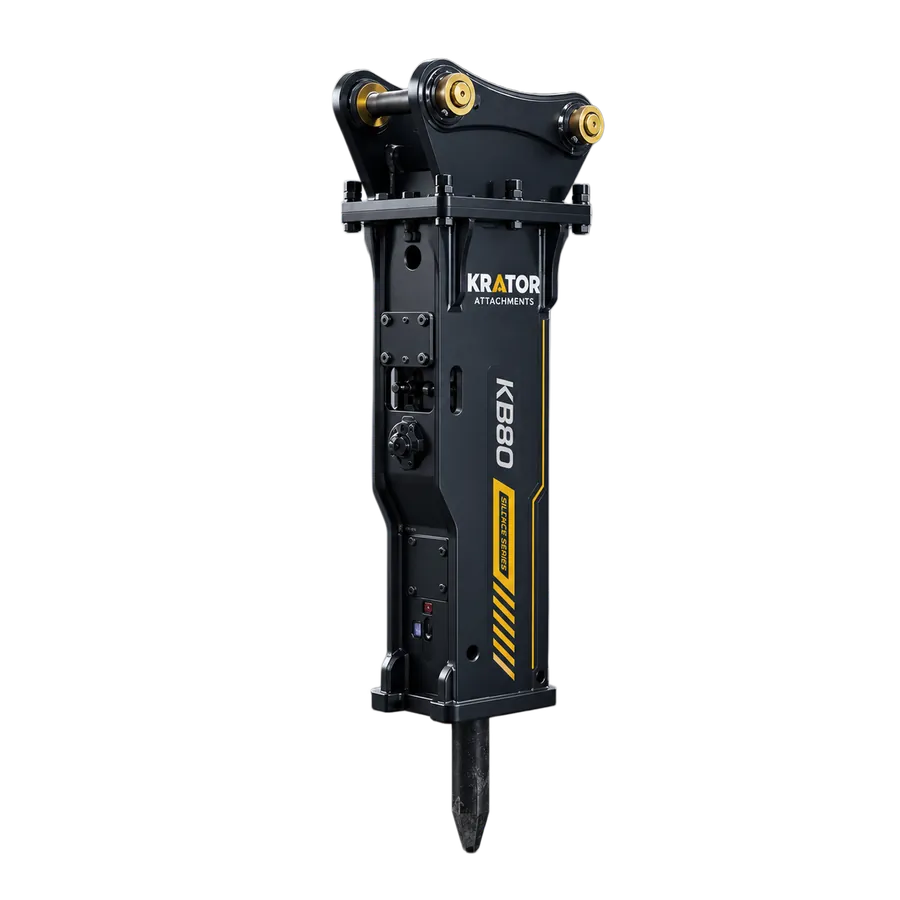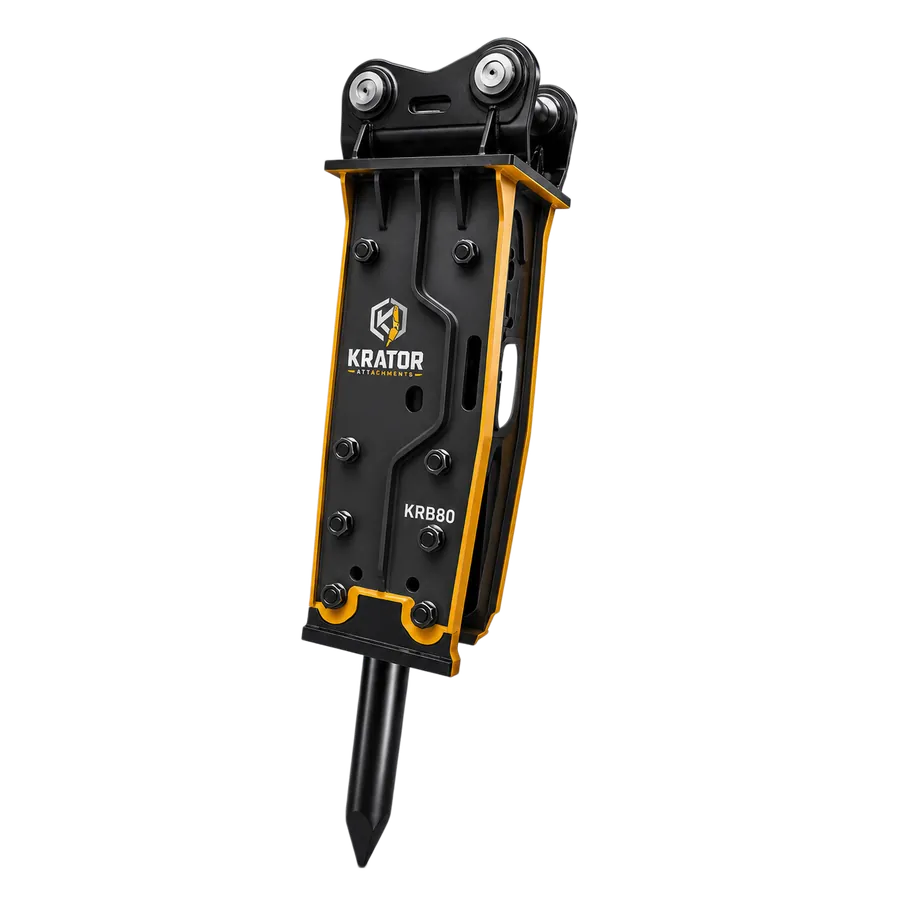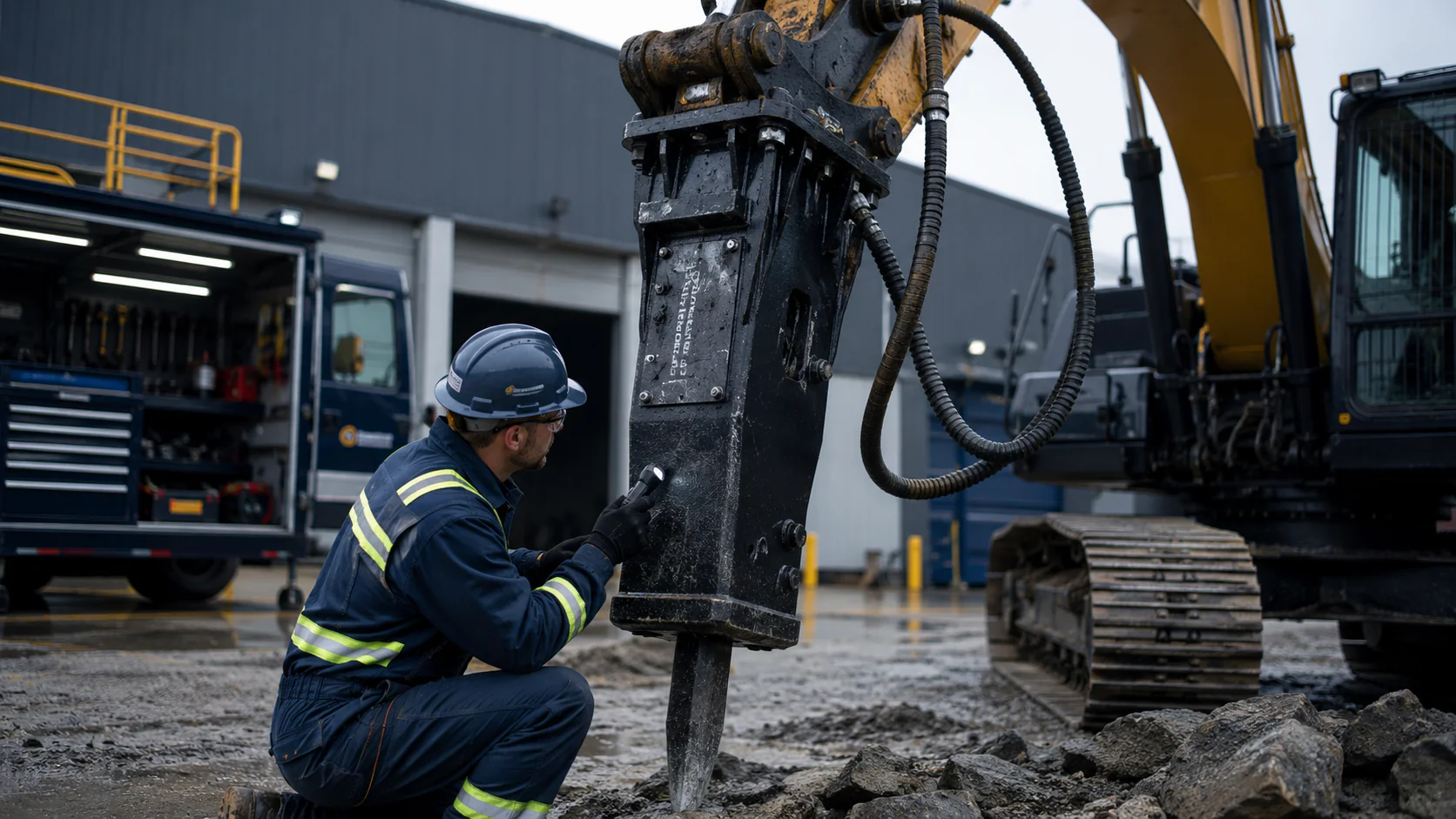

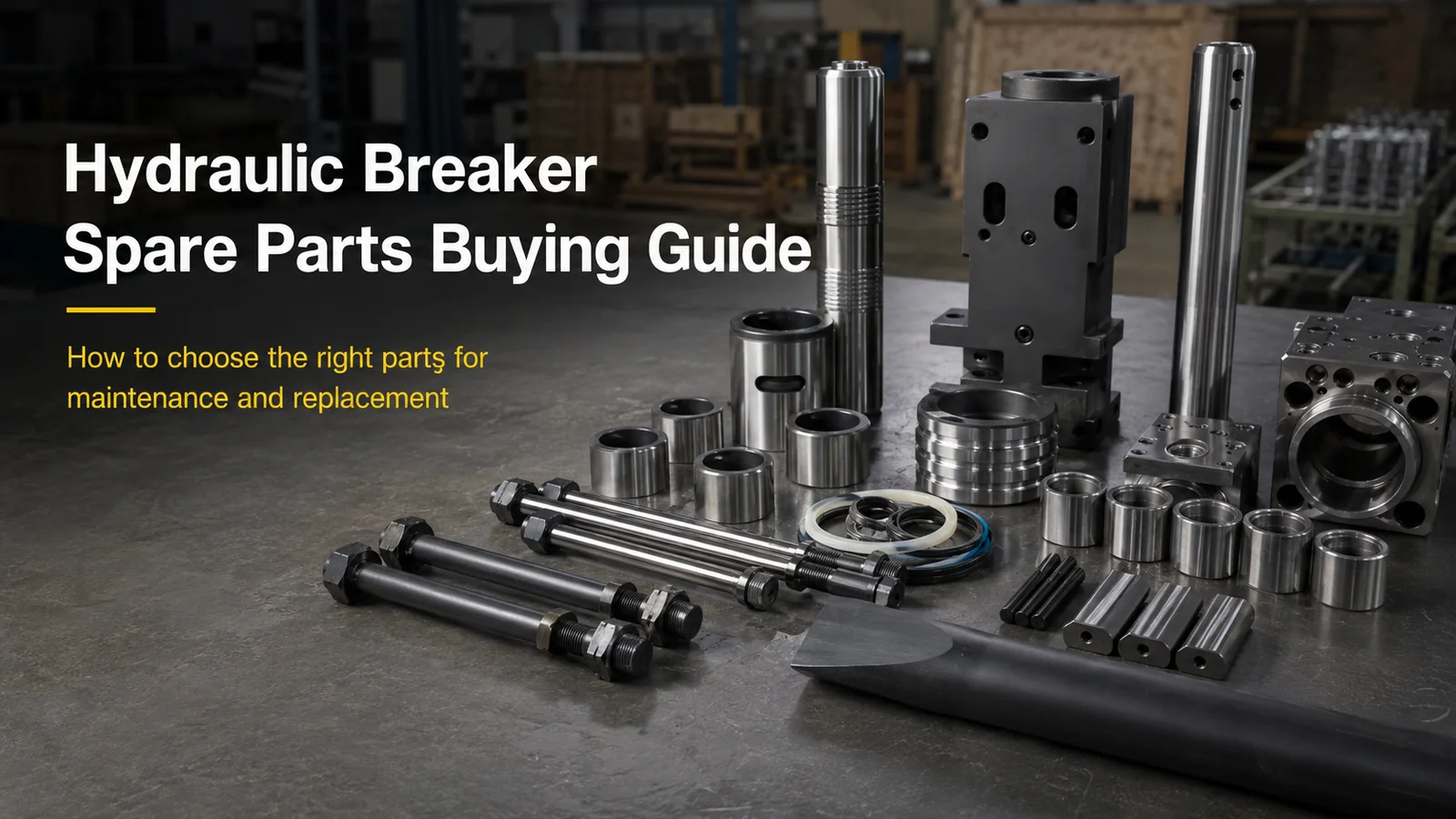
To order hydraulic breaker spare parts, first confirm the breaker brand, exact model and serial or nameplate information. Then identify the suspected part, provide clear installed and removed-part photos, record safely accessible dimensions only when requested, explain the replacement reason, and confirm quantity and destination. Appearance alone is not enough: chisels, seal kits, bushings, pistons and bolts that look similar may still use different dimensions or designs.
Why Breaker Model Identification Comes First
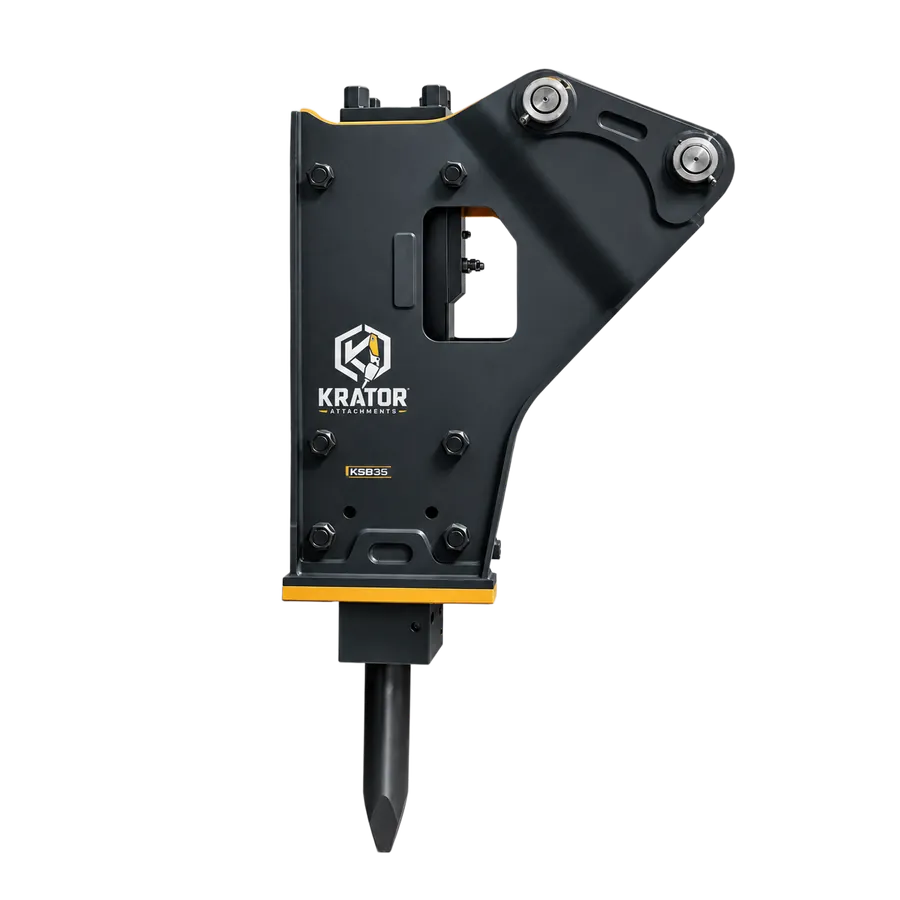
A spare-parts inquiry should begin with the breaker, not with a generic component name. Model names can vary by market, and a hydraulic breaker product family may contain several sizes or revisions. The nameplate, serial information where available and clear views of the complete breaker help establish which documentation and part family should be checked.
Do not assume that parts from different brands, models or housing configurations are interchangeable. A similar external shape does not confirm the shank, bore, retaining system, seal arrangement, thread, port or internal fit. If the breaker identity is uncertain, send evidence first and wait for model confirmation before ordering.
Hydraulic Breaker Spare-Parts Overview
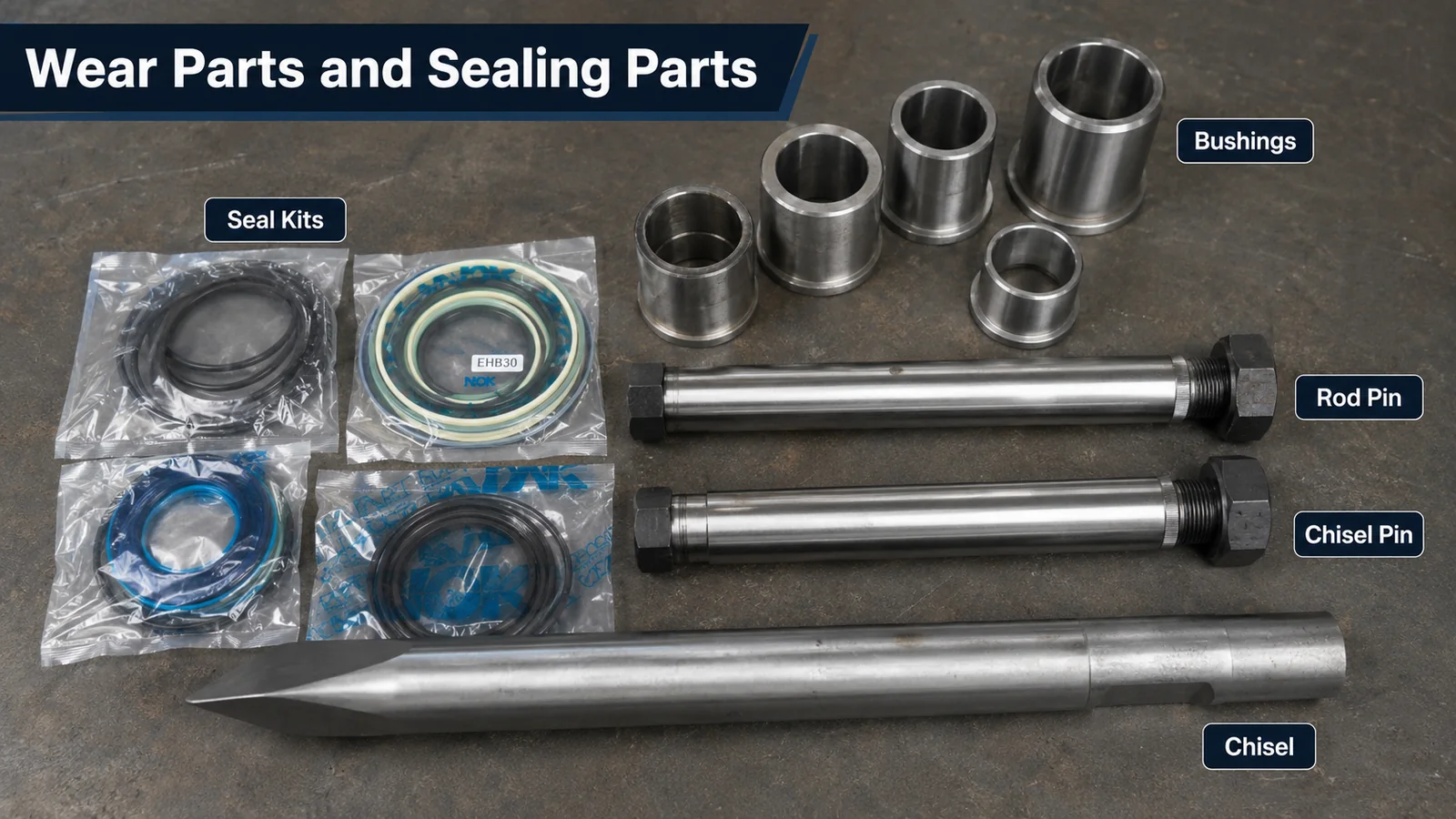
Common inquiry categories include working tools, bushings, retaining parts, seals, fasteners, pistons, head and cylinder components, accumulator-related parts where fitted, hoses, fittings and mounting hardware. Component design and naming vary by breaker brand and model. Not every breaker contains every listed component, and a category name alone is not a compatibility decision.
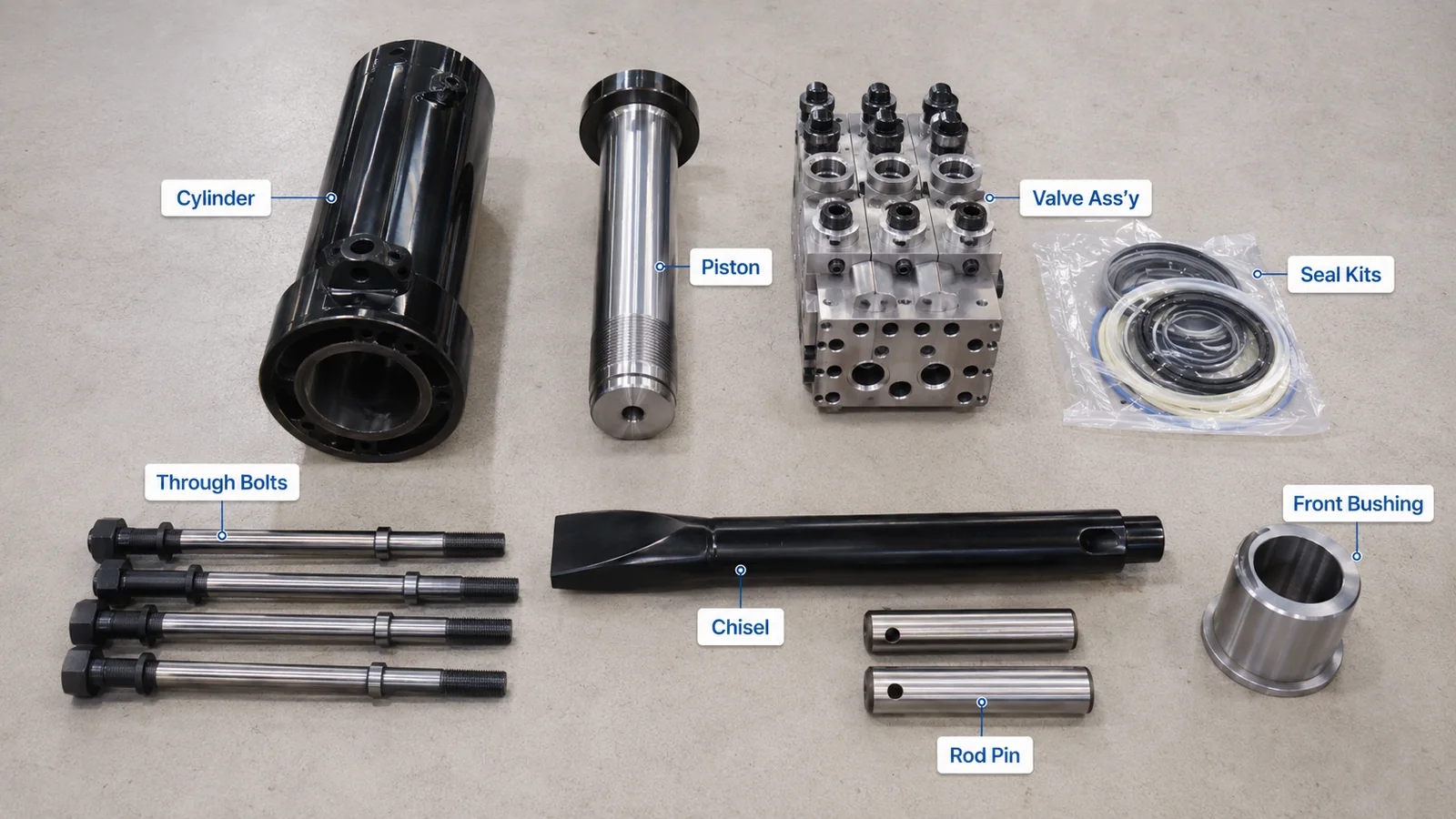
| Part category | Typical function | Common reason for replacement | Identification information required | Technician inspection required |
|---|---|---|---|---|
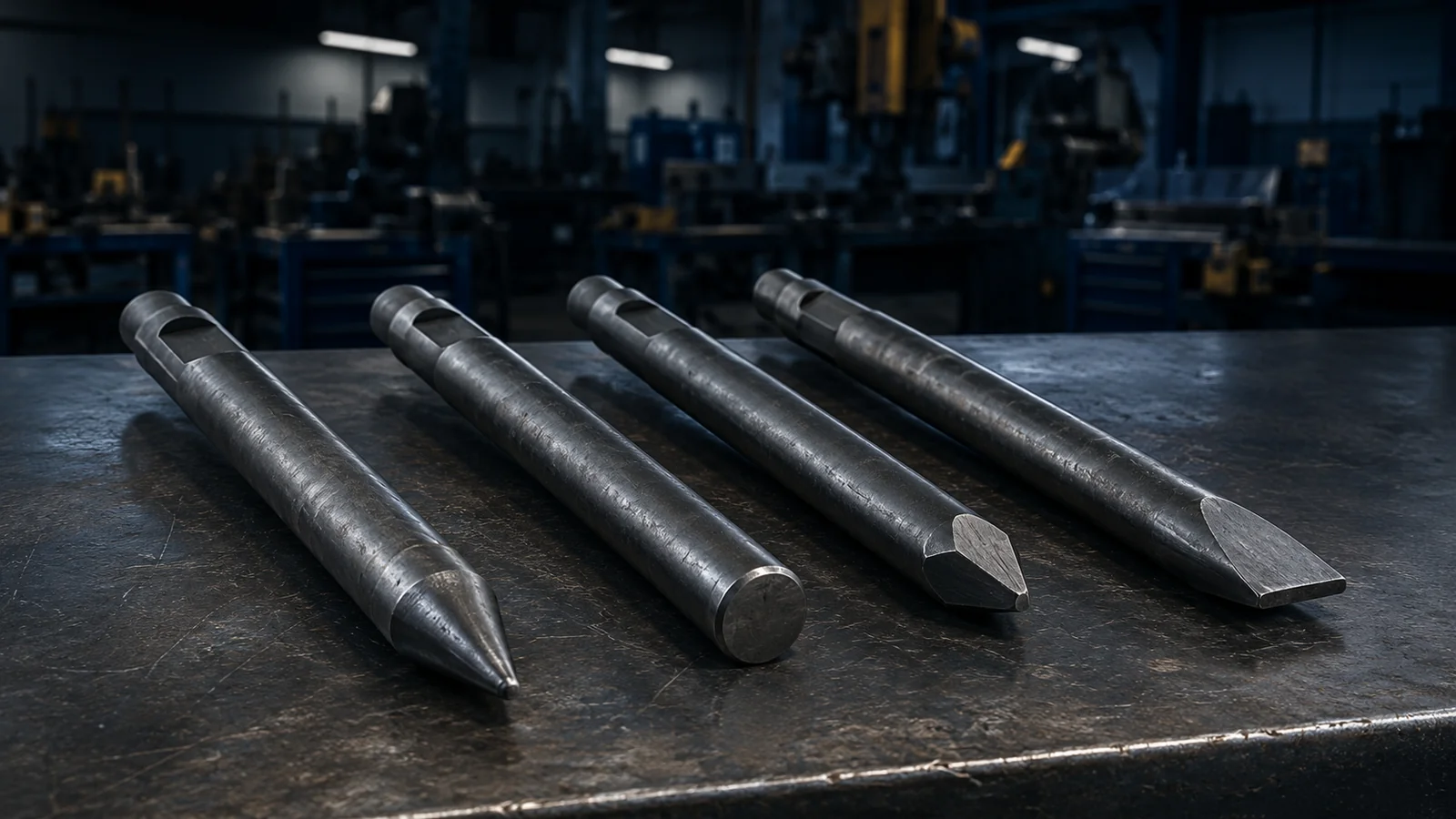
| Chisel / working tool | Transfers breaker impact to the material | Wear, deformation, visible cracking or application change | Breaker model, tool profile, retainer arrangement, photos and requested dimensions | Required for removal, internal contact review or uncertain damage |
| Front bushing | Guides and supports the working tool | Model-specific wear, damage or excessive movement | Breaker model, bushing location, photos and approved measurements | Yes |
| Lower bushing | Supports tool alignment where that design is used | Wear, scoring, deformation or related tool movement | Exact model, position, photos and requested dimensions | Yes |
| Retaining pin | Retains the working tool in the front assembly | Wear, deformation or surface damage | Model, location, profile, markings and photos | Yes for removal and mating-part inspection |
| Stop pin | Secures or locates a retaining component where fitted | Damage, loss or model-specific service finding | Model, installed location, shape and marking | Usually |
| Seal kit | Provides model-specific internal sealing | Qualified diagnosis identifies leakage or service need | Exact model, serial/nameplate data and verified kit marking if available | Yes |
| Through bolt | Clamps major breaker sections in designs that use it | Damage or an approved service finding | Model, bolt location, markings, photos and requested dimensions | Yes |
| Side bolt | Secures housing or side components where fitted | Damage, loss or approved replacement need | Model, housing type, location and marking | Model-dependent |
| Piston | Internal impact component | Qualified internal inspection identifies damage | Exact breaker identity, service evidence and verified part data | Yes |
| Front head | Supports the working-tool area and related components | Damage or qualified inspection finding | Model, serial/nameplate, casting or part marking and photos | Yes |
| Cylinder | Forms part of the internal breaker assembly | Damage or qualified service diagnosis | Exact model, serial/nameplate and verified component identity | Yes |
| Back head | Forms the rear breaker section in applicable designs | Damage or approved service finding | Model, configuration, markings and documentation | Yes |
| Accumulator parts | Support the applicable breaker hydraulic system where fitted | Qualified diagnosis under the correct manual | Exact model, accumulator design and approved part identification | Yes; do not open or service without authorization |
| Hose and fittings | Connect the breaker hydraulic circuit | Visible damage, leakage or routing-related wear | Breaker and carrier data, connection details, routing photos and verified specifications | Required when pressure may remain or specifications are uncertain |
| Bracket pin and bushing | Connect the breaker bracket to the excavator | Wear, damage or carrier/bracket change | Excavator model, bracket location, pin dimensions and photos | Recommended |
Wear Parts Versus Structural and Hydraulic Parts
Wear parts are components expected to be inspected regularly because they contact the working tool, material or moving interfaces. Working tools, some bushings and retaining components are common examples, but replacement criteria still come from the correct breaker documentation. A visible mark does not by itself establish a wear limit.
Sealing, hydraulic and structural parts require a different level of evidence. A seal kit, piston, cylinder, front head, back head or accumulator-related component should not be selected from a general photograph. Internal dismantling, seal replacement, accumulator work and nitrogen-chamber work are outside this buying guide and must be performed by qualified technicians using the correct service information.
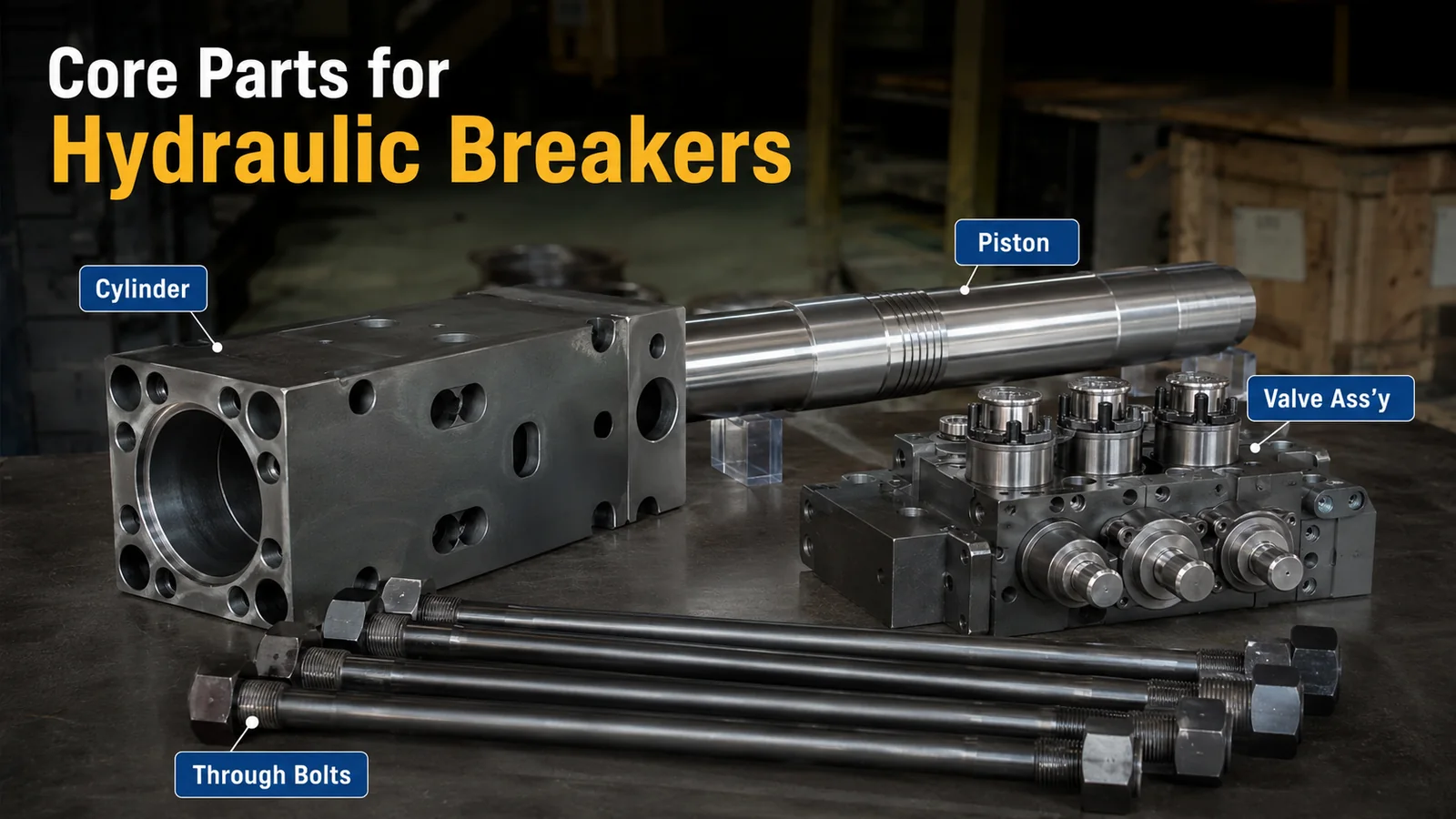
Common Hydraulic Breaker Spare-Part Groups
Working Tool / Chisel
The working tool must match the breaker model, shank and retainer design as well as the intended material. Diameter and overall length are useful only as part of a complete model-specific check. For working-end selection and replacement evidence, use the hydraulic breaker chisel guide.
Front and Lower Bushings
Bushing position and naming vary. If abnormal tool movement or visible wear is suspected, isolate the equipment and record the condition without improvising a clearance limit. A qualified technician should inspect and measure the parts using the correct manual.
Retaining Pins and Stoppers
Retaining pins, stop pins and related parts should be identified by their installed location, profile and model context. Send photos of both the component and its mating area when safely available. Damaged retaining or structural parts should not be reused.
Seal Kits
A hydraulic breaker seal kit is model-specific and may also depend on a version or serial range. Provide the nameplate, existing kit marking or verified part number where available, and the service diagnosis. Do not open the breaker to identify seals without an approved procedure.
Through Bolts and Side Bolts
Through-bolt and side-bolt terminology is not universal. Confirm the fastener location, thread and dimensions requested for the exact model. Do not substitute a visually similar bolt or publish torque values without the approved model documentation.
Piston
The breaker piston is a precision internal part. Matching requires the exact breaker identity and qualified inspection evidence. Do not grind, weld, rework or reuse a damaged piston based on an unverified assessment.
Front Head, Cylinder and Back Head
These major components may contain model-specific bores, passages and interfaces. A supplier may require serial information, casting or part markings, photos and additional approved measurements. Structural damage requires technician review and should not be treated as a routine wear-part purchase.
Accumulator and Diaphragm Components Where Applicable
Some breaker designs include accumulator-related components; others differ. Do not open an accumulator or nitrogen chamber, release pressure, or order a diaphragm from appearance alone. Identification and service must follow the exact model documentation.
Hoses, Fittings and Connection Parts
Record the breaker and carrier model, hose route, fitting location and visible condition. Hydraulic specification and connection details must be verified. The hydraulic flow and pressure guide explains why carrier data should be confirmed rather than inferred.
Mounting Bracket, Pins and Bushings
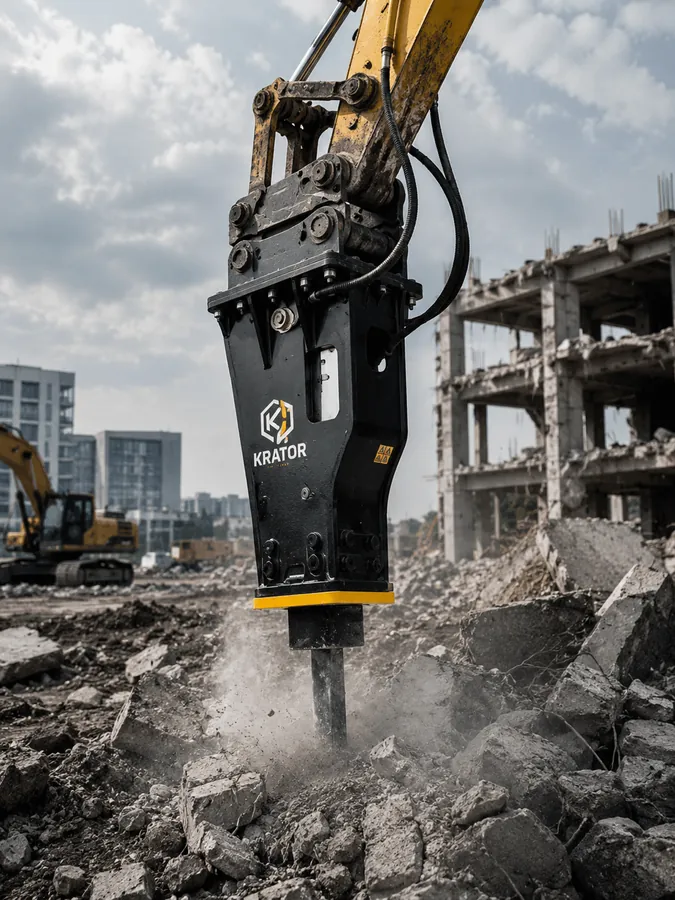
Mounting parts relate to both the breaker bracket and the excavator interface. Prepare the excavator brand, model, operating weight and safely measured pin data. Use the breaker selection guide when the underlying carrier-breaker match also needs review.
Common Spare-Parts Ordering Mistakes
- Ordering from a photo without the breaker brand, exact model or nameplate.
- Assuming a part is interchangeable because it looks similar.
- Using only a generic part name such as seal kit, piston or bolt.
- Sending one measurement without the part profile and installed location.
- Mixing parts for several breaker models in one unlabelled photo or list.
- Requesting an internal component without qualified inspection evidence.
- Reusing a visibly cracked, deformed or damaged structural part.
- Omitting quantity, destination country or port from a commercial inquiry.
If a part request follows a no-strike, weak-impact, overheating or leakage symptom, use the safe breaker troubleshooting sequence first. Keep fault diagnosis separate from the purchasing decision.
How to Identify the Correct Replacement Part
- Confirm breaker brand and exact model. Do not rely on a housing color or general size.
- Photograph the nameplate. Include serial information where available and readable.
- Record excavator model and carrier weight. Add hydraulic configuration only when relevant to the part or diagnosis.
- Identify the suspected part. State its name and installed location without guessing an internal failure.
- Photograph the installed component. Include context plus close views from multiple angles.
- Record dimensions only where safely accessible. Follow the requested measurement method and never dismantle a pressurized assembly for a buying inquiry.
- Provide old part markings or part number if available. Markings support identification but still require model confirmation.
- Describe the fault or replacement reason. State the visible condition and when it began.
- Confirm quantity. Separate quantities by model and part.
- Provide destination country and port. Add the preferred transport method only if known.
Appearance alone is not enough for compatibility. Similar-looking parts may use different dimensions, model names can vary by market, and serial or nameplate data may be necessary. Parts should not be ordered solely from an unverified photo.
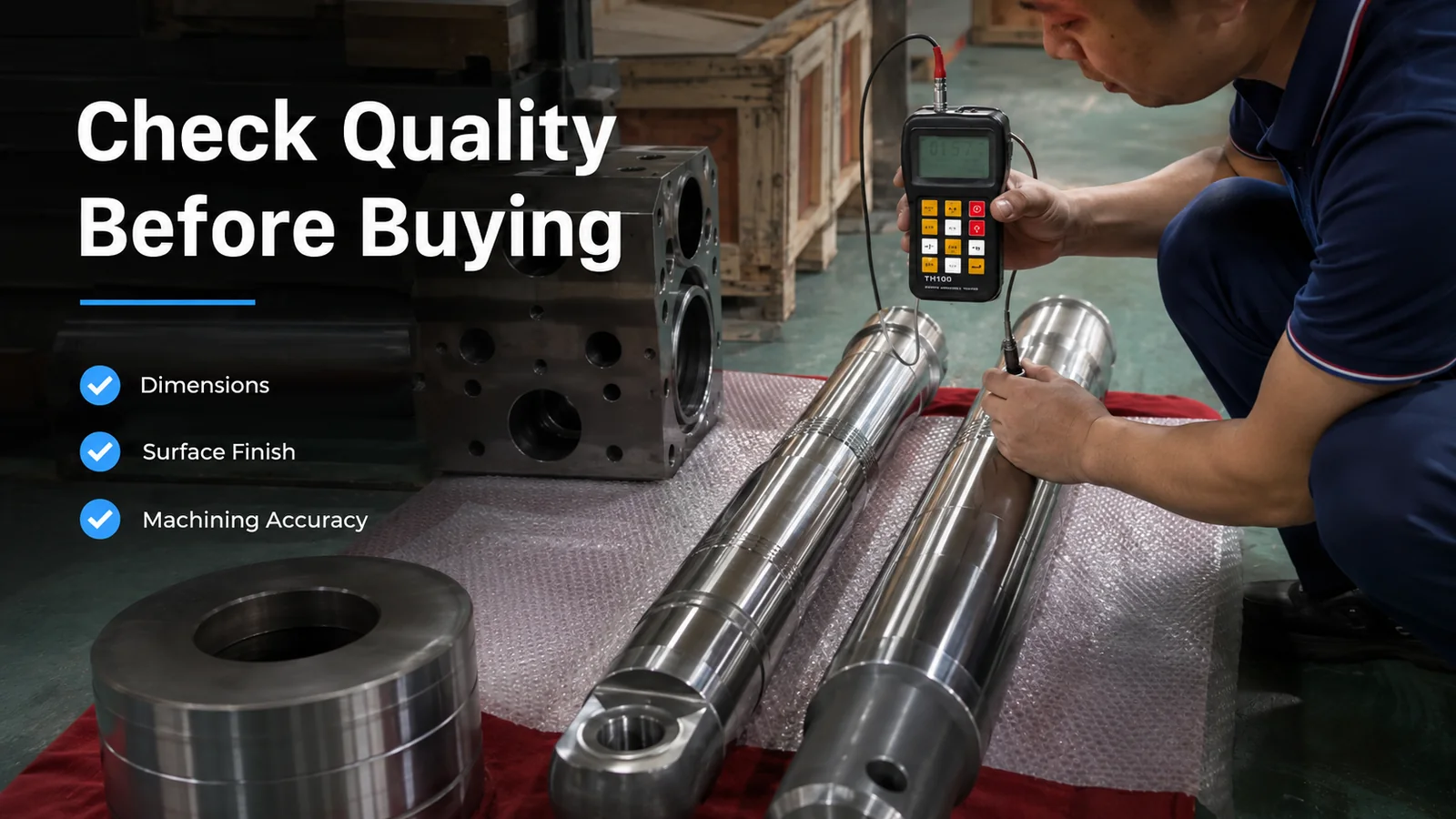
SPARE PARTS MATCHING
Send the breaker nameplate and part photos
Parts that look similar may use different dimensions, retainers or internal designs. Share the exact breaker model and clear part information before ordering.
Breaker
- Brand and model
- Serial number if available
- Nameplate photo
Part
- Part name or marking
- Dimensions if safely accessible
- Quantity required
Evidence
- Installed-part photo
- Removed-part photo
- Damage or wear photo
Hydraulic Breaker Spare-Parts Buying Checklist
- Brand
- Exact model
- Serial number if available
- Nameplate photo
- Excavator brand and model
- Operating weight
- Hydraulic configuration if relevant
- Part name and marking
- Quantity
- Safe measurements
- Multiple-angle photos
- Symptom
- Visible damage
- When it began
- Known repair history
- Destination country
- Destination port
- Preferred transport method if known
For recurring inspection and maintenance planning, review the hydraulic breaker maintenance guide. For supplier evaluation and visible inspection processes, see KRATOR quality control. These resources do not replace the model-specific service manual.
Dealer and Bulk Spare-Parts Support
Hydraulic breaker dealers, repair workshops, rental fleets, attachment distributors and maintenance contractors often need model-based parts lists, recurring wear-part orders, mixed inquiries, bulk quantity planning and shipment consolidation. The useful starting point is a structured model-by-model list rather than a mixed set of unlabelled photos.
Available spare-parts categories, supported breaker models, inventory, minimum order quantity, shipment timing, consolidation, dealer support and private-label packaging require verification before quotation. Prepare the proposed model list, part categories, quantities and destination for review.