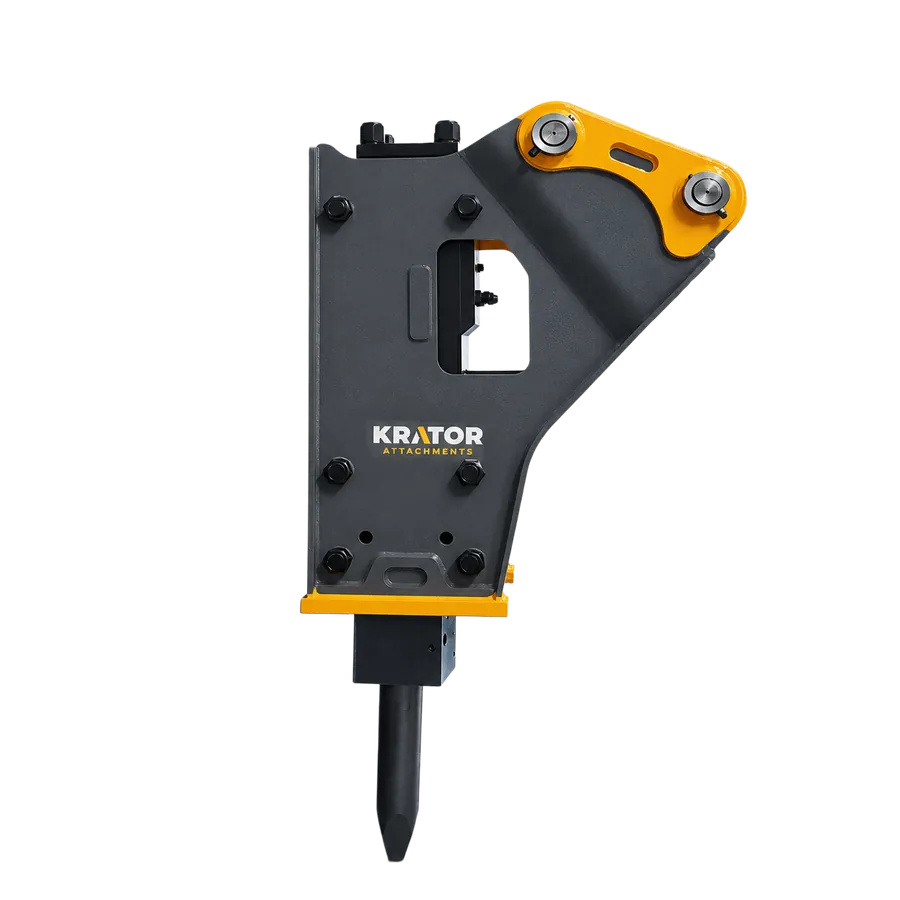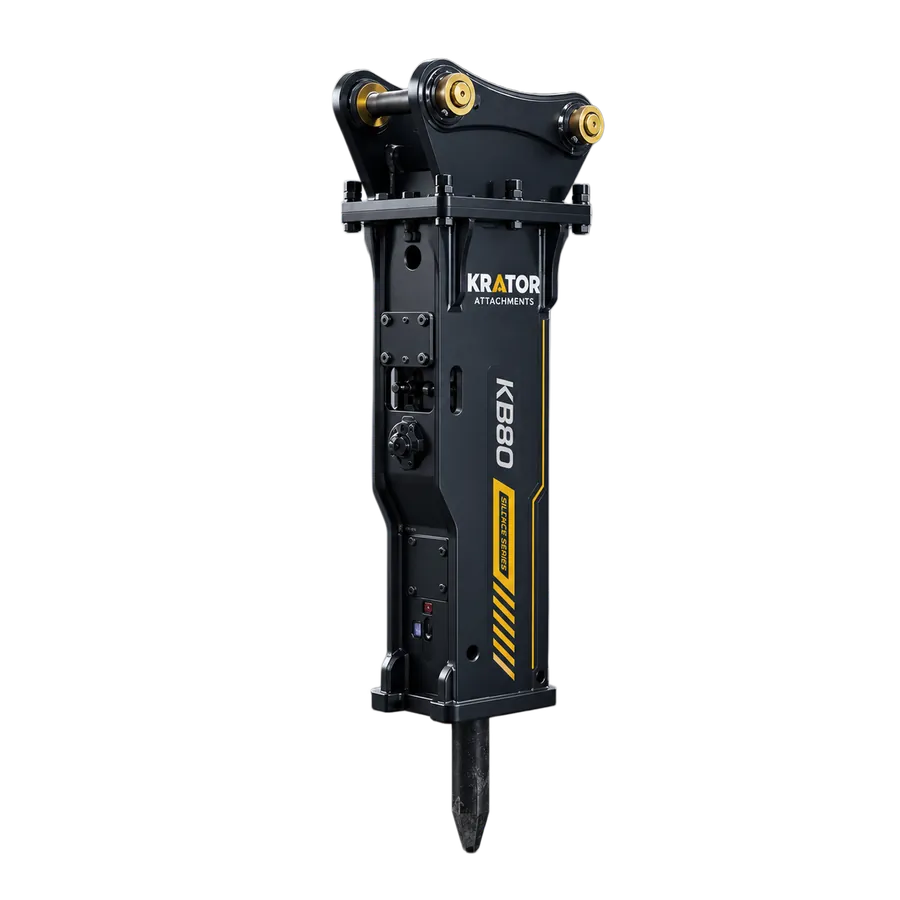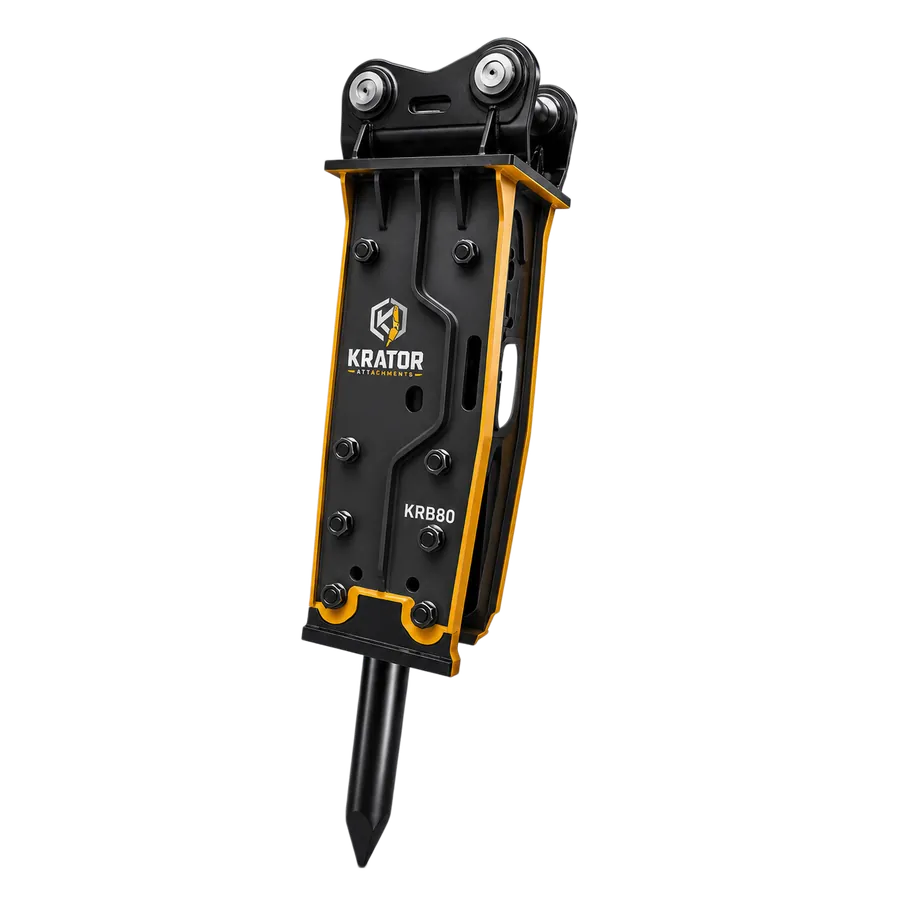

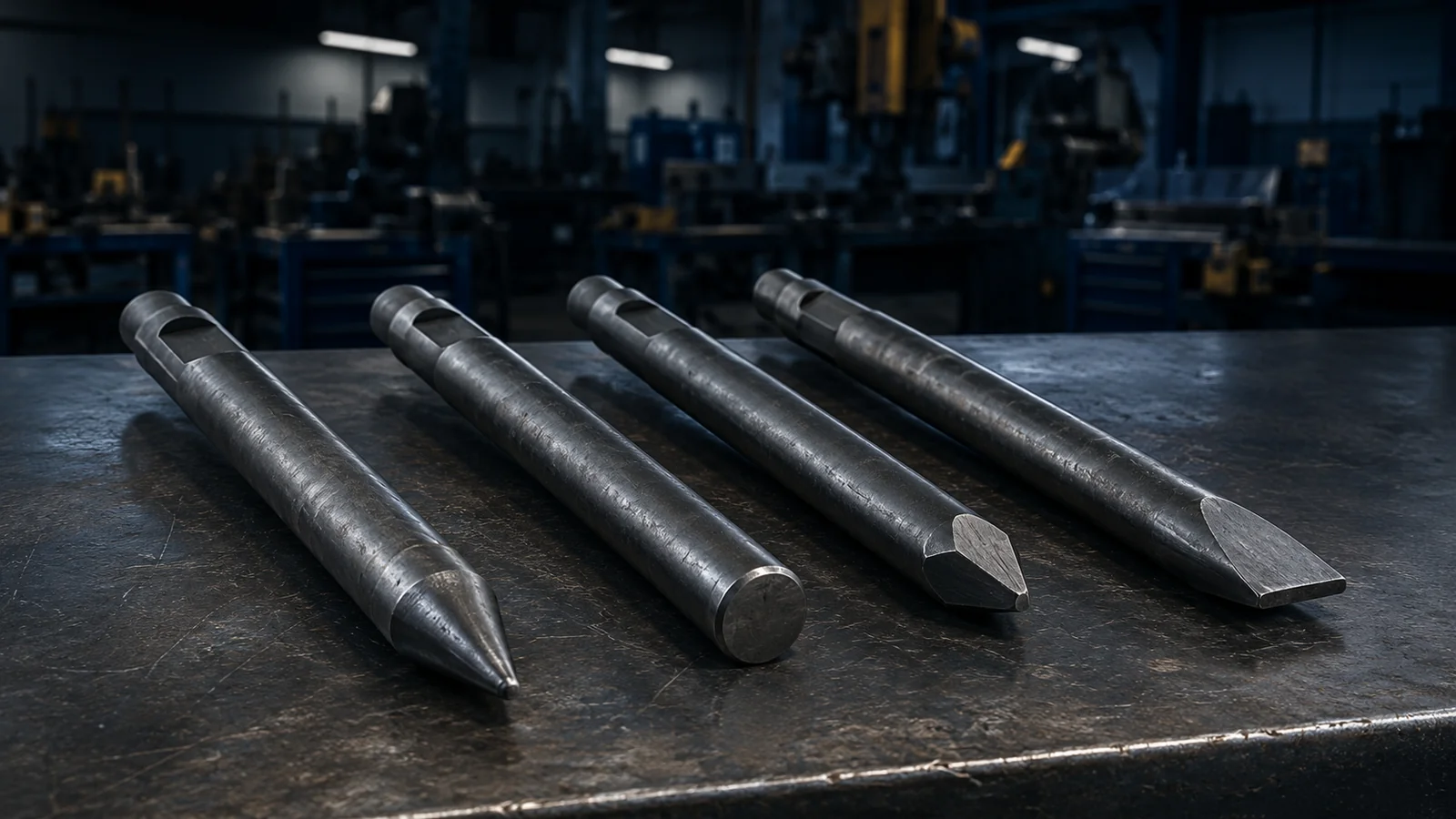
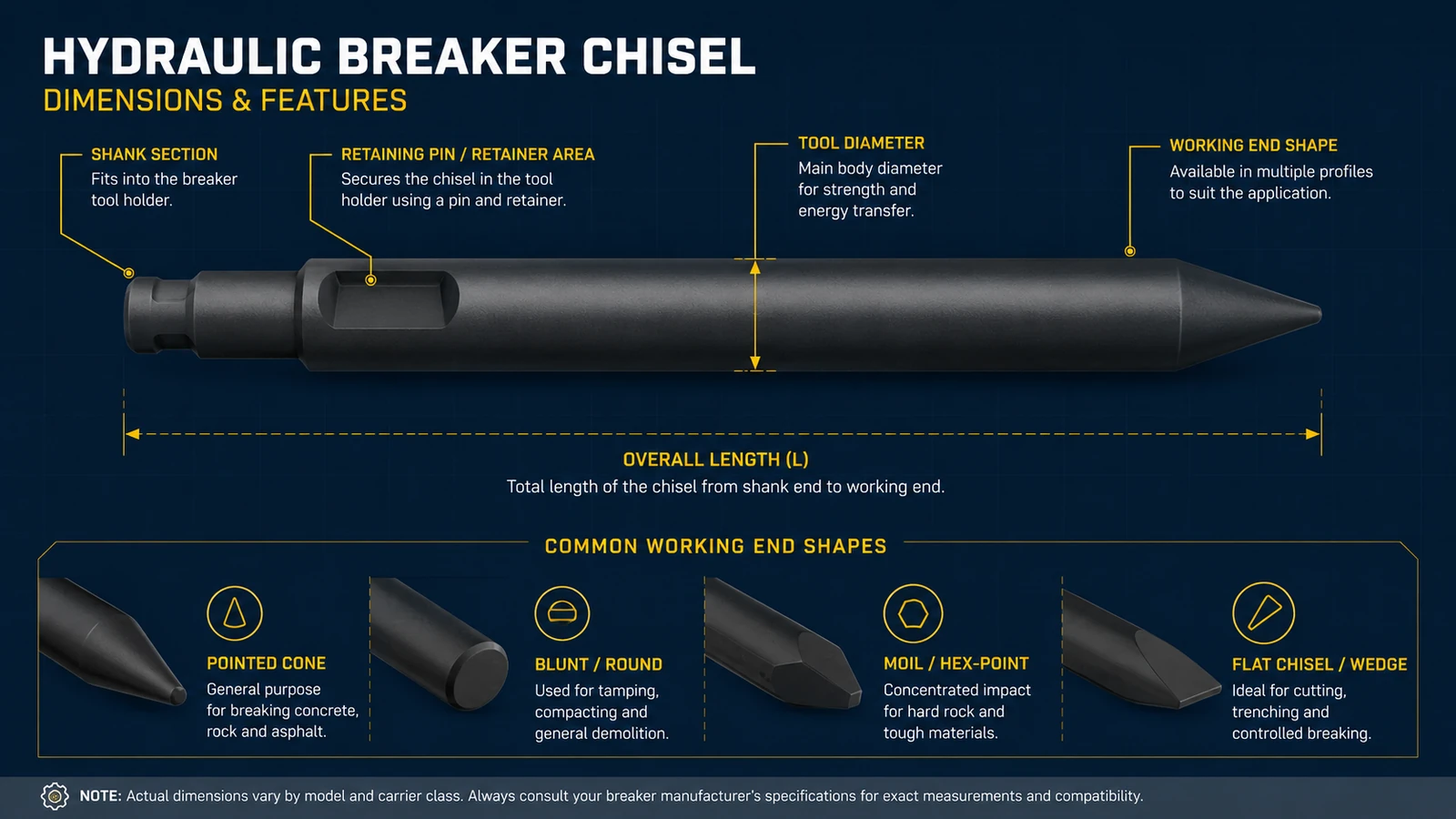
Moil points concentrate impact for penetration and general breaking, blunt tools spread impact for broader crushing, and flat chisels or wedges provide directional splitting. No shape is universally correct. Confirm the working material, job objective, exact breaker model, tool dimensions, retainer design and manufacturer-approved options before ordering or changing a tool.
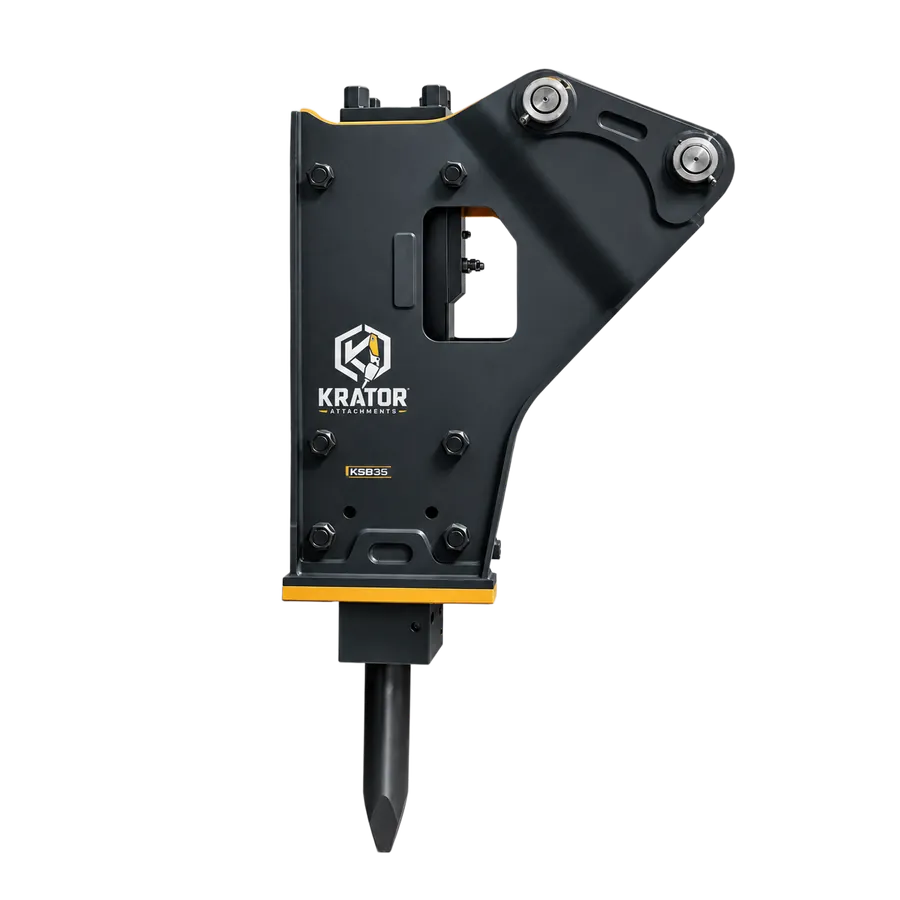
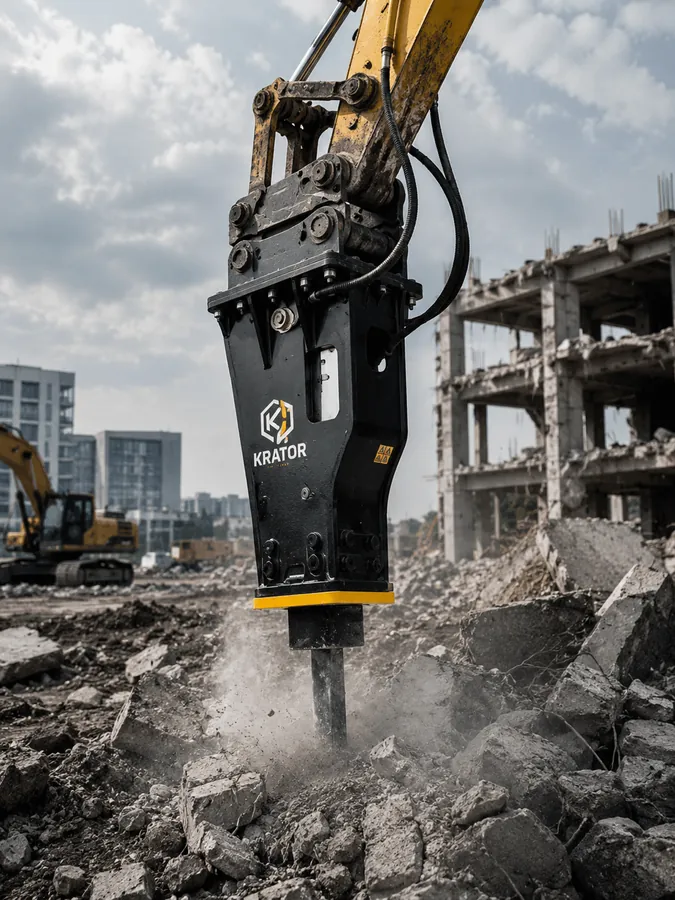
A hydraulic breaker working tool transfers repeated impact into rock, concrete, asphalt or compacted material. Its working-end geometry changes how the contact force enters that material, but the shape does not replace correct carrier matching, breaker sizing, operating position or hydraulic setup. Buyers reviewing the hydraulic breaker range should treat the tool as one part of a complete breaker-and-carrier system.
This guide separates working-tool geometry from broader breaker selection, maintenance and troubleshooting. It uses qualified application guidance because actual suitability varies with the exact breaker, material structure, job method and approved tool availability.
Why Hydraulic Breaker Tool Shape Matters
A smaller point concentrates impact into a limited contact area and can support penetration. A wider end spreads impact and may encourage broader crushing in brittle material. A flat edge introduces a directional line of contact that may help splitting or cutting through a defined path. These tendencies are useful for shortlisting, not for guaranteeing production or tool life.
Tool choice should follow the carrier and breaker decision. Use the breaker selection guide to confirm carrier weight, breaker class and working condition first. Tool availability and dimensions must then be confirmed for the exact breaker model.
Hydraulic Breaker Tool-Type Comparison
| Tool type | Typical use | Material behavior | Main advantage | Main limitation | Information to verify |
|---|---|---|---|---|---|
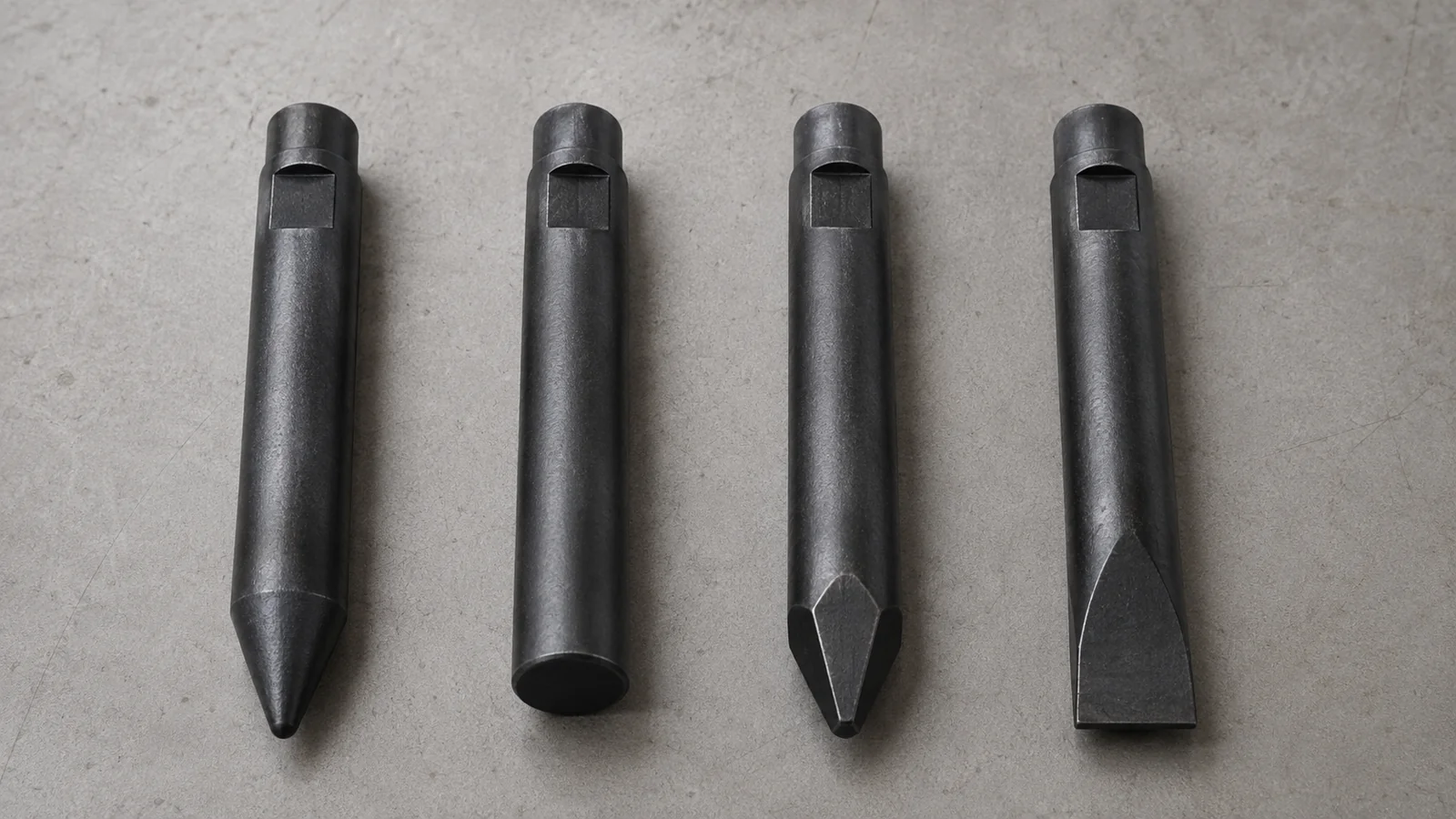
| Moil point | Penetration, general rock or concrete breaking | Concentrates impact at a small contact area | Useful starting point for penetration | May not provide the broad crushing action needed for brittle oversized material | Exact model, diameter, length, retainer design and material structure |
| Blunt tool | Secondary breaking and brittle oversized material | Distributes impact over a wider contact area | Supports broader crushing action | Not primarily intended for narrow penetration or directional cutting | Breaker class, material brittleness, supported blunt-tool dimensions |
| Flat chisel / wedge | Directional splitting, trenching, concrete or asphalt edge work where appropriate | Applies impact along a defined edge | Can encourage a controlled splitting direction | Orientation and side loading require careful control; never use it as a lever | Approved orientation, edge shape, shank dimensions and job method |
| Conical or pyramid point | Model-specific penetration or general breaking applications | Uses a shaped point that may differ from a standard moil profile | May provide a model-specific contact geometry | Naming and geometry vary; availability cannot be assumed | Verified product option, drawing, model, dimensions and intended application |
Availability and dimensions must be confirmed for the exact breaker model. Similar tool names do not prove that the shank, retainer slot or working length is interchangeable.
Common Hydraulic Breaker Chisel Types
Moil Point Tool
A moil point narrows the contact area and is commonly considered for penetration, starting a break and general-purpose work in rock or concrete. It may be useful where the operator needs to initiate cracks from a defined point. It may be unsuitable where the job depends on a wider crushing face rather than penetration.
Blunt Tool
A blunt tool spreads impact across a broader end. It is commonly used for secondary breaking of brittle oversized stone or other material that responds to crushing rather than narrow penetration. It is not primarily intended to cut a directional trench or penetrate through a small point.
Flat Chisel or Wedge Tool
A flat chisel or wedge creates a line of contact that can support directional splitting, edge work or trenching where the model and application allow it. The working edge must be oriented deliberately. Side loading, twisting and prying can load the tool and lower-body components in ways they were not intended to carry. Never use the breaker tool as a lever.
Conical or Pyramid Point
Some suppliers distinguish conical or pyramid profiles from a generic moil point. Because terminology and dimensions vary, treat this as a model-specific option rather than a universal category. KRATOR availability requires confirmation from the exact breaker model and an approved tool drawing.
Material and Application Matching Matrix
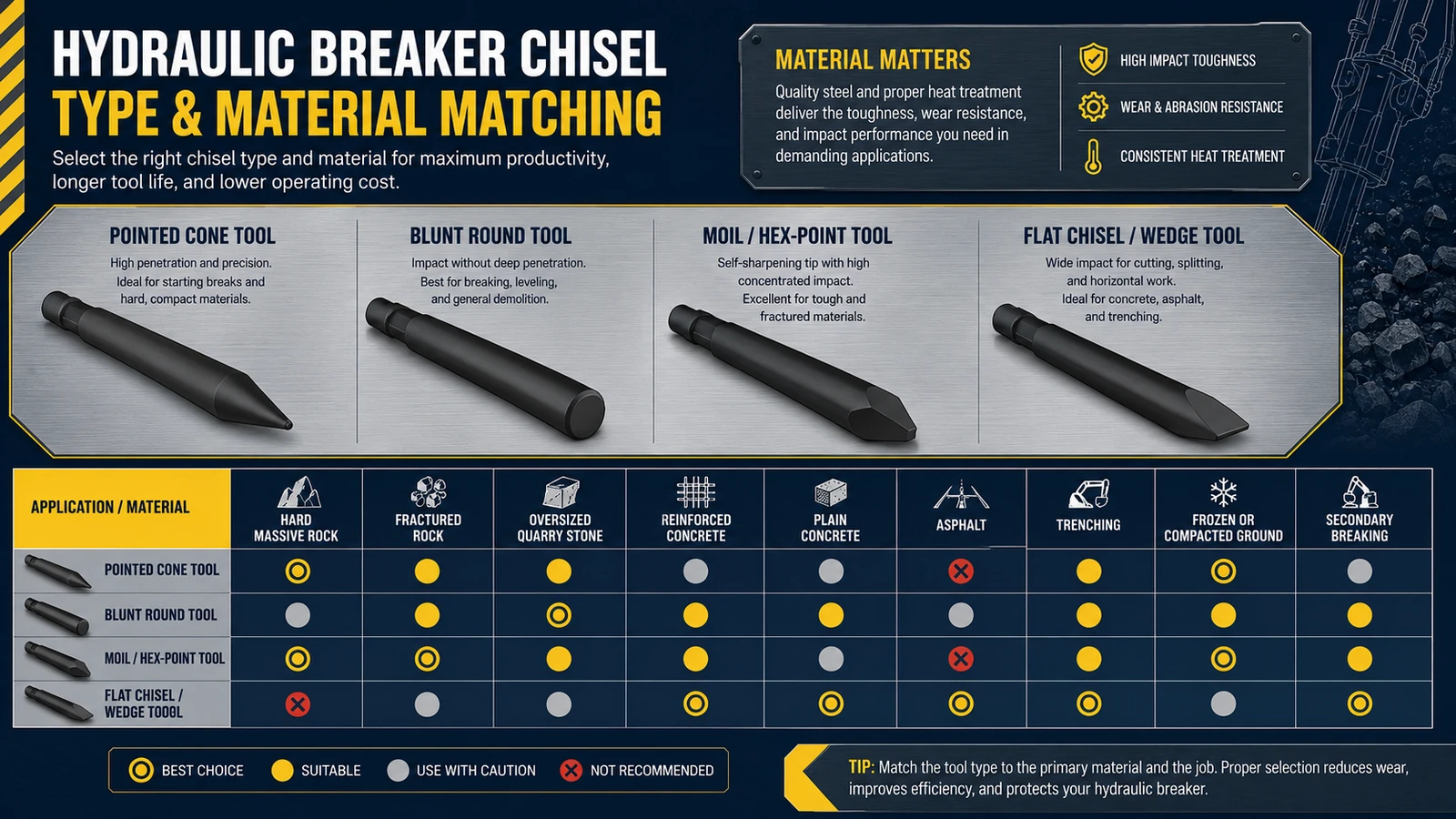
The matrix identifies shapes that are often considered, not guaranteed selections. Material fracture pattern, reinforcement, working access, breaker class and approved tool options can change the recommendation.
| Material / application | Often considered | Reason | Operating caution | Model confirmation |
|---|---|---|---|---|
| Hard, massive rock | Moil point or approved pointed profile | Concentrated contact may help initiate penetration and cracks | Do not pry; reposition when the material does not open | Required for tool option, breaker class and dimensions |
| Fractured rock | Moil point, blunt or flat chisel depending on fragment structure | The job may need penetration, broader crushing or directional splitting | Keep the tool square and avoid working between unstable pieces | Required |
| Oversized quarry stone | Blunt tool or moil point depending on brittleness and crack pattern | Blunt contact may suit brittle secondary breaking; a point may start a crack | Do not assume the same tool suits every stone type | Required |
| Reinforced concrete | Moil point or flat chisel may be suitable | A point can initiate breaking; a flat edge may support directional concrete splitting | The breaker tool is not a rebar cutter; isolate reinforcement with an approved method | Required |
| Plain concrete | Moil point, blunt or flat chisel depending on slab and break objective | Different shapes support penetration, crushing or directional splitting | Avoid blank firing after the section breaks free | Required |
| Asphalt | Flat chisel or wedge may be suitable | A defined edge can support cutting or lifting a break line | Do not lever under the mat; confirm the approved working angle | Required |
| Trenching | Flat chisel, wedge or point depending on ground and trench direction | A flat edge may guide splitting while a point may penetrate compacted zones | Control orientation and side load; check buried-service procedures | Required |
| Frozen or compacted ground | Moil point or approved wedge may be suitable | Concentrated or directional contact may help open the material | Ground conditions vary and may conceal obstructions | Required |
| Secondary breaking | Blunt tool or moil point depending on material brittleness | Broader crushing or point-initiated cracking may be needed | Support the material safely and avoid unstable fragments | Required |
Tool Selection by Material and Job Type
Hard Rock and Quarry Applications
Massive rock often encourages buyers to choose the sharpest point available, but rock structure matters as much as apparent hardness. A moil point is commonly considered for initiating penetration, while a blunt tool may suit brittle oversized material during secondary breaking. Confirm the breaker class, supported tool and quarry working method instead of promising one shape for all rock.
Reinforced Concrete and Demolition
For reinforced concrete, a moil point may start a break and a flat chisel may help direct concrete splitting. Neither shape should be presented as a rebar-cutting tool. Plan how exposed reinforcement will be managed with the appropriate approved attachment and site procedure. Housing choice remains a separate decision covered by the side, box and top type breaker comparison.
Trenching and Directional Breaking
A flat chisel or wedge may be suitable when a defined splitting direction is useful. Keep the edge aligned with the intended break and reposition the carrier rather than twisting the tool. A moil point may be considered where penetration through compacted or frozen material is the first objective.
Secondary Breaking and Oversized Material
A blunt tool is often considered for brittle oversized pieces because it spreads impact over a wider face. A moil point may still be useful where an existing crack or dense section needs a concentrated starting point. The operator should keep the material stable, maintain square contact and stop before the tool begins blank firing.
Common Tool-Selection Mistakes
- Ordering from a tool photo or diameter alone without the breaker nameplate and retainer details
- Assuming every breaker model accepts moil, blunt and flat chisel options
- Choosing a pointed tool for every hard material without considering fracture structure
- Using a flat chisel as a lever or twisting it to force a directional break
- Changing hydraulic settings because a different tool shape was installed
- Continuing after visible mushrooming, cracking, abnormal movement or uneven wear appears
- Heating, welding, grinding or striking a tool as an improvised repair
Signs the Selected Tool May Not Suit the Application
Repeated difficulty starting a break, excessive repositioning, frequent slipping, strong side movement, rapid uneven visible wear or repeated blank firing can indicate that the tool, material, operating method or breaker match needs review. These observations do not prove that tool shape is the only cause.
If impact becomes weak, the tool sticks, the breaker leaks or hose behavior changes, stop treating the issue as a shape-selection question and follow the hydraulic breaker troubleshooting guide. Hydraulic testing, setting changes and internal diagnosis require verified procedures and qualified personnel.
External Tool-Wear Inspection
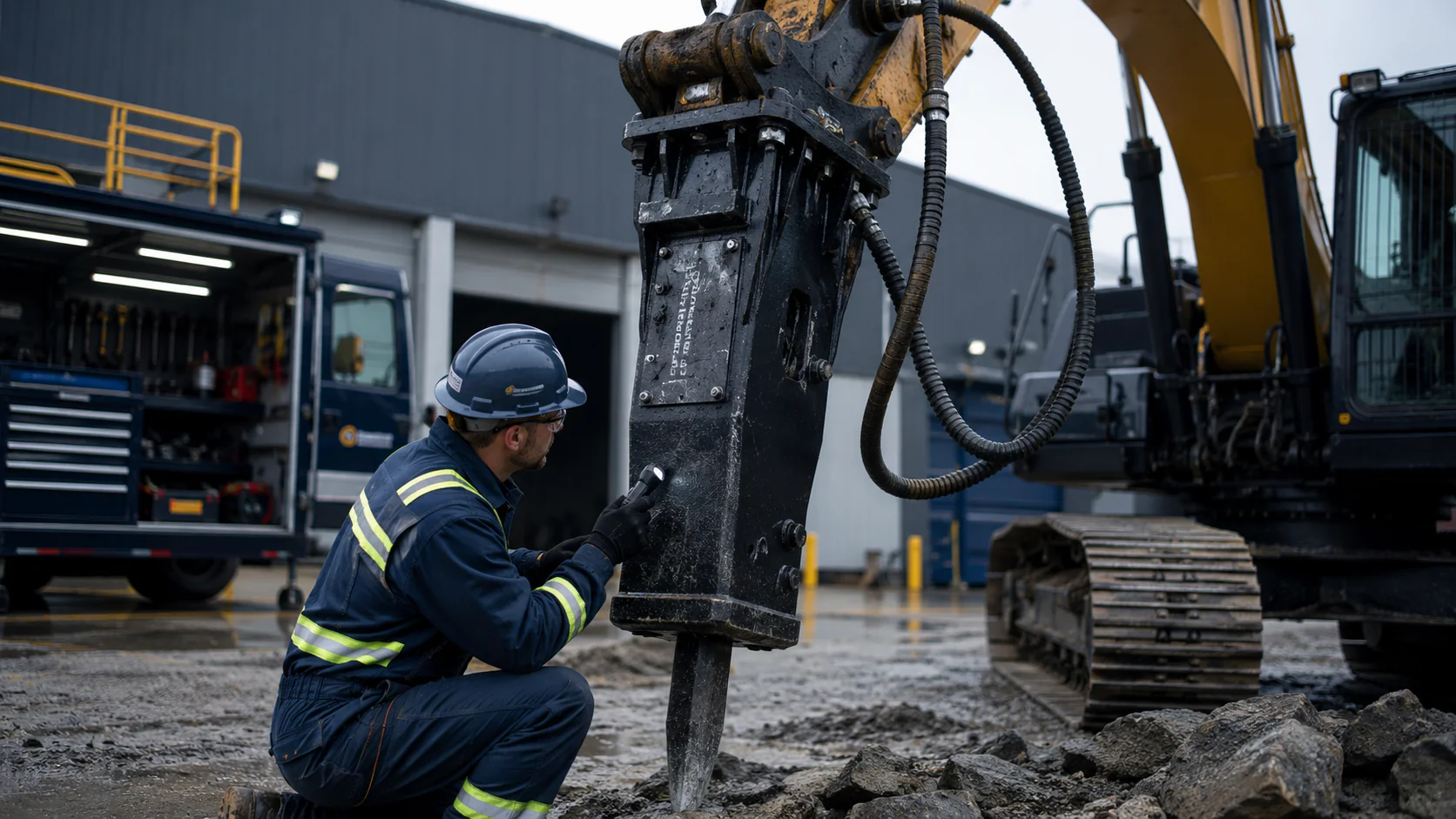
After the machine and breaker are safely lowered, shut down, isolated and depressurized according to the correct manuals, an operator can record the exposed tool surface, working-end profile, visible cracking, mushrooming, scoring, discoloration and unusual side movement. Do not remove the retainer or tool unless the person is qualified and follows the exact breaker procedure.
Uneven visible wear can be associated with side loading, alignment, material contact, lubrication, bushing condition or retainer issues. Use the breaker maintenance guide for routine external checks, but use only model-specific instructions for clearance, wear limits, retaining-pin removal and bushing inspection.
Information Required When Ordering a Replacement Chisel
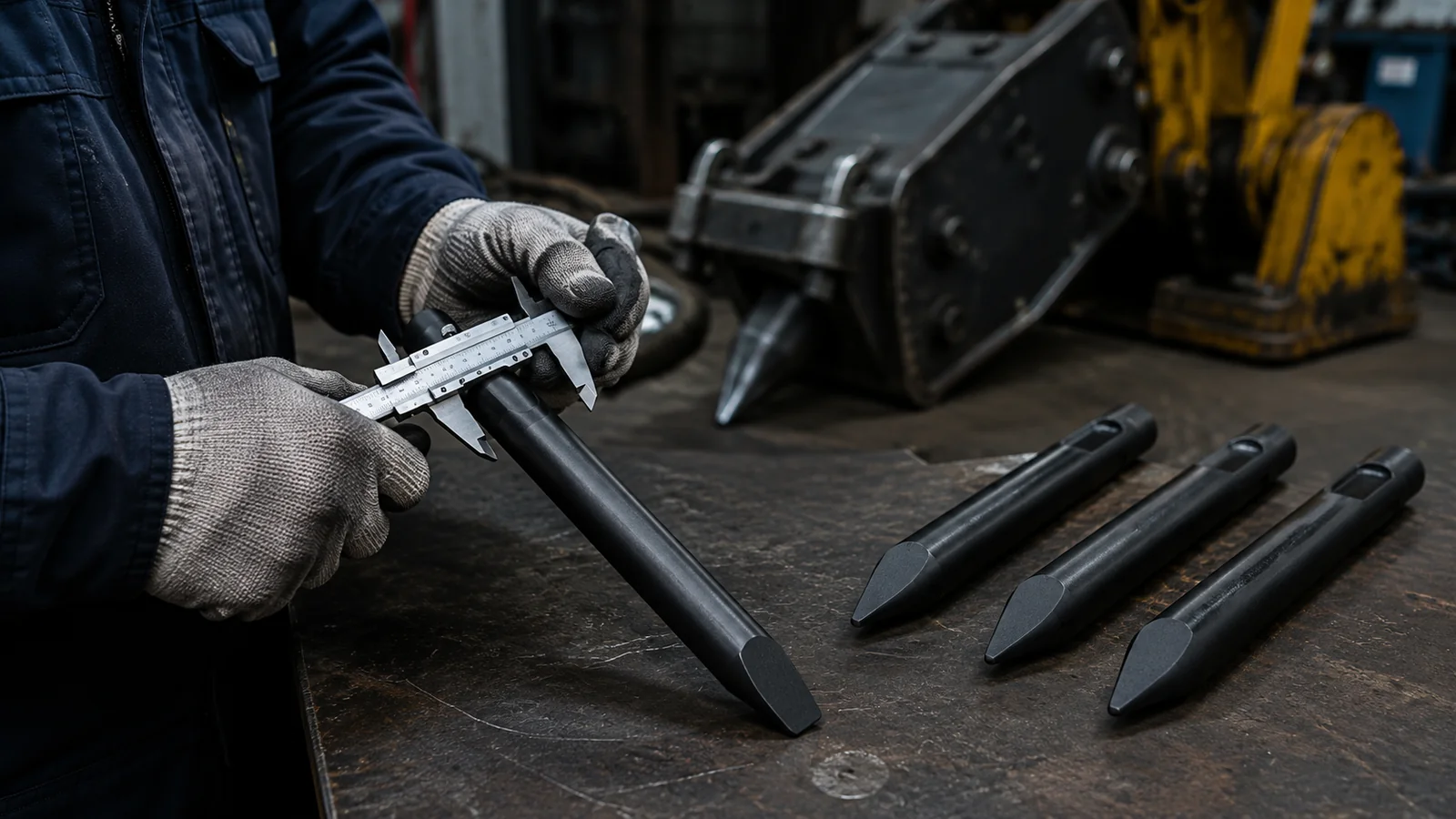
A replacement inquiry should identify the breaker before it identifies the tool. Send the breaker brand and exact model, a clear nameplate photo, full-length and close photos of the existing tool, the working material, job type and destination country. When requested, provide measurements taken by the approved method for that model.
| Data group | Information to prepare | Why it matters |
|---|---|---|
| Breaker identity | Brand, exact model, serial or nameplate details where available | Establishes the correct tool family and retainer arrangement |
| Existing tool | Full tool photos, working-end shape, shank profile and visible markings | Helps distinguish geometry and possible variants |
| Measurements | Diameter, overall length, retainer-slot position/shape and other dimensions requested for that model | Confirms fit beyond appearance |
| Application | Rock, concrete, asphalt, trenching or secondary-breaking details plus photos | Supports a qualified tool-shape shortlist |
| Condition | Wear, fracture, mushrooming, uneven marks and bushing/retainer observations from qualified inspection | Identifies whether another component also needs review |
| Order | Quantity, destination country and required documentation | Supports the spare-parts inquiry and packing review |
KRATOR can review the evidence through its inspection and quality-control process, but compatibility should not be promised until the exact breaker identity, dimensions and available tool option are checked. Tool shape does not change the need to verify the carrier's hydraulic flow, operating pressure and return conditions against the breaker requirements.
TOOL MATCHING SUPPORT
Send the breaker model and working material
Tool dimensions, retainer design and available shapes depend on the exact breaker model. Share the breaker nameplate, current tool and application before ordering a replacement.
Breaker
- Brand and model
- Nameplate photo
- Existing tool dimensions
Application
- Material being broken
- Job type
- Typical working condition
Evidence
- Current tool photos
- Wear or damage photos
- Destination country