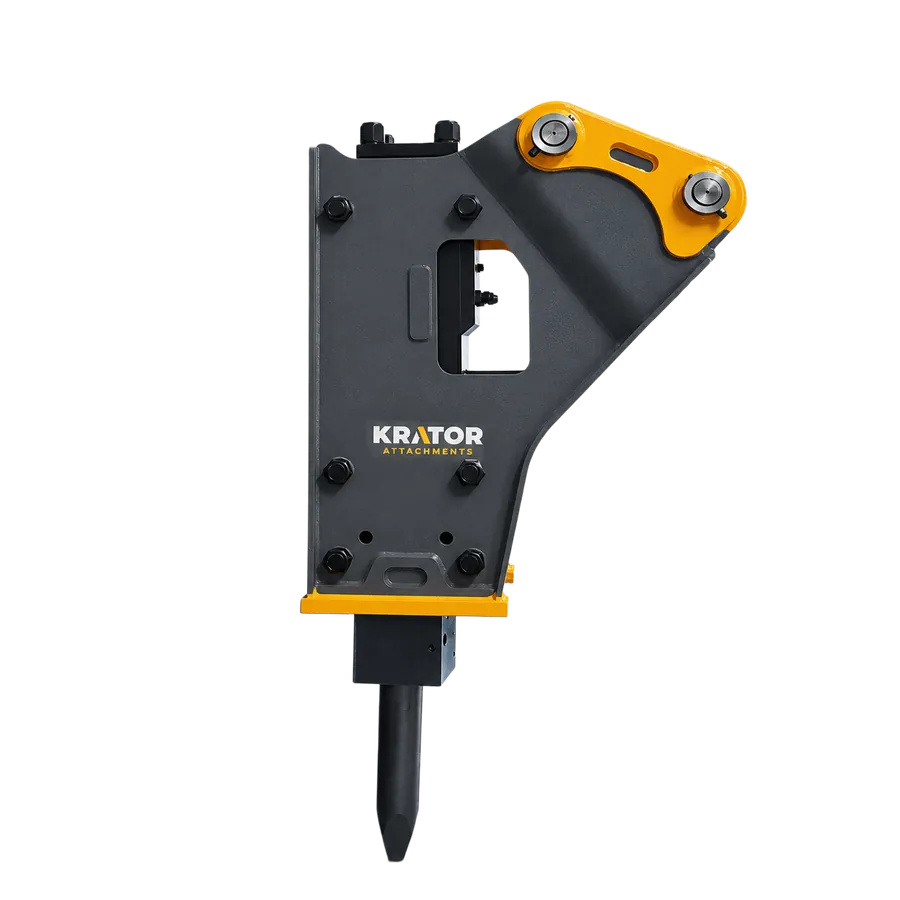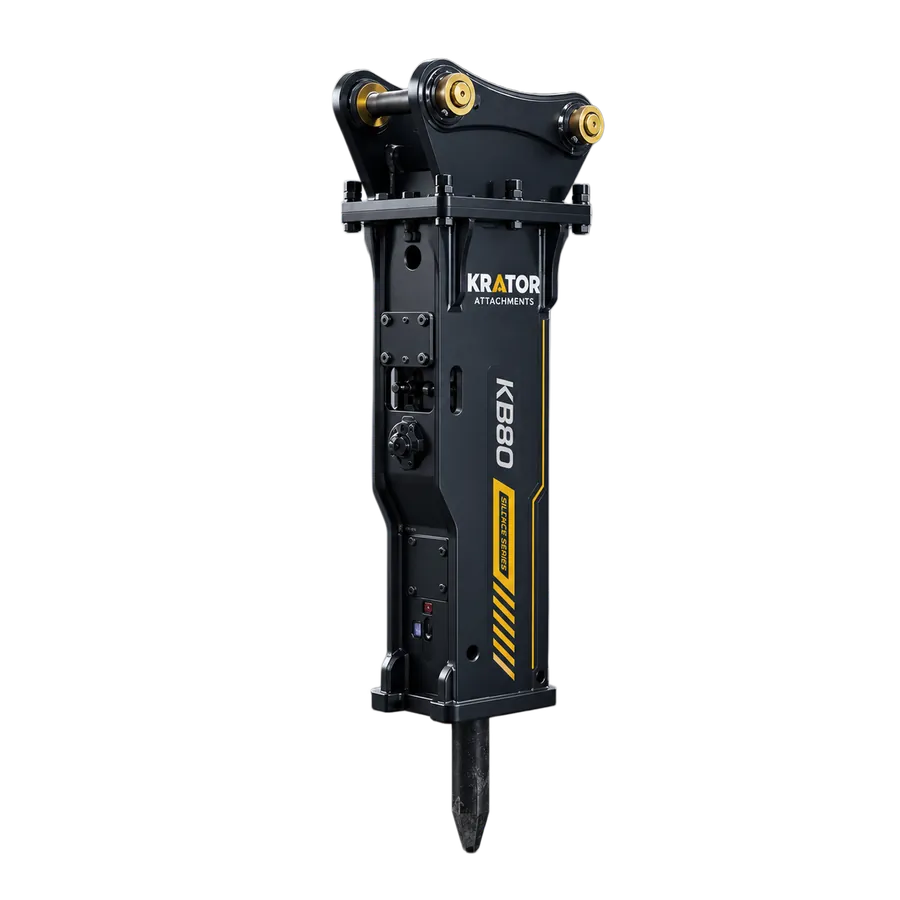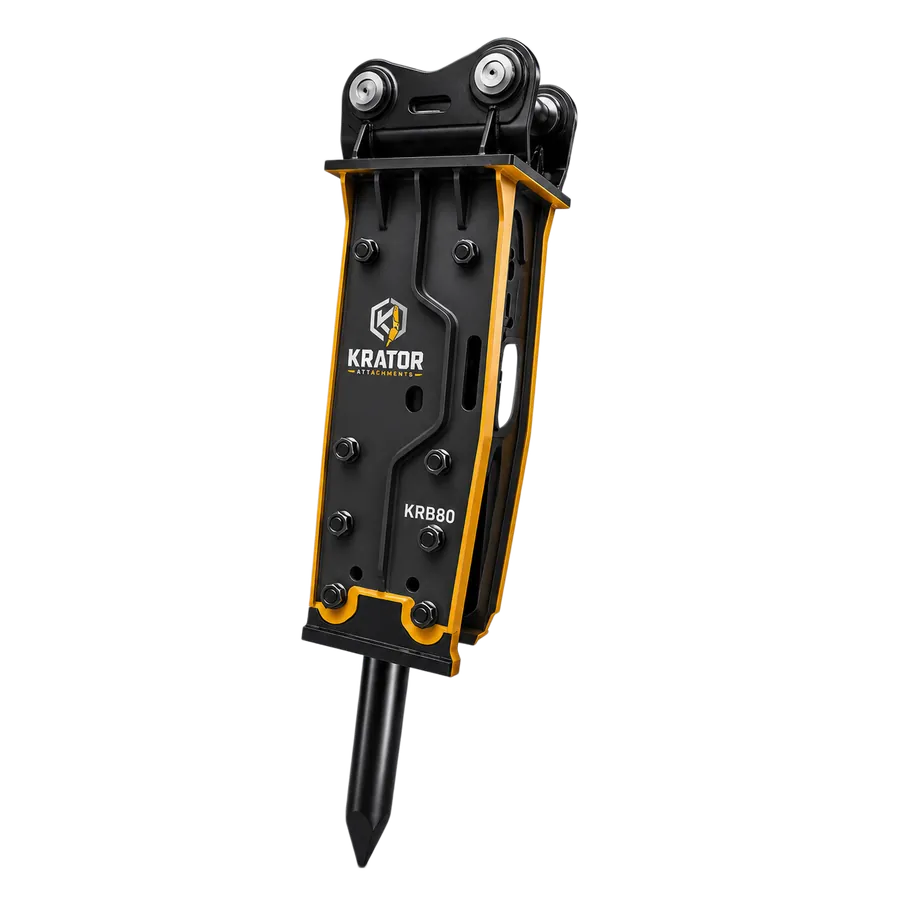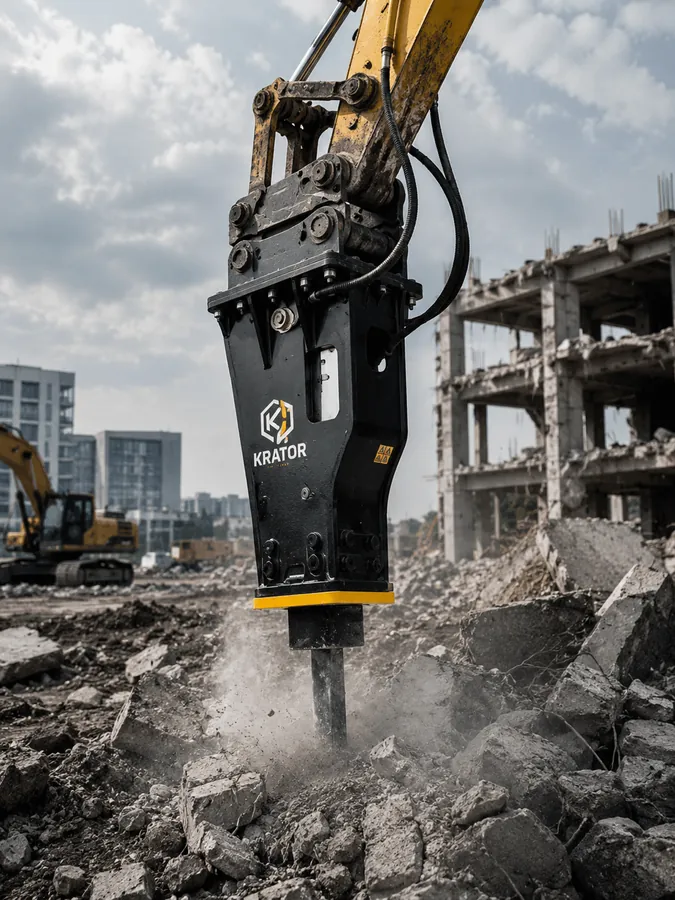

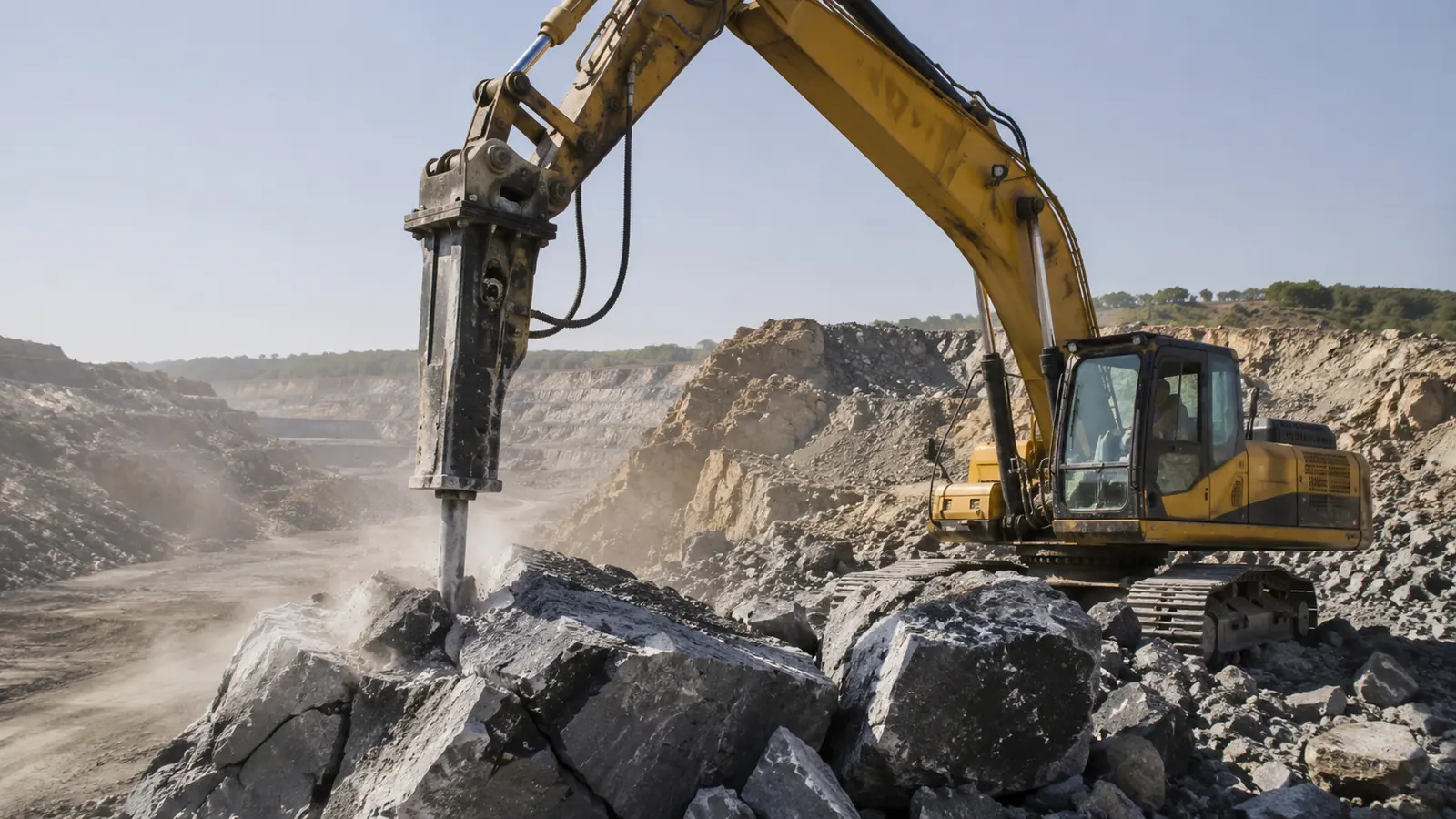
A hydraulic breaker may be suitable for quarry or mining tasks such as oversized rock reduction, secondary breaking, localized excavation and bench cleanup, but suitability cannot be decided from rock hardness or breaker size alone. Confirm the excavator, carrier operating weight, hydraulic flow, operating pressure, return-line condition, breaker operating weight, rock structure, working tool, position, duty cycle, ambient temperature, dust and mounting arrangement for the exact model.
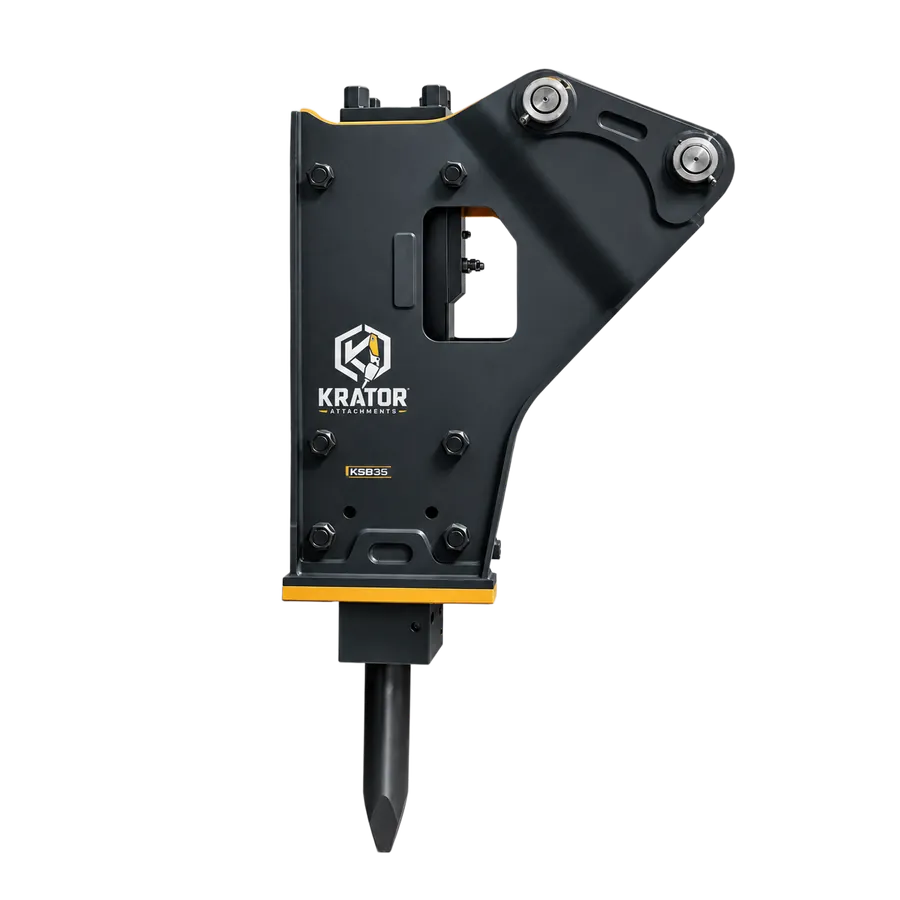
Quarry operators, mining contractors, dealers and fleet buyers often use an excavator rock breaker where controlled, movable impact is useful. The application can be demanding: rock response varies, dust affects exposed components, heat can build during long work periods, and carrier stability matters near uneven ground. This guide focuses on those operating conditions. For general model selection, use the hydraulic breaker selection guide; for available configurations, review the KRATOR hydraulic breaker range.
Where Hydraulic Breakers Fit in Quarry and Mining Work
Hydraulic breakers are commonly considered for reducing pieces that are too large for safe handling or crusher-feed preparation, breaking localized rock around a working area, cleaning retained rock from a bench and completing controlled reduction where a movable excavator attachment is appropriate. They may also assist with concrete foundation removal inside a quarry or mine site when the structure, reinforcement and surrounding services have been reviewed.
A breaker does not make an unsafe face, unstable bench or unsupported block safe. Site controls, exclusion zones, ground assessment and machine positioning remain the responsibility of qualified site personnel. Never work below unsupported faces or where falling material can strike the carrier.
Primary Breaking Versus Secondary Breaking
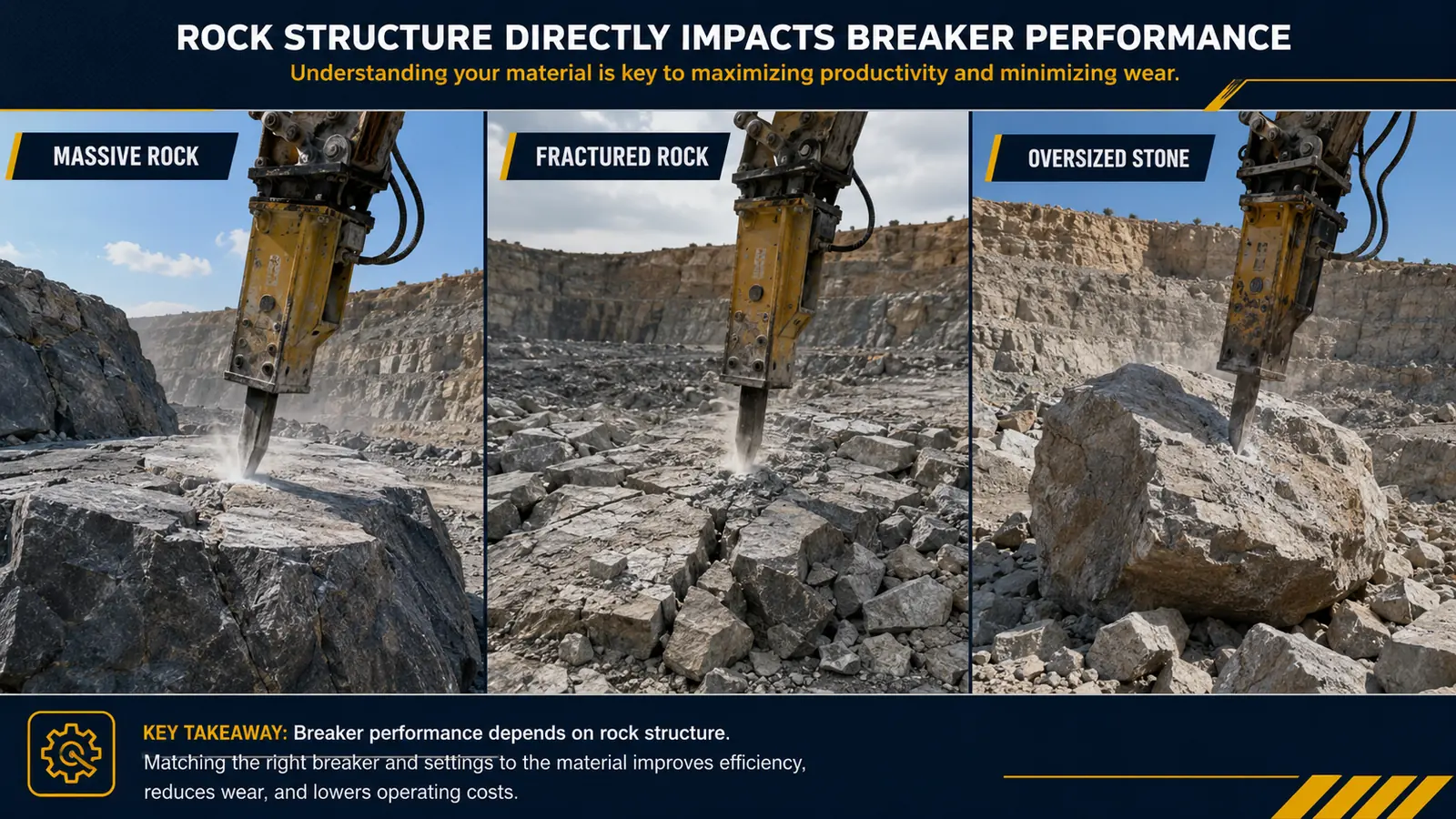
Primary breaking changes rock that remains part of the ground or rock mass. A breaker may be considered for localized excavation, scaling or controlled work where access and rock structure permit, but it is not a universal substitute for drilling, blasting, ripping, cutting or other engineered methods. Massive unfractured rock may respond differently from visibly similar fractured material.
Secondary breaking reduces material already separated from the face. It commonly includes oversized boulders, crusher-feed preparation and breaking pieces to a size that can be handled safely by downstream equipment. Even here, the final breaker and tool depend on block support, crack pattern, brittleness, carrier reach and hydraulic confirmation.
Common Quarry and Mining Applications
| Application | Material condition | Common objective | Tool-shape consideration | Matching information required | Main operating caution |
|---|---|---|---|---|---|
| Oversized quarry stone | Separated block; structure and brittleness vary | Reduce to a safely handled or prepared size | Blunt or moil may be considered, depending on crack behavior | Carrier, hydraulics, dimensions if safely available, rock photos | Stabilize the work area; avoid unsupported or moving blocks |
| Secondary breaking | Loose stone after primary extraction | Reduce oversize for handling or feed preparation | Commonly blunt for brittle material; point for crack initiation | Typical block condition, objective, breaker model and tool options | Stop after the piece breaks to avoid blank firing |
| Fractured rock | Existing joints, seams or multiple fragments | Open or reduce along natural weakness | Moil, blunt or flat chisel may be suitable | Fracture pattern, working position, carrier and hydraulic data | Do not work between unstable fragments or beneath loose faces |
| Hard massive rock | Limited visible fracturing; response is uncertain | Initiate controlled local breaking | Pointed profiles may be considered for penetration | Geological/site assessment, breaker model, tool availability | Do not promise universal suitability or continue one-point impact without progress |
| Bench cleanup | Retained or loose rock around an engineered working bench | Remove manageable localized material | Depends on material and access | Bench geometry, reach, position, site controls, rock condition | Never work near unsupported faces or unstable bench edges |
| Crusher feed preparation | Separated feed with variable size and shape | Prepare oversize before controlled handling | Blunt or point depends on brittleness and cracks | Feed condition, safe target size, equipment interface, hydraulics | Isolate from active crusher and material movement under site procedure |
| Controlled rock reduction | Localized rock where adjacent structures or services matter | Reduce selected areas with deliberate positioning | Flat chisel may assist directional splitting when correctly oriented | Site constraints, rock structure, tool orientation, carrier reach | Use engineered controls; never lever or pry with the tool |
| Concrete foundation removal on site | Plain or reinforced concrete within quarry/mine facilities | Remove obsolete localized structures | Moil or flat chisel may be considered; breaker tool does not cut rebar | Concrete/reinforcement, buried services, access, carrier data | Confirm isolation, structural stability and approved reinforcement handling |
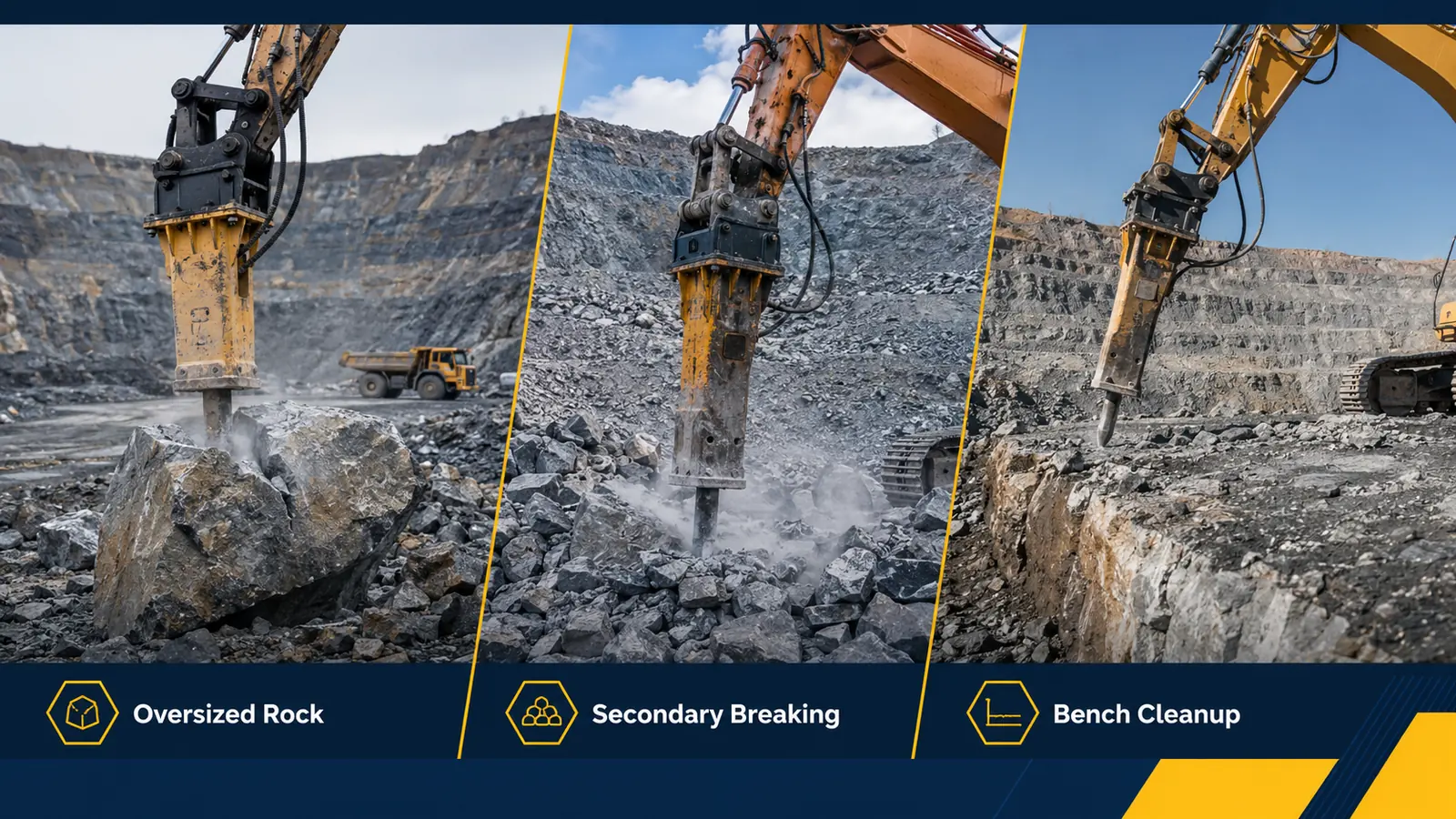
Oversized Rock and Boulder Reduction
For an oversized block, first observe whether it is brittle, laminated, weathered, jointed or dense with few visible cracks. A blunt tool is commonly considered when a broad impact can crush brittle material. A moil point may be considered to start penetration or work from an existing weakness. Block dimensions can help matching only when they can be recorded safely; they are not a substitute for material and carrier data.
Bench Cleanup and Controlled Breaking
Bench cleanup should be limited to conditions assessed and controlled by the site. Position the carrier on stable ground, preserve safe reach and visibility, and keep the machine away from unsupported edges and falling-rock paths. Controlled breaking near infrastructure may require a site-specific method, exclusion zone, monitoring and alternative equipment. Breaker selection alone cannot control every ground or vibration risk.
Hard Rock and Fractured Rock Considerations
“Hard rock” is not a complete selection description. Mineral composition, abrasiveness, bedding, joints, weathering, moisture and confinement influence how impact propagates. Massive rock may resist a tool that works quickly in fractured stone, while a heavily jointed mass can release pieces unpredictably. Send close and wide site photos plus a description of how the material fractures; do not infer an exact hardness limit from appearance.
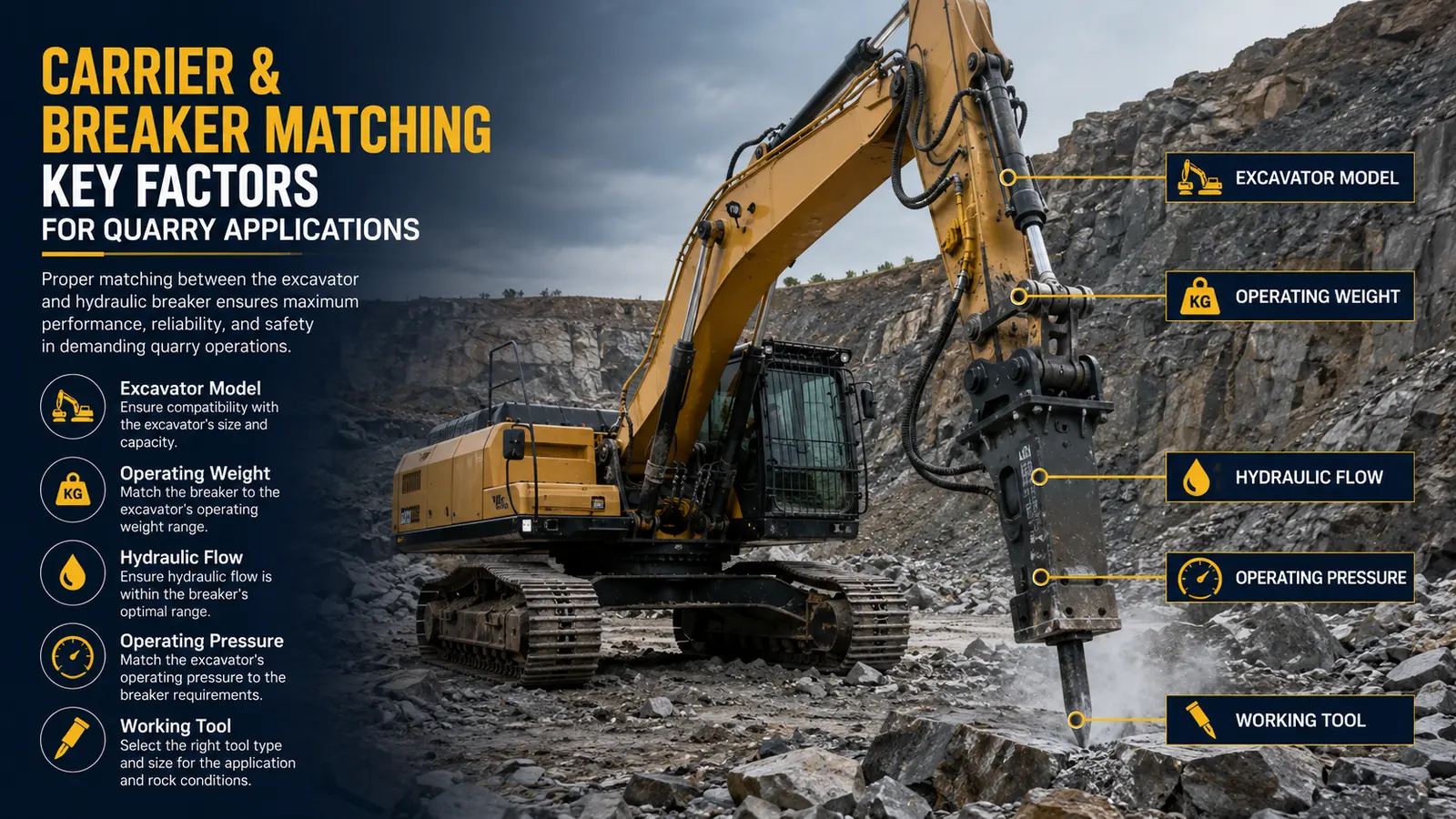
Carrier and Breaker Matching Factors
Selection should review the complete machine-and-attachment system. The checklist below supports inquiry qualification; it does not confirm a model before manufacturer data and the exact installation are checked.
Excavator brand, model and operating weight.
Verified flow, operating pressure and return-line condition.
Operating weight, approved carrier range and exact model data.
Structure, fracture behavior, abrasiveness and block condition.
Working position, objective and expected duty cycle.
Ambient temperature, dust, access and mounting arrangement.
- Excavator brand and model
- Carrier operating weight
- Hydraulic flow and operating pressure
- Return-line condition and any verified back-pressure requirement
- Breaker operating weight and exact model
- Rock condition and required objective
- Required working-tool type
- Typical working position and expected duty cycle
- Ambient temperature and dust conditions
- Existing quick coupler or mounting bracket
Use the dedicated guide to understand hydraulic flow, pressure and return-line matching. Do not apply a value from another breaker model or change machine settings without the exact manufacturer procedure.
Hydraulic Flow, Pressure and Return-Line Conditions
Flow influences impact frequency and oil movement through the circuit; pressure must remain within the exact breaker’s requirements; the return path must not create an unsuitable restriction. Hose size, routing, couplers, valves, oil condition and cooling capacity can also affect heat and performance. Verify readings with an approved method and qualified personnel. Never loosen a pressurized connection or search for a leak by hand.
Working-Tool Selection for Quarry Materials
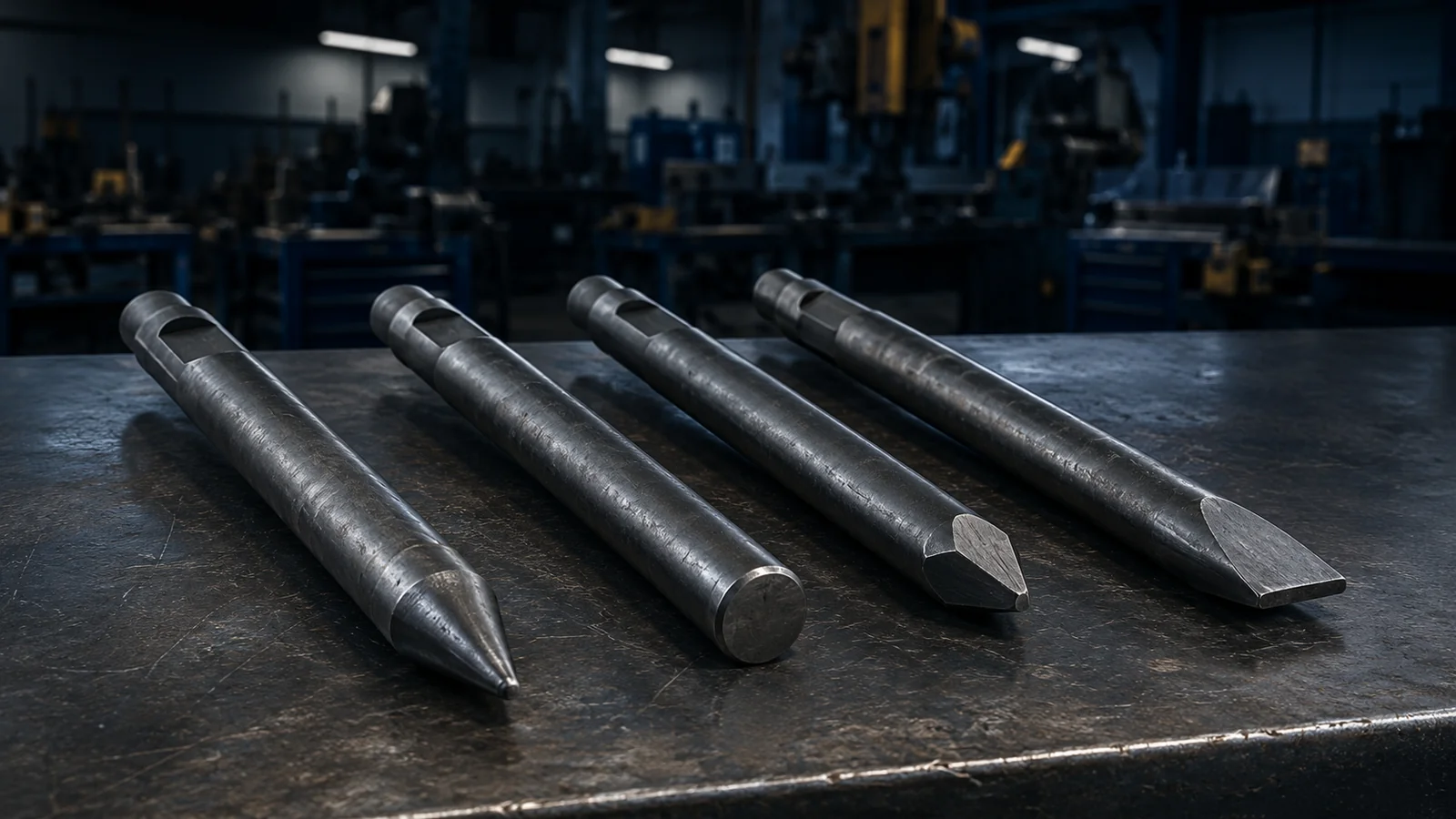
Tool shape changes how impact enters the material, but it does not replace correct breaker or carrier matching. A moil point may be considered for penetration and general breaking. A blunt tool is commonly considered for oversized brittle material and secondary breaking. A flat chisel may assist directional splitting where correctly oriented. Availability depends on the exact breaker model, and the breaker tool must never be used as a lever.
For detailed material behavior, limitations and replacement data, see the working-tool and chisel matching guide.
Moil Point Considerations
Concentrated contact may help initiate penetration or a crack. Reposition if the material does not open; prolonged impact in one location does not guarantee progress and can add heat.
Blunt Tool Considerations
The broader end may suit brittle blocks that respond to crushing rather than penetration. It is not automatically correct for every oversized rock or every breaker model.
Flat Chisel Considerations
A flat edge may support directional splitting when its orientation is controlled. Avoid side loading, twisting and prying. If carrier repositioning is needed, stop impact and move the machine rather than levering the tool.
Heat, Dust and Long-Duty-Cycle Risks
Quarry duty can involve repeated impact, high ambient temperature, airborne dust and limited cooling pauses. Monitor the carrier’s hydraulic oil temperature and warning indicators, follow the machine and breaker manuals, and use a work/rest pattern approved for the exact equipment and site. Dust can obscure leaks and accelerate contamination around exposed interfaces, so cleaning and inspection methods should be defined without directing contaminants into seals or hydraulic connections.
Stop when leakage, abnormal vibration, unstable impact, sudden hose movement, warning alarms or rising temperature indicate an unsafe or abnormal condition. Lower and isolate the attachment under the correct procedure before inspection.
Lubrication and Tool-Bushing Inspection
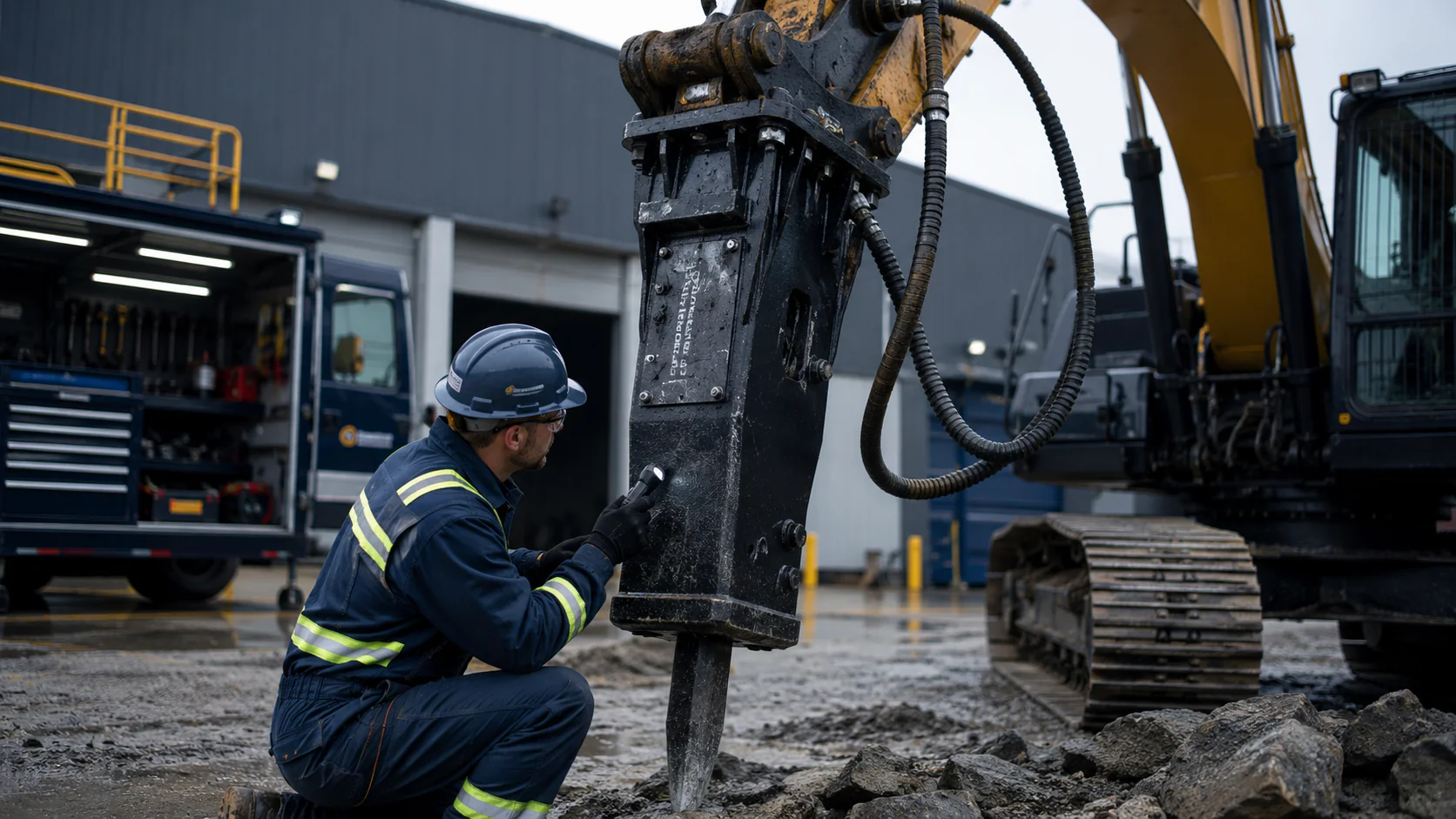
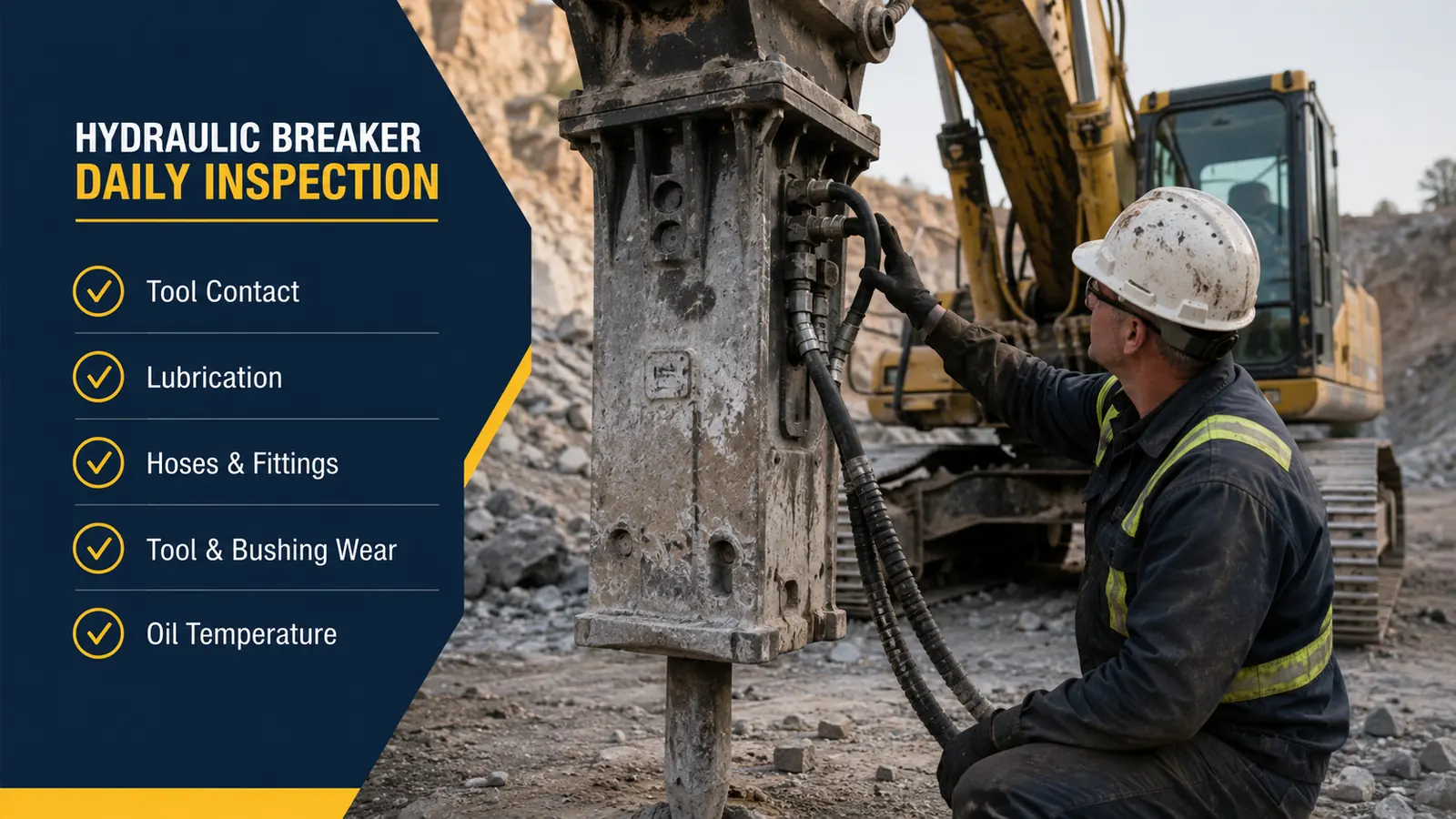
Check lubrication using the exact breaker instructions and the approved lubricant. Observe the exposed tool, retaining area, visible bush condition, hoses, fittings, mounting hardware and coupler before work and during planned pauses. Inspection frequency and wear limits are model-specific and should not be guessed. See the hydraulic breaker maintenance checklist for routine external care.
Common Causes of Weak Performance
Weak or unstable impact can be associated with carrier flow or pressure, restricted return conditions, excessive oil temperature, oil condition, hose or connection issues, tool contact, lubrication, tool/bushing condition, operating practice or an internal service requirement. The symptom alone does not identify the cause. Maintain correct tool contact before impact, avoid prolonged blank firing and stop for leakage, abnormal vibration or unstable impact.
Use the safe breaker troubleshooting sequence to separate operator-visible evidence from technician-only work. Do not dismantle, adjust gas charge, change relief settings or test pressurized components without the exact procedure and qualified personnel.
When a Larger Breaker Is Not Automatically the Right Answer
A larger attachment may exceed the carrier’s operating-weight or hydraulic limits, change stability, reduce positioning control or load the boom and mounting system incorrectly. Rock structure may also favor a different tool, impact position, pre-fracturing approach or alternative method. Compare the proposed breaker with the exact carrier range and circuit requirements rather than assuming more attachment weight guarantees more output.
Information to Send for Quarry Breaker Matching
Send one labeled data set for each carrier and application. Photos should show the overall work area and rock condition without placing anyone in an unsafe position. A short working video can help only when it is safe and permitted by the site.
QUARRY APPLICATION MATCHING
Send the carrier and rock information
Breaker selection depends on the excavator, hydraulic conditions, rock structure and working objective. Share the information below before confirming a model or working tool.
Machine
- Excavator brand and model
- Operating weight
- Hydraulic flow and pressure
Application
- Quarry or mine application
- Rock type and condition
- Oversized rock dimensions if safely available
Evidence
- Site photos
- Short working video
- Current breaker or attachment details
Dealer and Fleet Support Considerations
Quarry operators, mining contractors, equipment dealers, rental fleets and attachment distributors may need several carrier matches, mixed breaker model inquiries, spare working tools, wear-parts planning, dealer technical information or consolidated shipping. Prepare a model-by-model table with carrier data, application, proposed quantity and destination so each configuration can be reviewed separately.
Available breaker models, working tools, wear parts, manuals, dealer technical information, commercial terms and consolidated shipping options must be verified for the inquiry. This page does not claim stock, lead time, exclusivity, distributor rights or a universal support package.