
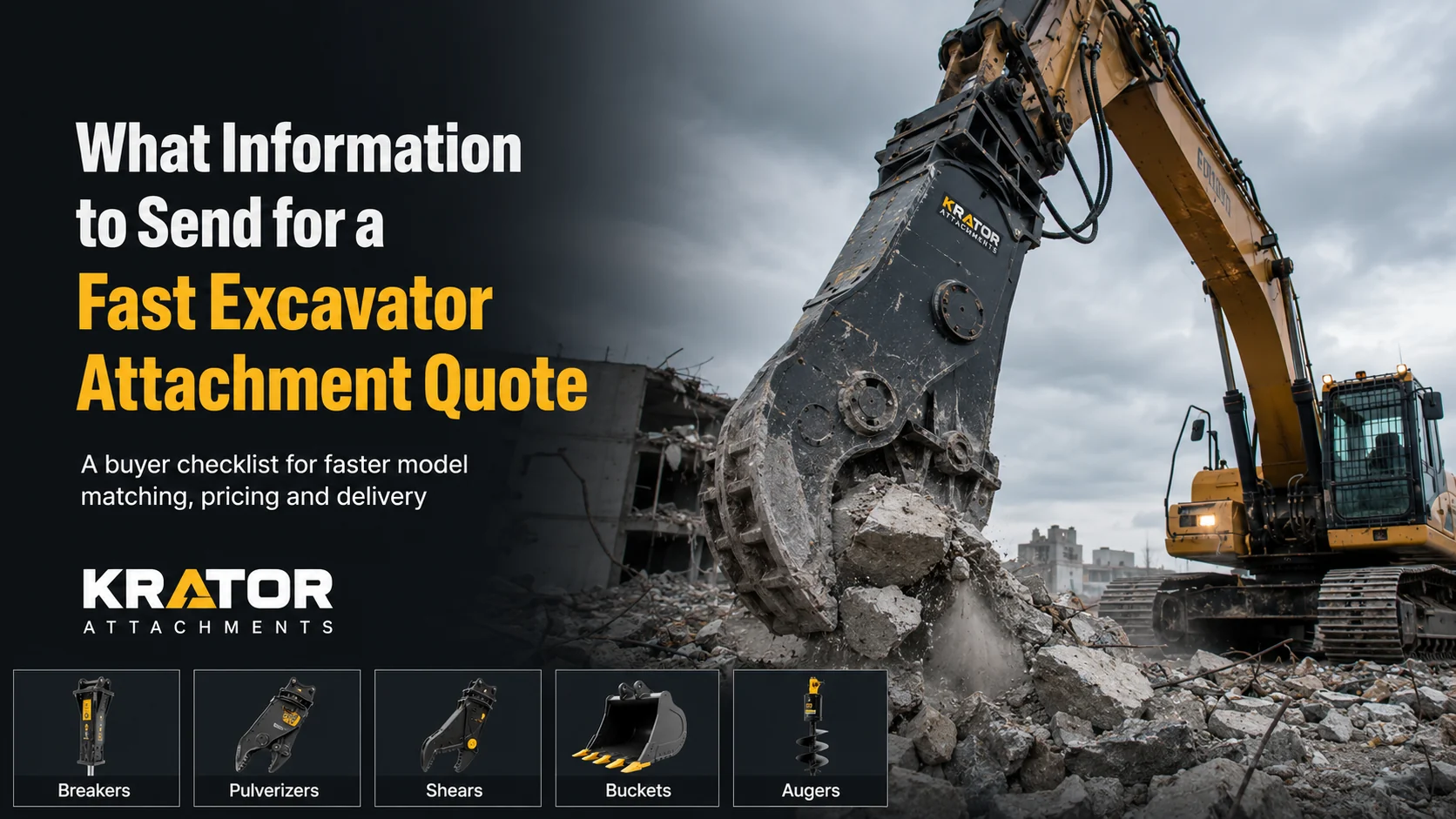
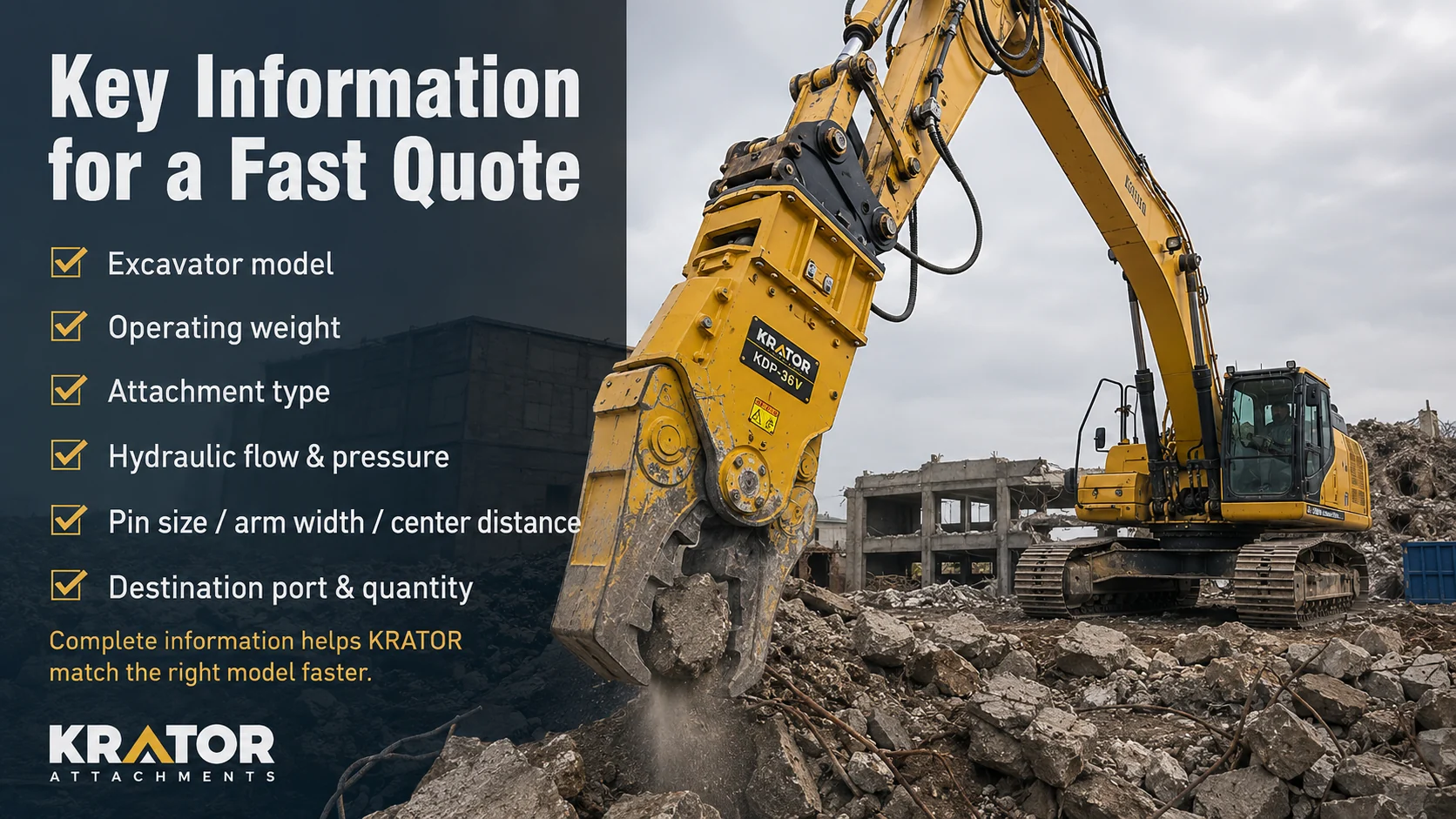
To get a faster excavator attachment quote, send the excavator brand and model, operating weight, attachment type, working condition, pin diameter, arm width, center distance, hydraulic flow, working pressure, quantity and destination port. Photos, drawings or videos are also helpful. Complete information allows KRATOR to check fitment, hydraulic matching, packing and shipping details before quotation instead of asking repeated follow-up questions.
Why Complete Information Makes Quotation Faster
Complete information reduces repeated questions and helps the supplier recommend a suitable attachment configuration. If a buyer sends only product name and tonnage, the supplier still needs excavator model, fitment dimensions, hydraulic data, working condition and destination before a useful quote can be prepared.
Excavator Model and Operating Weight
Excavator brand, model and operating weight help identify carrier class and likely mounting data. Different brands may use different pin dimensions even at similar tonnage. Operating weight narrows the attachment range, but it does not replace fitment confirmation.
Attachment Type and Working Condition
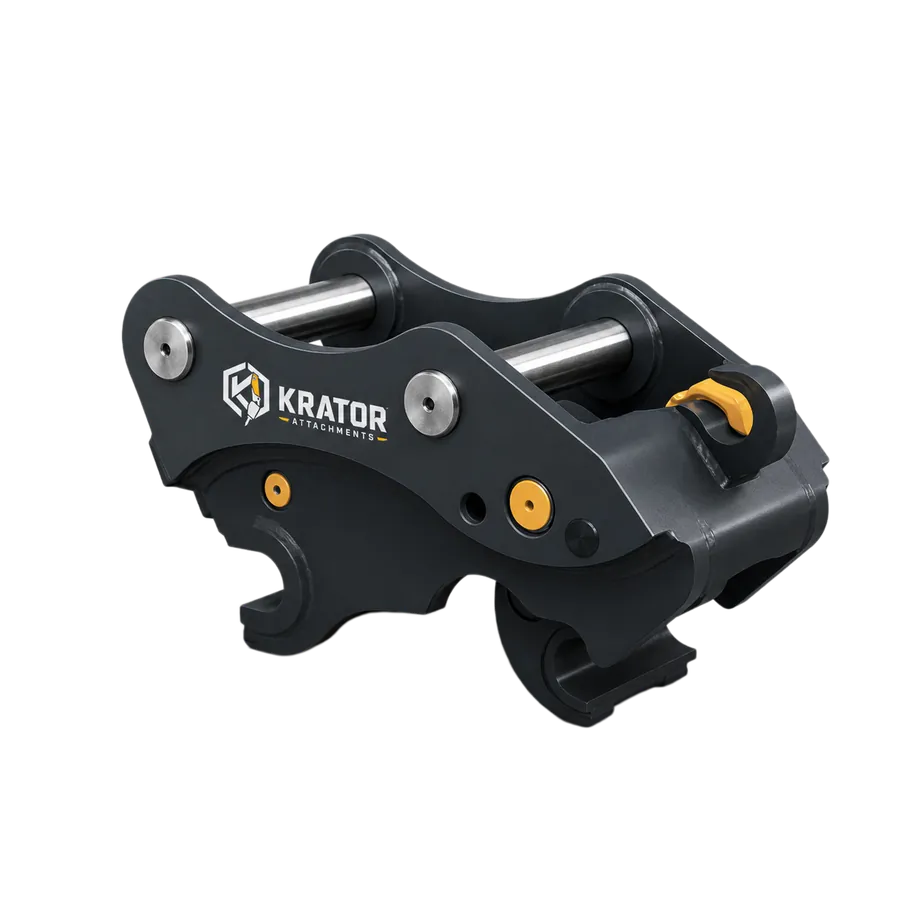
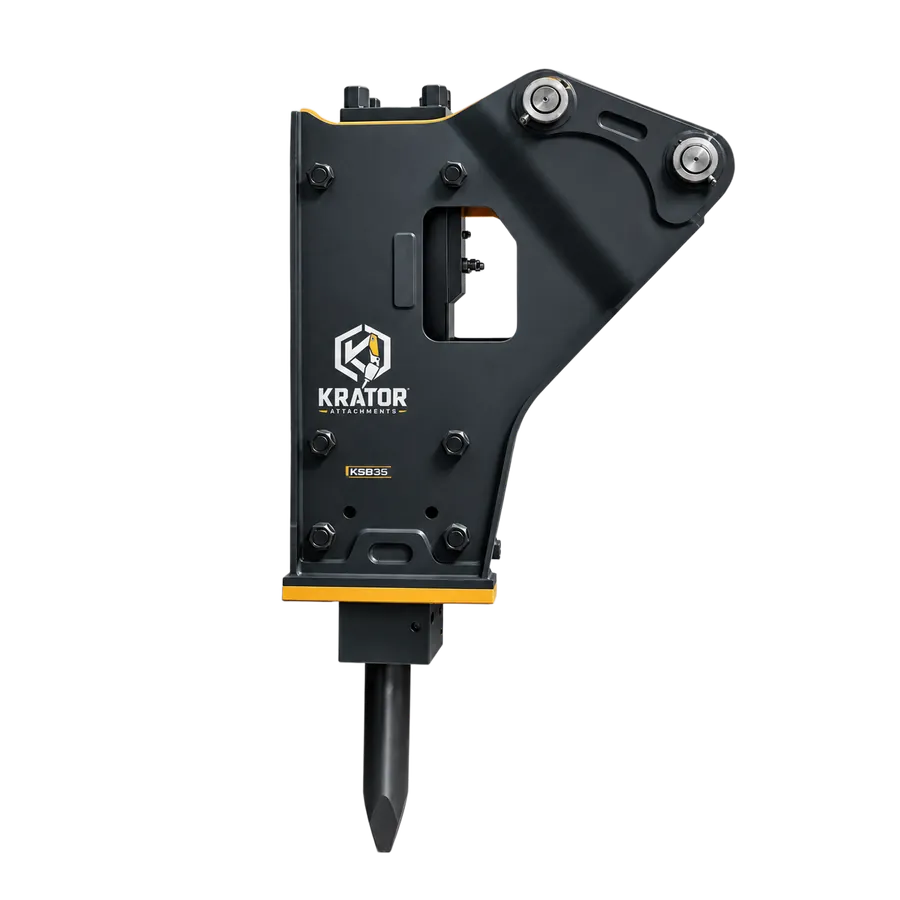
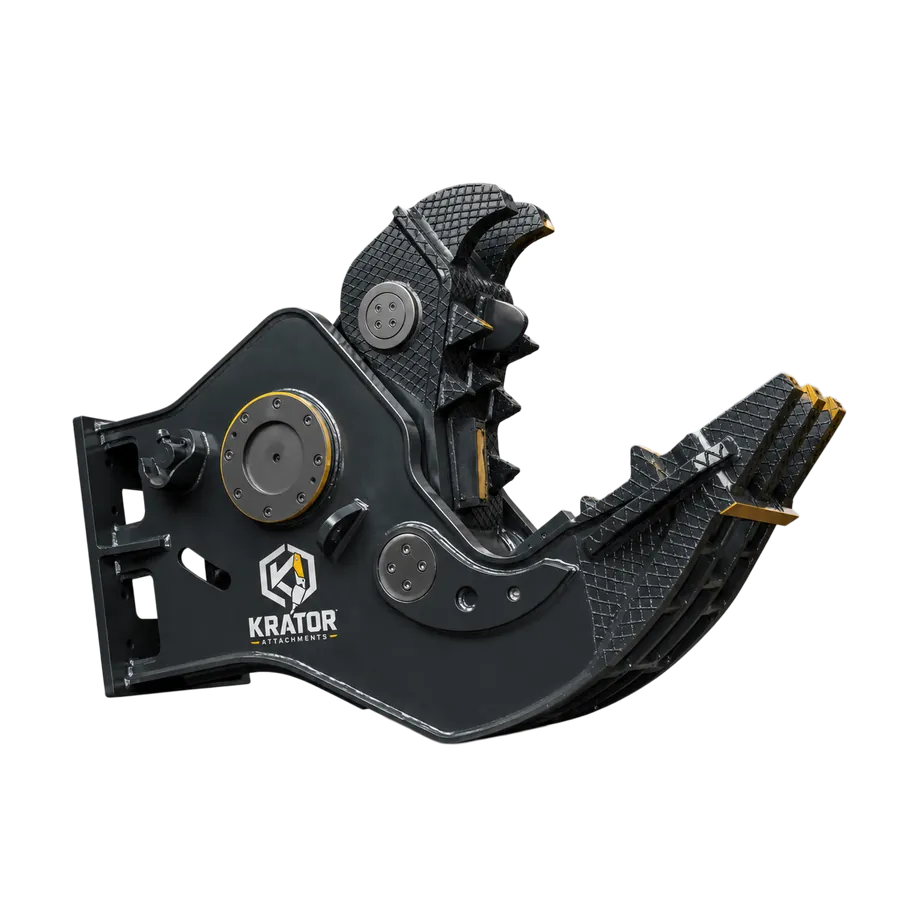
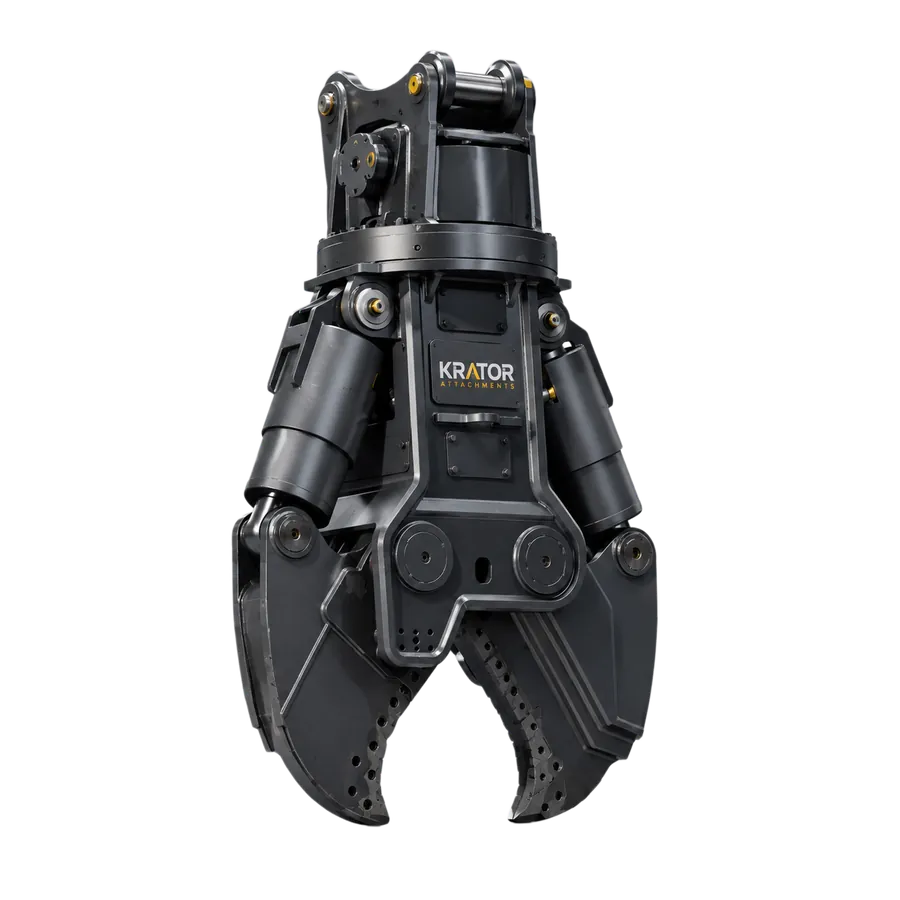
Tell KRATOR whether you need a quick coupler, hydraulic breaker, pulverizer, shear, bucket, grapple, compactor, auger or custom excavator attachment. Also describe the material and jobsite condition.
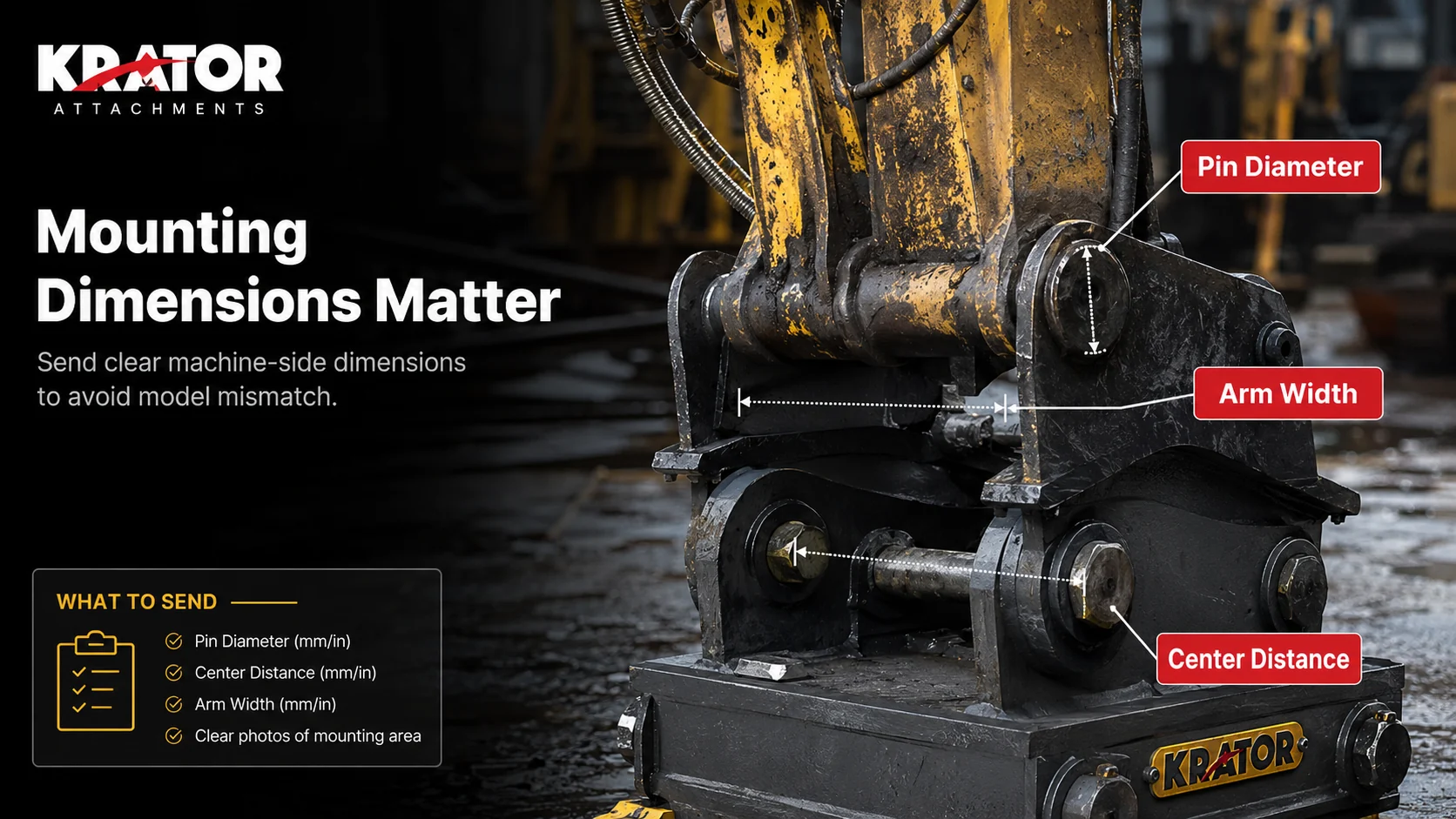
Pin Diameter, Arm Width and Center Distance
Pin diameter, arm width and center distance are essential for bracket and coupler matching. Clear measurements or photos with a tape measure can prevent wrong mounting and reduce drawing confirmation time.
Hydraulic Flow and Operating Pressure
Hydraulic attachments such as breakers, hydraulic pulverizers, hydraulic shears, compactors and augers need oil flow and working pressure data. If this information is unavailable, send the excavator model and KRATOR will help check the matching range.
Material Type and Application
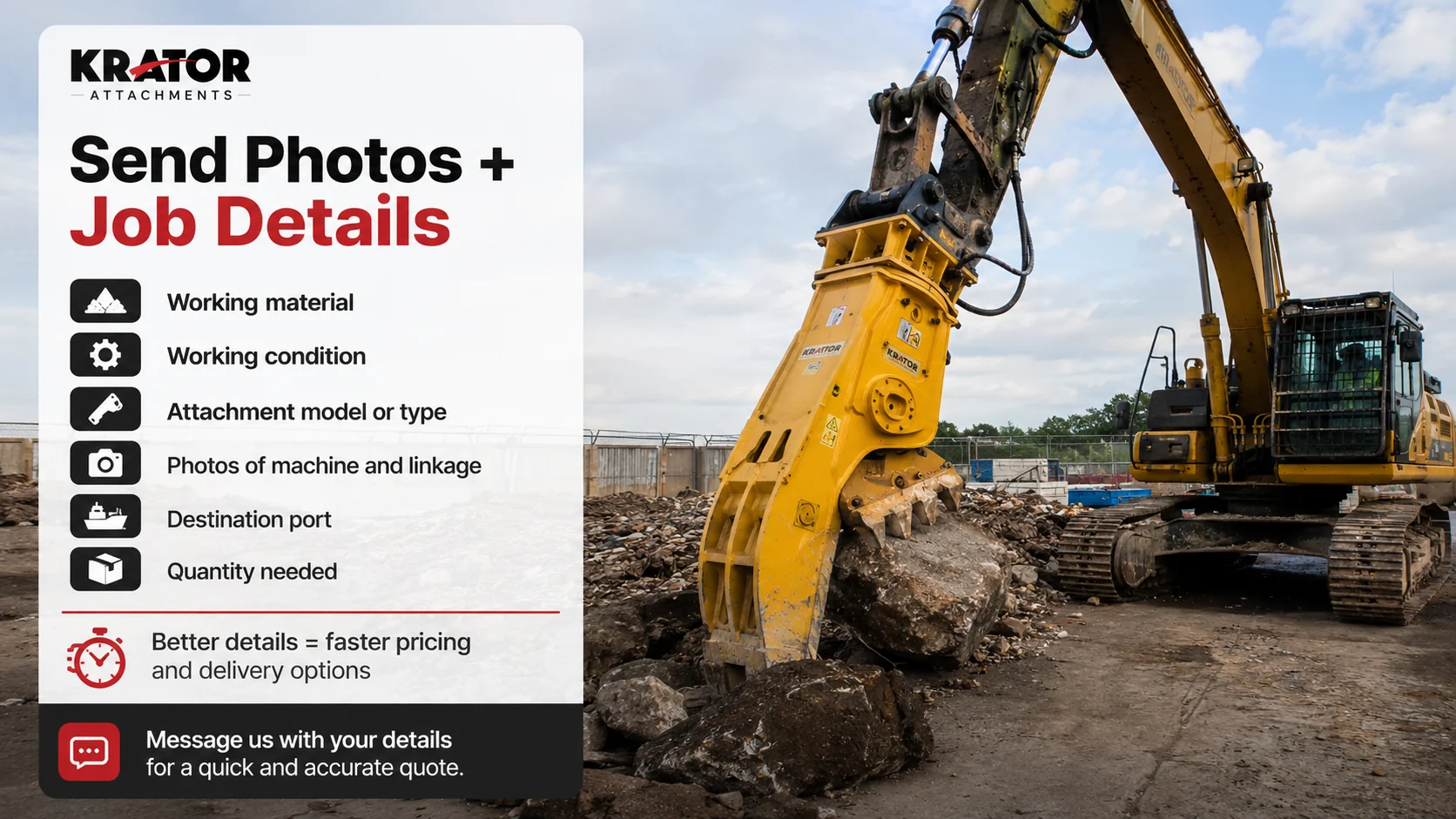
The attachment should match the material. Concrete thickness, steel thickness, rebar density, rock hardness, soil condition, timber size and scrap density all affect selection. Photos or videos often explain the project faster than a long description.
Quantity and Destination Port
Quantity and destination affect packing, shipping and export quotation. Dealer batch orders, sample orders and project supply orders may use different packing and spare parts plans. Destination port also helps estimate logistics options.
Photos, Drawings and Videos
Photos, drawings and videos help confirm structure and dimensions. For custom brackets or OEM projects, drawings can shorten confirmation time. If drawings are not available, send clear photos of the excavator arm, old attachment and jobsite material.
MATCHING SUPPORT
Need help matching an excavator attachment?
Send your excavator model and working condition. KRATOR will recommend a suitable attachment configuration.
Fast Quote Checklist
| Information | Why It Matters | Example |
|---|---|---|
| Excavator model | Confirms carrier class and fitment range | CAT 320, Komatsu PC200 |
| Operating weight | Narrows attachment model range | 20 ton excavator |
| Attachment type | Defines structure and hydraulic needs | Hydraulic pulverizer |
| Working condition | Affects size, force and wear parts | Concrete recycling |
| Pin dimensions | Confirms bracket or coupler fitment | Pin diameter, arm width, center distance |
| Hydraulic data | Confirms performance compatibility | Oil flow and pressure |
| Quantity and destination | Supports packing and shipping quote | 2 units, Singapore port |
Common Problems When Information Is Missing
Missing information can cause slow replies, wrong model suggestions, inaccurate freight estimates and mounting mismatch. Preparing a complete quote checklist before contacting the supplier saves time during quotation, production and delivery.
How to Send the Information Clearly
A useful quotation message does not need to be long, but it should be structured. Start with the excavator brand and model, then state the attachment type and working condition. Add pin dimensions and hydraulic data if available. Finish with quantity and destination port. Photos should show the excavator arm, existing attachment connection, jobsite material and any measurement marks.
For example, a strong inquiry could say: I need a hydraulic pulverizer for a 22 ton excavator. The work is reinforced concrete recycling. Concrete thickness is about 300 mm and rebar is heavy. Destination is Manila port. I will send pin diameter, arm width and center distance photos. This message lets KRATOR begin model matching immediately instead of asking several basic questions.
Dealer Batch Orders and OEM Requests
Dealers should mention whether the quote is for stock, a customer project or OEM branding. Color, logo, label, manual language, packing and spare parts requirements can affect the final proposal. If several products are ordered together, listing target excavator sizes helps the factory prepare a clearer product package.
Complete information can also reduce total cost. Accurate model matching helps avoid remade brackets, incorrect hoses and delayed shipping documents. Clear destination and quantity information makes freight estimation more realistic. For repeat buyers, a simple internal quote form can make every future inquiry faster.
Common Quote Examples
For a hydraulic breaker quote, include excavator model, carrier weight, rock or concrete condition, oil flow, pressure and preferred chisel type if known. For a quick coupler quote, pin diameter, arm width and center distance are more important than material condition. For a hydraulic pulverizer or shear quote, material thickness and hydraulic data are essential because the attachment must match both the machine and the demolition material.
For buckets, rippers and custom attachments, photos and drawings can be more valuable than a long description. A bucket quote may need width, capacity, tooth type and pin data. A ripper quote may need ground condition, ripping depth and shank requirement. A custom attachment quote may need drawings, working idea, object size and OEM requirements. The more specific the request, the faster the supplier can respond.
What Not to Send Alone
Avoid sending only one sentence such as price for 20 ton excavator breaker or need excavator attachment. This gives the supplier almost no matching information. It also makes quotes from different suppliers hard to compare because each supplier may assume a different model, bracket, packing scope or spare parts package.
A better inquiry gives enough context for a real recommendation. It does not need perfect technical data, but it should explain the excavator, attachment type, material, dimensions if available, quantity and destination. If something is unknown, say it is unknown and send photos. KRATOR can help check the missing items during the matching process.
What to Check After Receiving a Quote
After receiving a quotation, check whether the model, carrier range, bracket scope, hydraulic requirement, spare parts, packing and delivery terms are clearly stated. If two quotations have different prices, compare the included items before deciding. One quote may include hoses, pins or spare parts while another only includes the main attachment.
For imported excavator attachments, a clear quote reduces later confusion. It should help the buyer understand what is included, what data still needs confirmation and what preparation is required before production. This is why a complete first inquiry improves both speed and accuracy.
If any item is unclear, ask before payment. A short clarification at quotation stage is much easier than correcting a bracket, hose or packing issue after production has started.
Clear quotation files also help purchasing teams approve orders faster.