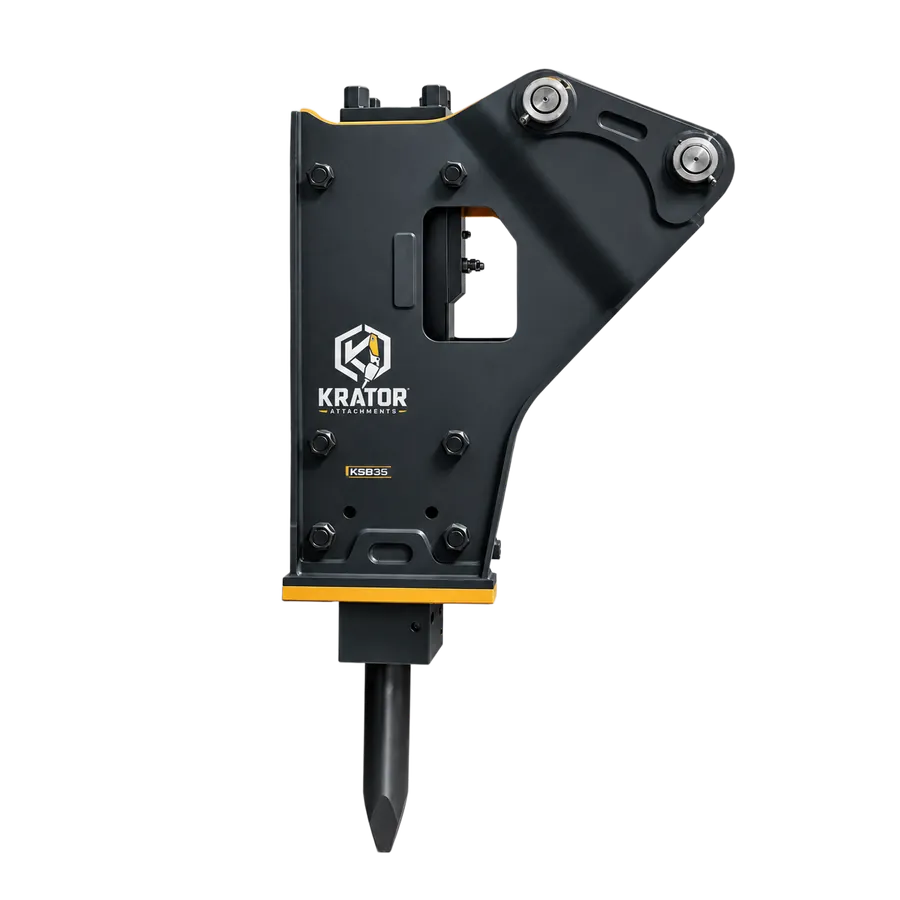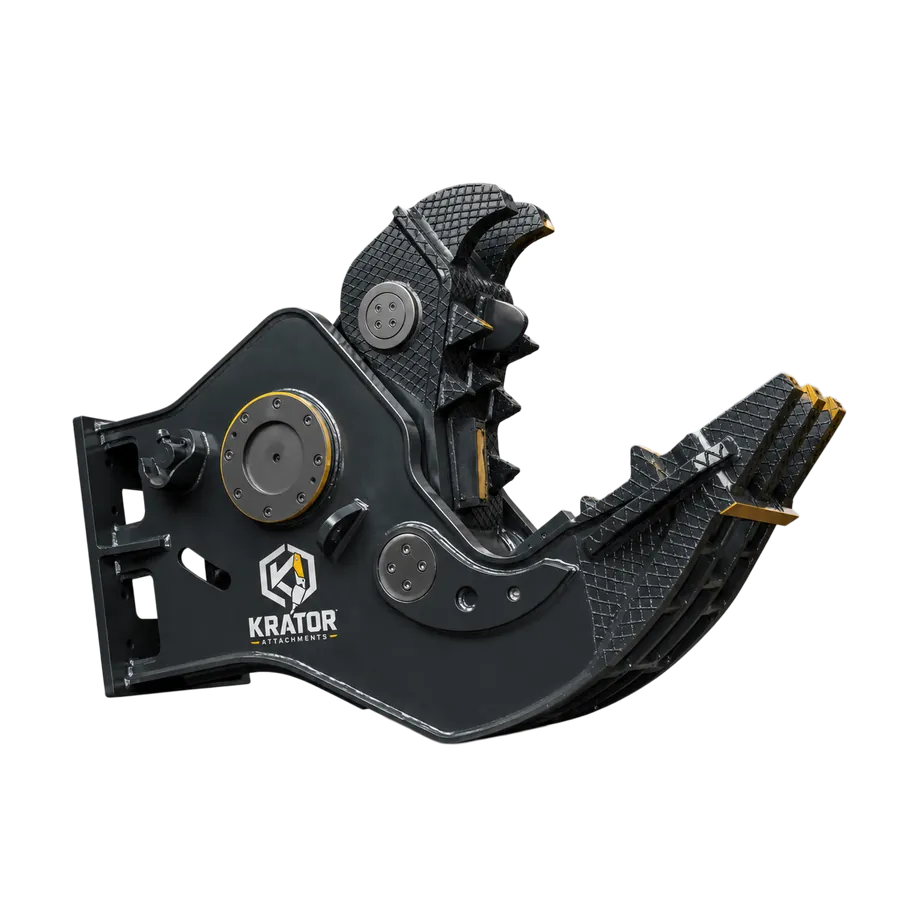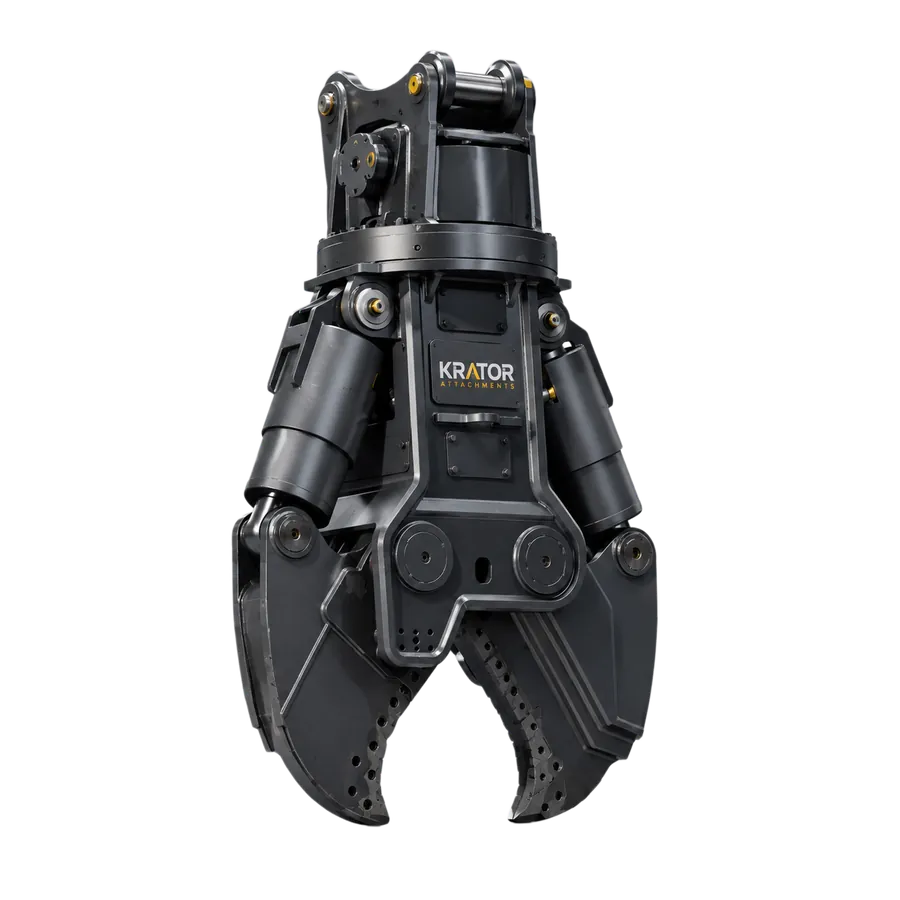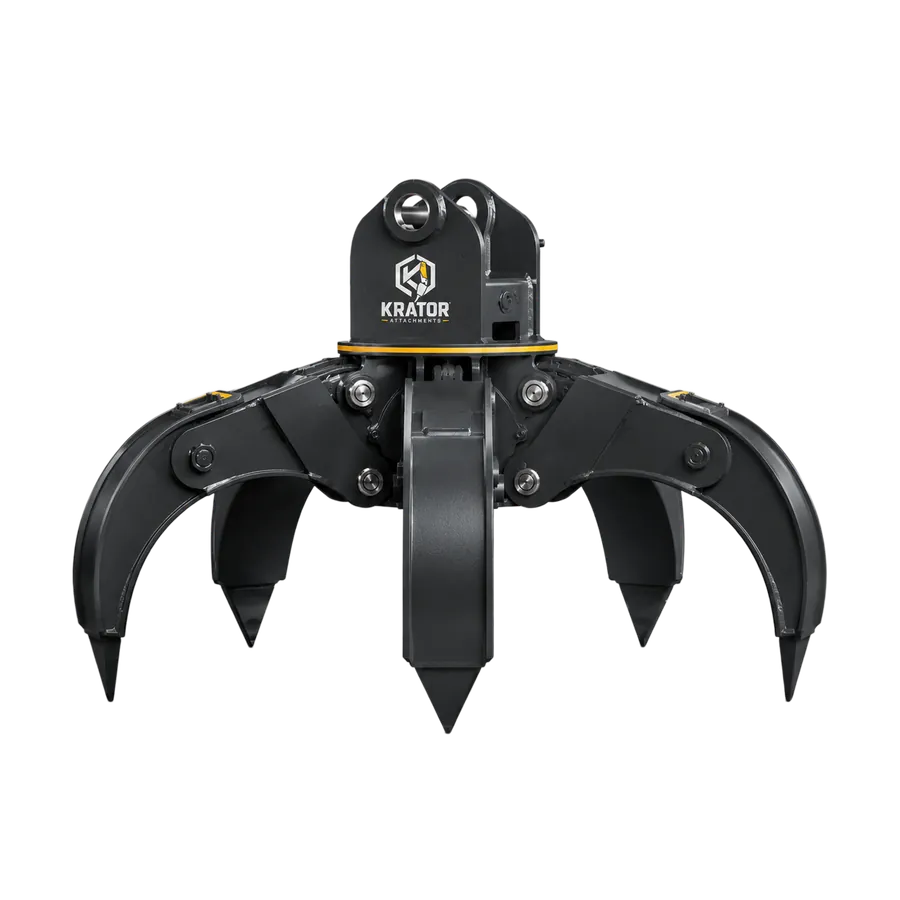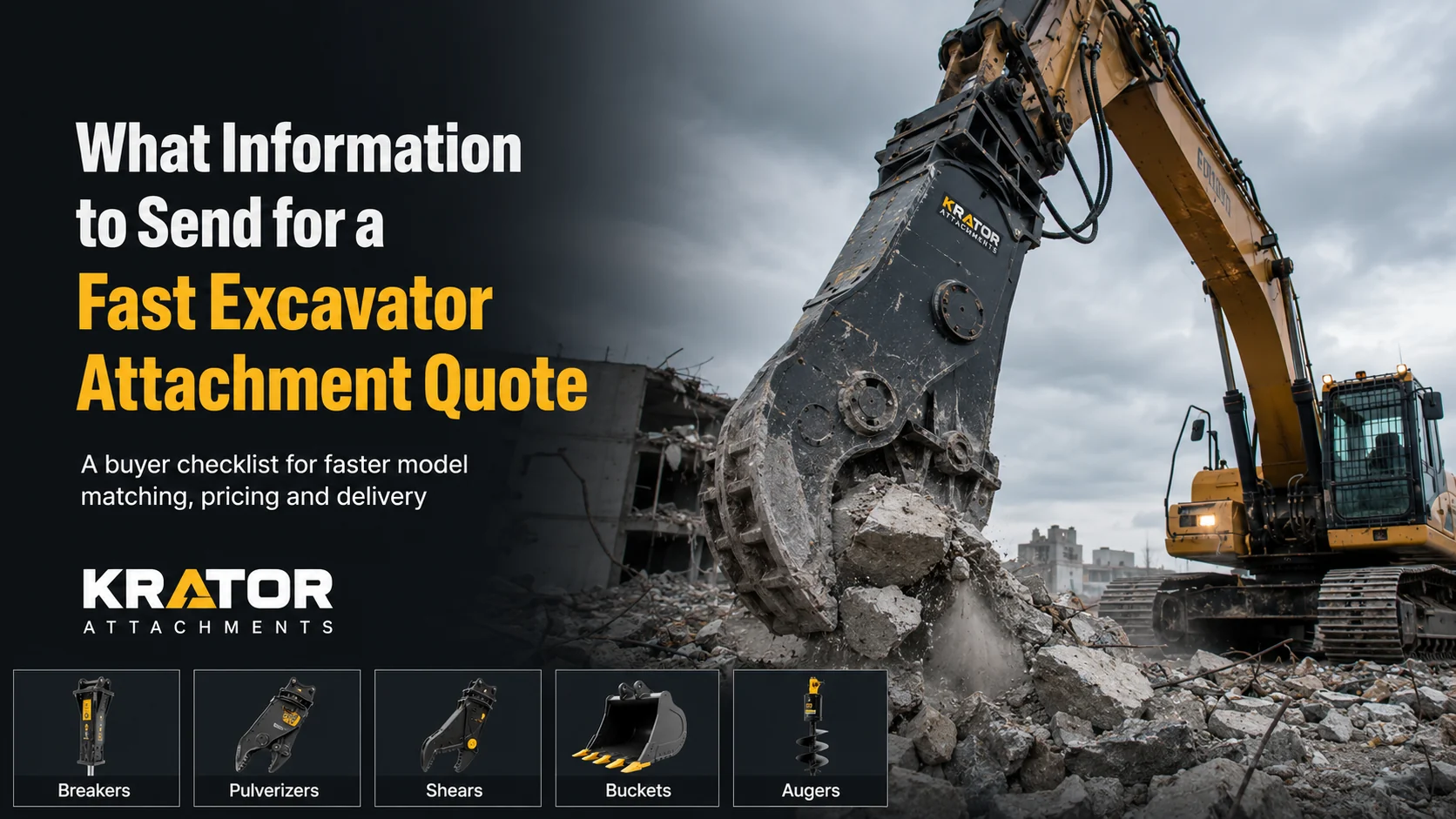

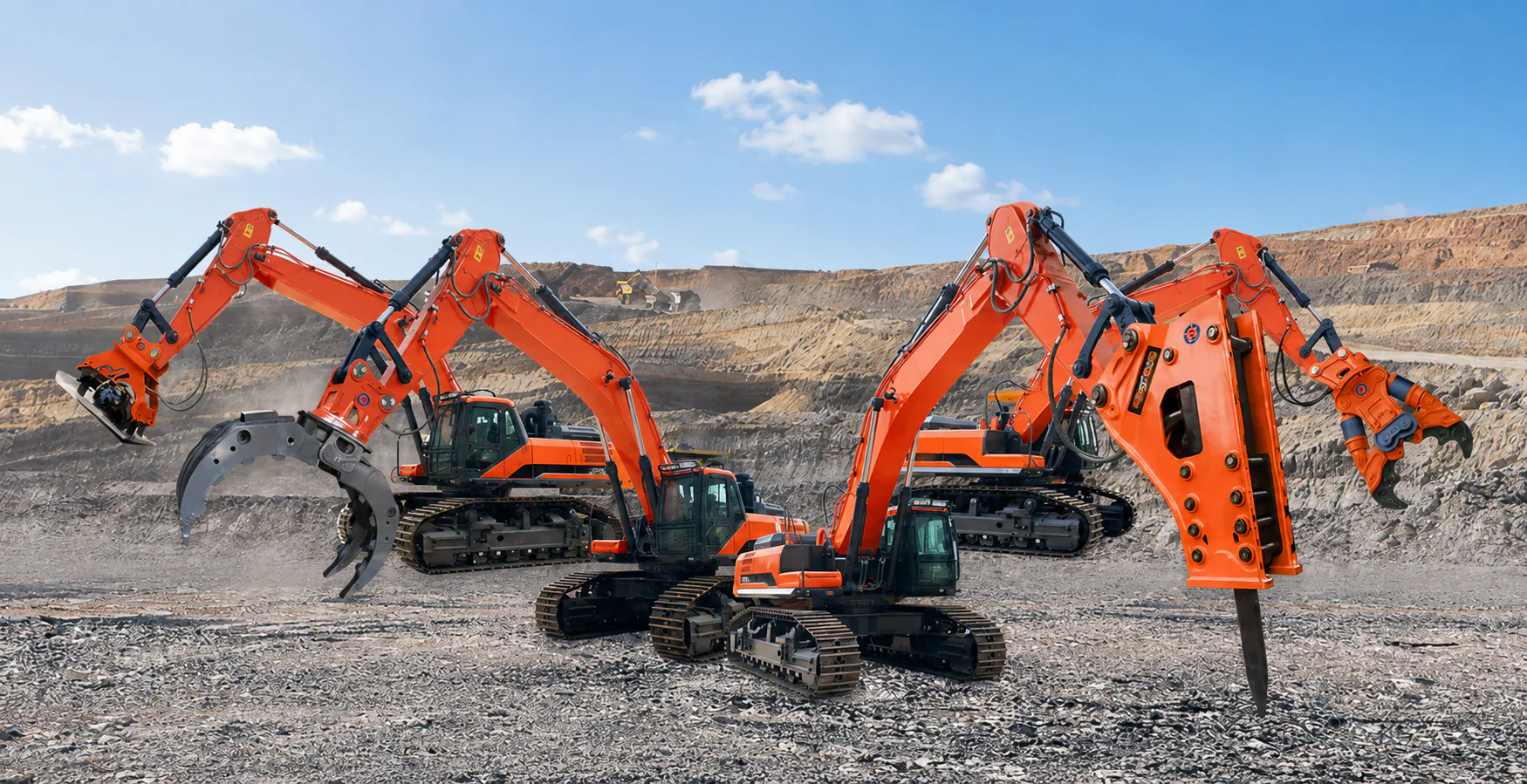
The best excavator demolition attachment depends on the material and task. Use a hydraulic breaker for primary concrete or rock breaking, a hydraulic pulverizer for secondary concrete crushing and rebar separation, a hydraulic shear for steel cutting, a hydraulic grapple for sorting and loading, and a quick coupler when the excavator needs to change tools often. Buyers should confirm excavator model, operating weight, hydraulic flow, working pressure, pin diameter, arm width, center distance and material thickness before quotation.
What Are Excavator Demolition Attachments?
Excavator demolition attachments are tools mounted on an excavator to break, crush, cut, sort and handle demolition material. They allow the same carrier to work across different stages of a demolition project instead of relying on one general bucket or one single tool. For contractors, the right attachment can reduce manual handling and improve jobsite workflow. For dealers, demolition attachments create a practical product package for concrete demolition, steel recycling and mixed material handling.
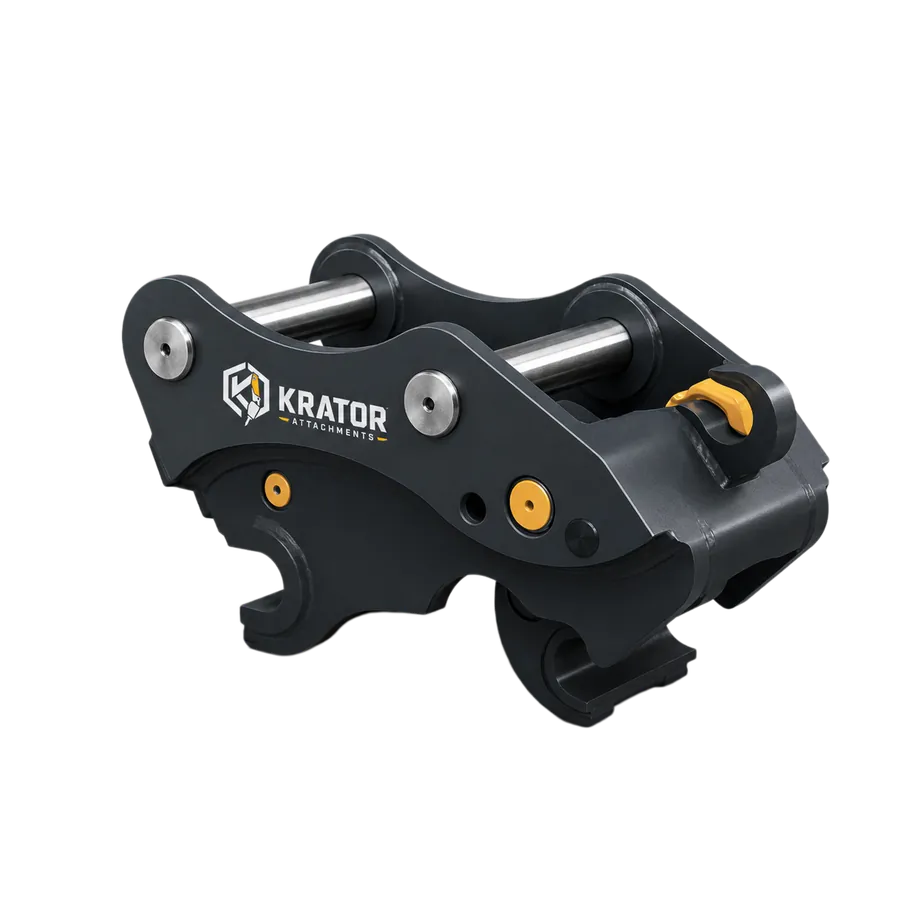
The main demolition attachment categories include hydraulic breakers, hydraulic pulverizers, hydraulic shears, hydraulic grapples and quick couplers. Each attachment has a different working principle. A breaker uses impact energy. A pulverizer uses jaw force for concrete crushing and rebar separation. A shear uses blades and cutting force. A grapple uses tines or jaws to sort and load material. A quick coupler does not process material directly, but it makes it easier to change between tools during a job.
Hydraulic Breaker
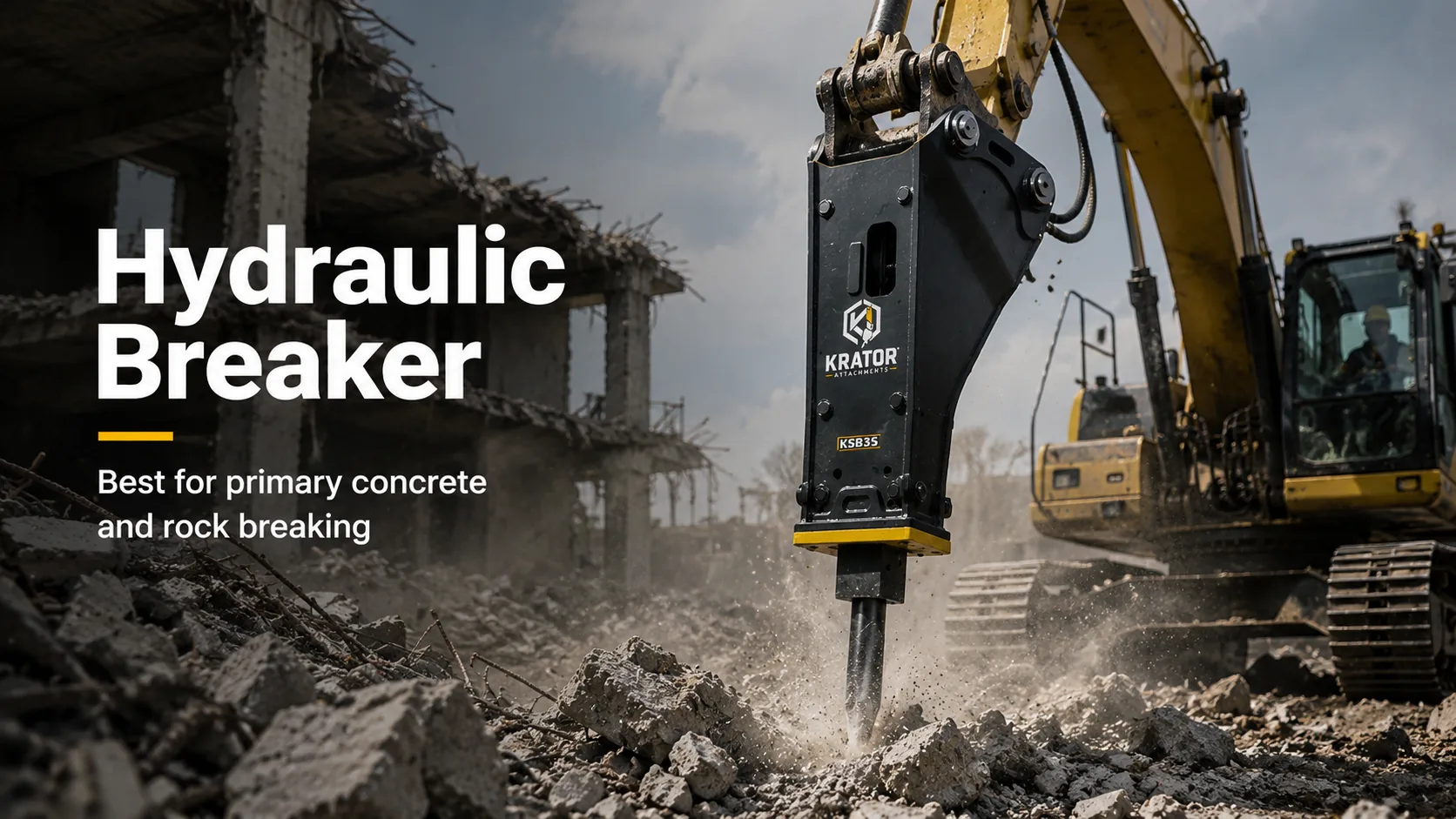
A hydraulic breaker is commonly used for primary concrete breaking, rock breaking, road removal, trenching and foundation opening. It is often the first attachment used when the material is still too large or too hard for crushing and sorting tools. In demolition projects, the breaker creates manageable pieces that can later be processed by a pulverizer, grapple or bucket.
Suitable working conditions include concrete slabs, bridge decks, road surfaces, rock, quarry material and compact demolition areas where impact breaking is required. Buyers should match the breaker by carrier weight, chisel diameter, oil flow, working pressure and material hardness. Chisel type also matters. Moil points, blunt tools and flat chisels solve different problems.
A common buying mistake is choosing a breaker only by excavator tonnage. Two excavators in the same ton class may have different hydraulic flow and pressure. If the breaker requires more oil flow than the excavator can supply, impact performance will be weak. If the breaker is too heavy, the excavator arm and mounting structure may be overloaded. Good breaker selection starts with both excavator data and working material.
Hydraulic Pulverizer
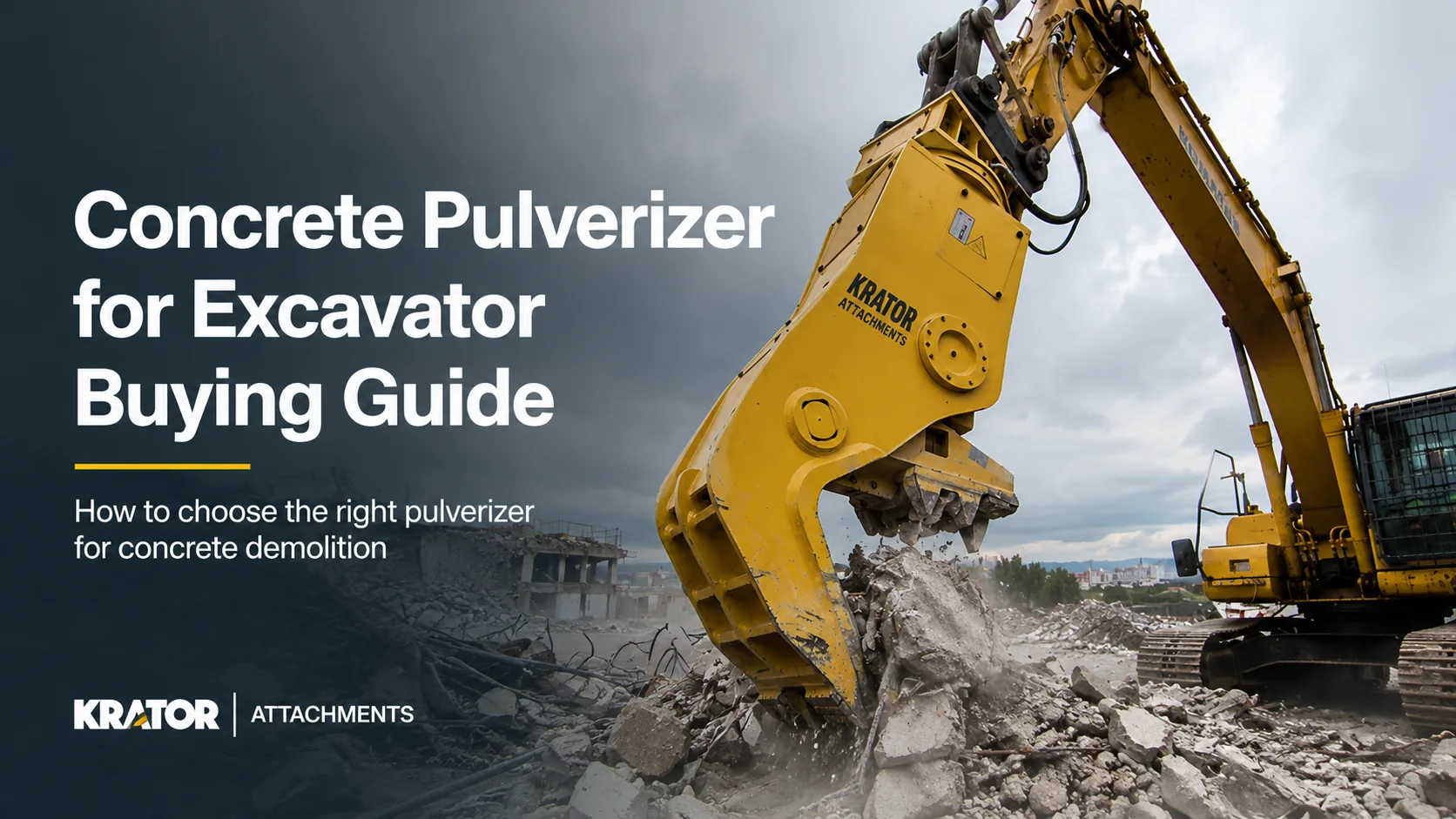
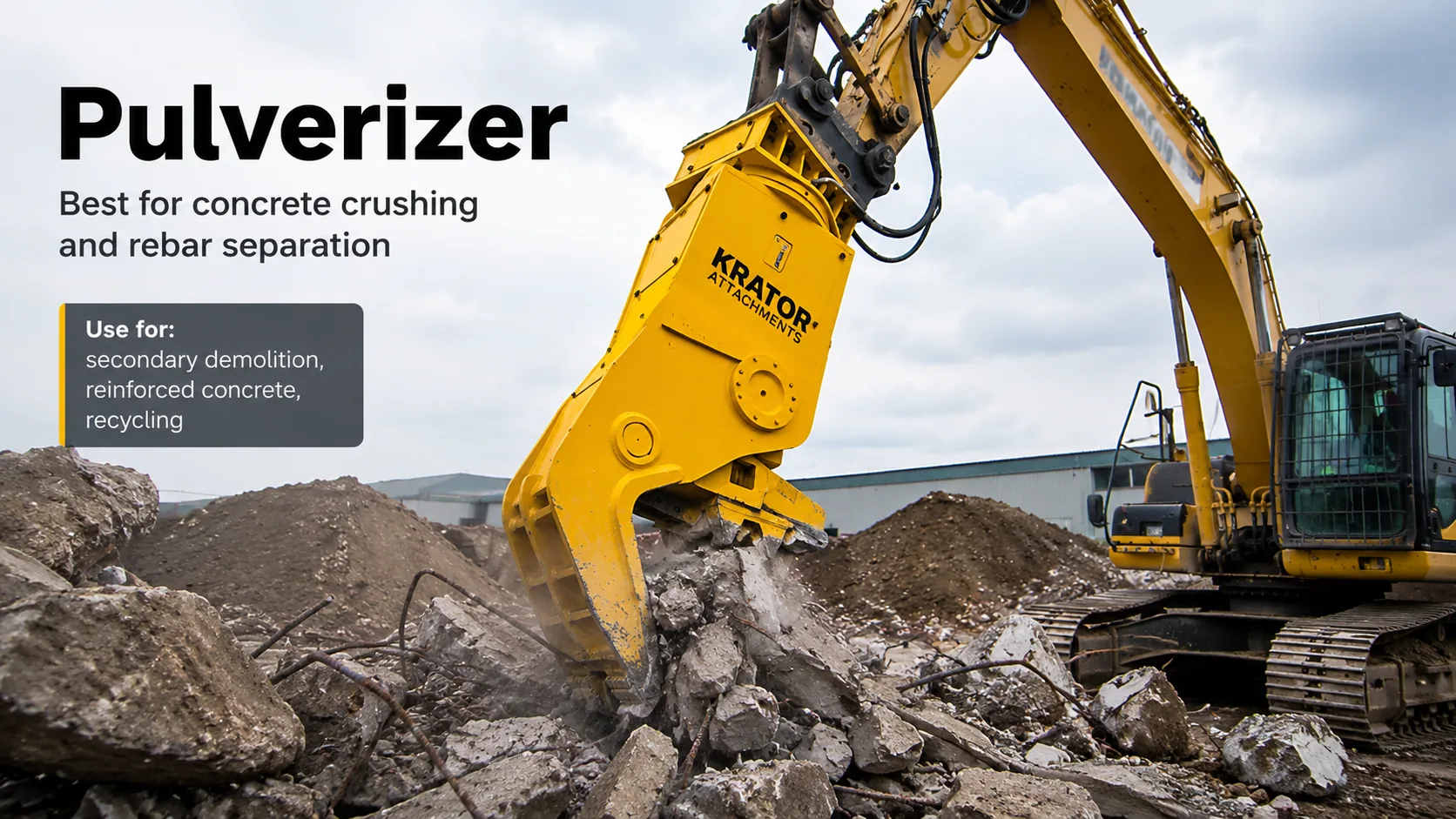
A hydraulic pulverizer is mainly used for secondary demolition. After a structure has been opened by a breaker or other primary demolition method, the pulverizer crushes concrete into smaller pieces and helps separate rebar. This makes it valuable for concrete recycling, foundation demolition and building demolition cleanup.
Pulverizers can be fixed or rotating. A fixed pulverizer has a simpler structure and is suitable when the excavator can position the jaw easily. A rotating pulverizer improves jaw positioning around reinforced concrete, columns and complex debris piles. The right choice depends on jobsite layout, operator workflow and how frequently the attachment must approach material from different angles.
Key matching data includes excavator operating weight, jaw opening, crushing force, oil flow, working pressure, bracket dimensions and whether rotation is required. Concrete thickness and rebar condition should always be described. A pulverizer with enough jaw opening but insufficient crushing force may still work slowly on heavy reinforced concrete. A common mistake is ignoring concrete thickness and assuming all concrete recycling jobs need the same pulverizer class.
Hydraulic Shear
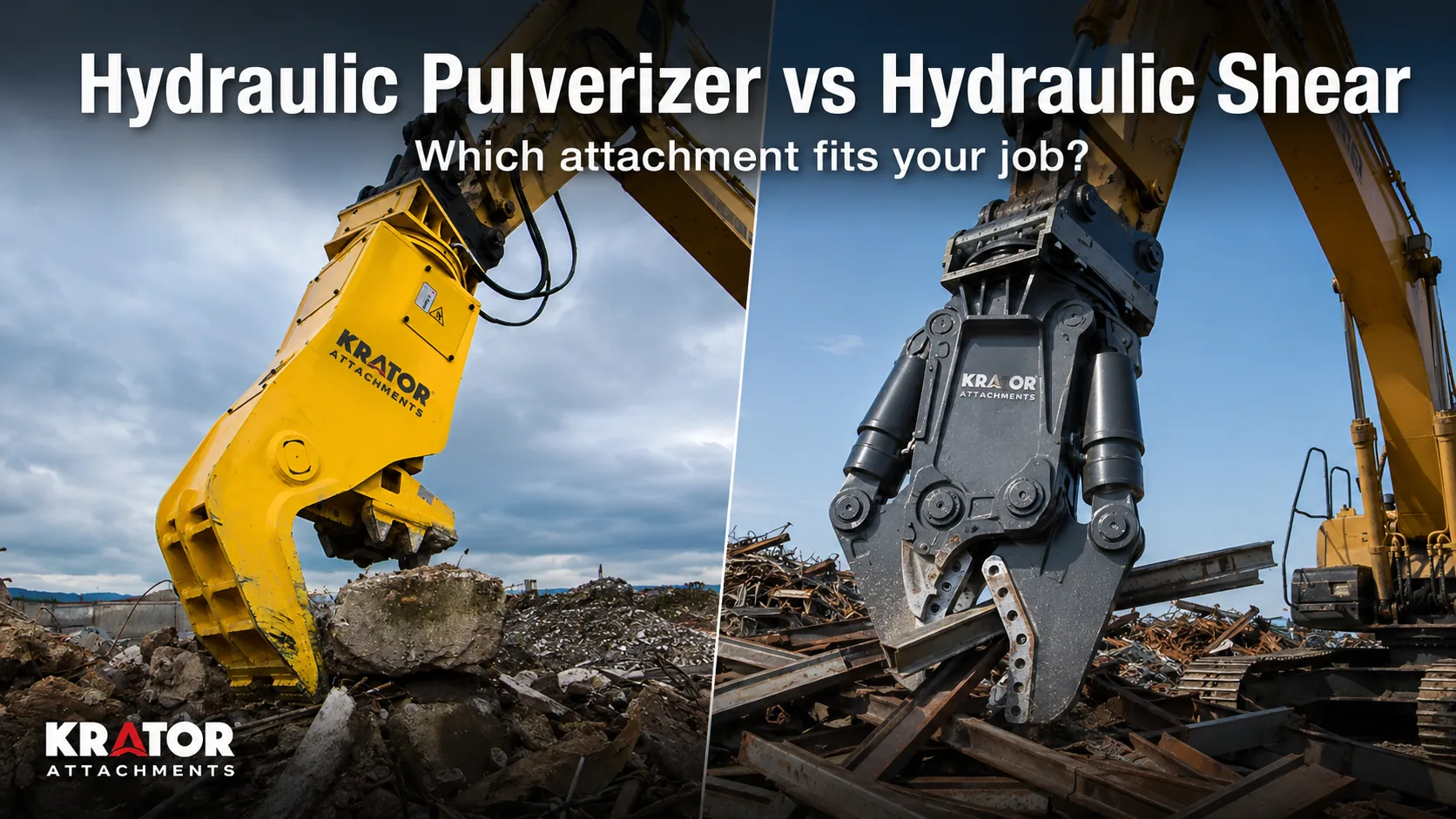
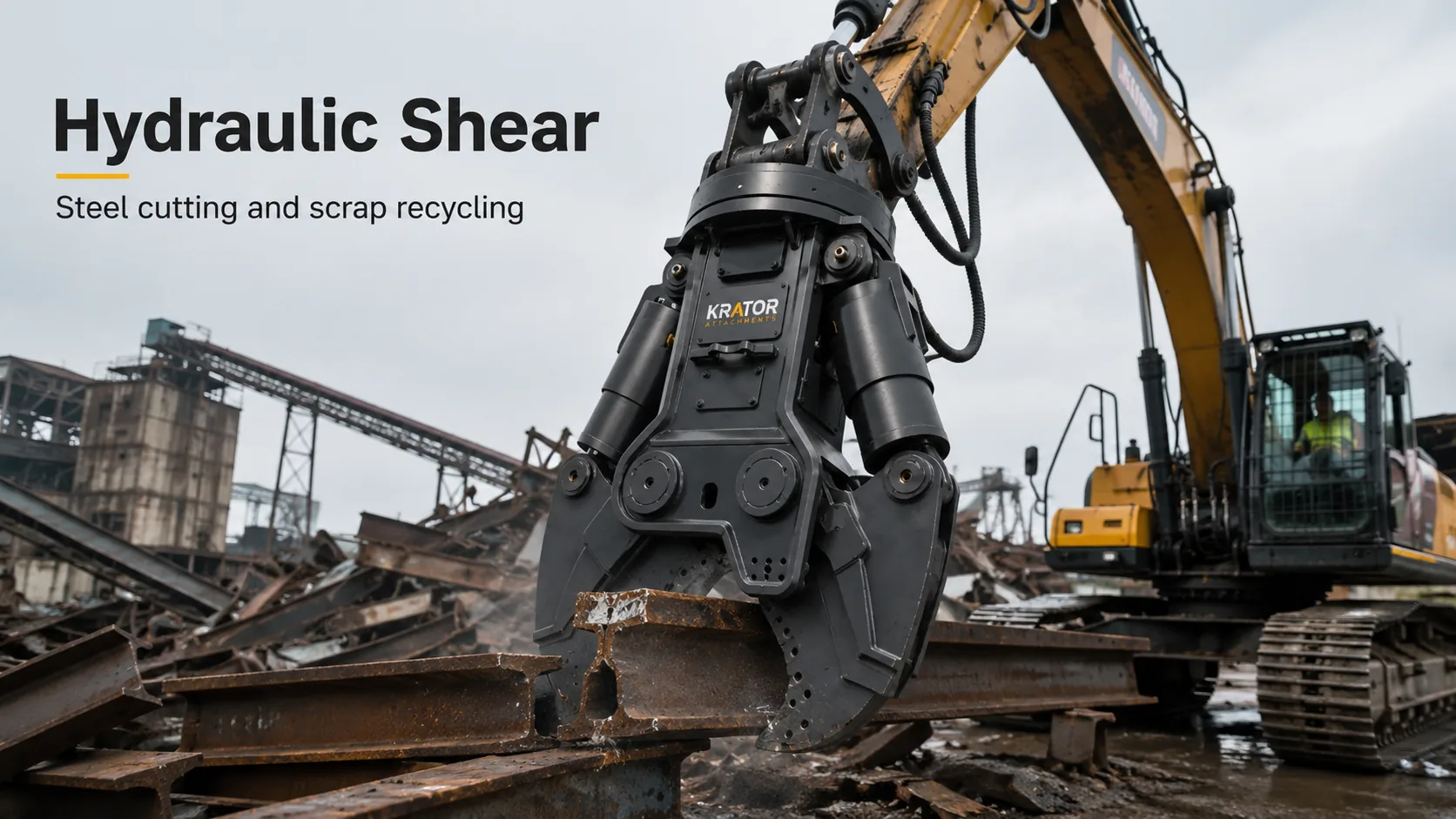
A hydraulic shear is used for steel structure demolition, scrap recycling, industrial dismantling, tank cutting and heavy metal processing. Unlike a pulverizer, a shear is not primarily designed to crush concrete. It uses cutting blades and high closing force to cut steel beams, pipes, plates and scrap.
The key specifications for a hydraulic shear include cutting force, jaw opening, blade length, blade material, rotation, oil flow and working pressure. Buyers should describe steel type and thickness before quotation. Steel plate, light scrap, rebar, heavy beam and mixed industrial demolition work can require different shear sizes or blade structures.
The main selection difference between shear and pulverizer is material. If the work is concrete crushing and rebar separation, start with a pulverizer. If the work is cutting steel, start with a shear. In many demolition projects both tools are useful, but at different stages. A breaker opens material, a pulverizer processes concrete, a shear cuts steel and a grapple handles sorting.
Hydraulic Grapple
A hydraulic grapple is useful after breaking, crushing or cutting because demolition sites produce mixed material. Grapples handle concrete debris, scrap, timber, waste, pipes, beams and irregular pieces that are hard to load with a bucket. They help sort recyclable material and keep the site organized.
Important grapple selection factors include opening width, tine type, tine quantity, rotation, attachment weight and material density. A light sorting grapple may work for timber or light debris, while demolition sorting and scrap handling need stronger structures. For orange peel or multi-tine grapples, the number of tines affects how material is held and released.
A grapple is especially useful when used together with breaker, pulverizer and shear work. After the breaker reduces large concrete, the grapple can move pieces. After the pulverizer separates concrete and rebar, the grapple can load material. After the shear cuts steel, the grapple can sort scrap into piles for transport or recycling.
Quick Coupler
A quick coupler is recommended when demolition jobs need frequent tool changes. A contractor may need a breaker in the morning, a pulverizer after the structure is opened, a shear for steel and a grapple for cleanup. Without a coupler, attachment changes take more time and often need additional labor.
Safety lock design is critical. Coupler buyers should confirm mechanical or hydraulic locking type, pin diameter, arm width, center distance and whether the attachment will be used pin-on or through a coupler. The coupler should match both excavator and attachment dimensions. If dimensions are wrong, the attachment may not lock safely or may not move through the correct working angle.
A quick coupler is most useful for contractors with multi-attachment jobs, rental fleets, dealers supplying attachment packages and operators who change tools frequently. It is less important when one excavator uses one attachment for a long continuous task, but even then future attachment compatibility may justify the investment.
Comparison Table
| Working Condition | Recommended Attachment | Why It Fits | Data to Confirm |
|---|---|---|---|
| Primary concrete breaking | Hydraulic breaker | Impact energy opens slabs, roads and foundations | Carrier weight, chisel diameter, oil flow, pressure |
| Secondary concrete crushing | Hydraulic pulverizer | Jaw force crushes concrete after primary demolition | Jaw opening, crushing force, concrete thickness |
| Reinforced concrete recycling | Hydraulic pulverizer | Helps separate rebar from concrete | Rebar density, rotation option, bracket dimensions |
| Steel structure demolition | Hydraulic shear | Cutting blades process beams, tanks and scrap | Steel thickness, blade length, cutting force |
| Scrap handling | Hydraulic grapple | Tines hold irregular scrap and debris | Opening width, tine type, material density |
| Mixed demolition debris sorting | Hydraulic grapple | Sorts concrete, timber, scrap and waste | Rotation, tine number, attachment weight |
| Frequent tool change | Quick coupler | Reduces downtime between attachments | Pin diameter, arm width, center distance, safety lock |
How to Choose by Working Condition
Start with the work, not the product name. If the material must be broken by impact, use a breaker. If concrete must be crushed and separated from rebar, use a pulverizer. If steel must be cut, use a shear. If material must be sorted, loaded or moved, use a grapple. If the excavator changes tools several times a day, add a quick coupler.
The buyer should also consider jobsite workflow. Some contractors lose time because they buy a strong breaker but do not plan for sorting and loading. Others buy a pulverizer when the project actually involves heavy steel cutting. A demolition attachment package should match the whole workflow from primary demolition to recycling and loading.
MATCHING SUPPORT
Need help matching an excavator attachment?
Send your excavator model and working condition. KRATOR will recommend a suitable attachment configuration.
Buyer Checklist Before Quotation
A complete quotation request helps the supplier recommend the right model and reduces repeated confirmation. Each data point has a purpose. Excavator model and operating weight define the carrier range. Hydraulic flow and pressure confirm whether the attachment can perform correctly. Pin diameter, arm width and center distance confirm bracket or coupler fitment.
Material information prevents wrong attachment selection. Concrete thickness and rebar condition affect pulverizer choice. Steel thickness affects shear choice. Rock hardness affects breaker size and chisel type. Destination and quantity help prepare packing and shipping. If these details are missing, the quotation may be delayed, the model may be too small or too large, and freight estimates may be inaccurate.
- Excavator brand, model and operating weight
- Material type and working condition
- Concrete thickness, steel thickness or rock hardness if known
- Hydraulic flow and working pressure
- Pin diameter, arm width and center distance
- Required attachment type and quantity
- Destination port or country
- Photos, drawings or short jobsite videos
Common Buying Mistakes
The first mistake is choosing only by price. A low purchase price can become expensive if the attachment is too weak, mismatched or difficult to service. The second mistake is choosing only by excavator tonnage. Tonnage is the starting point, not the complete model match. Hydraulic flow, pressure and mounting dimensions must also be checked.
Other common mistakes include ignoring pin dimensions, using a breaker for every demolition task, not planning spare parts, not confirming destination and packing, and not checking coupler compatibility. If a breaker, pulverizer, shear and grapple will all be used with one coupler, every attachment must be checked against the coupler and excavator dimensions. Spare chisels, blades, teeth, bushings, seal kits and hoses should be planned before the attachment reaches the jobsite.